

King Charles III: What good can even the right man do in the wrong place?

Date:

Trending

- Advertisement -

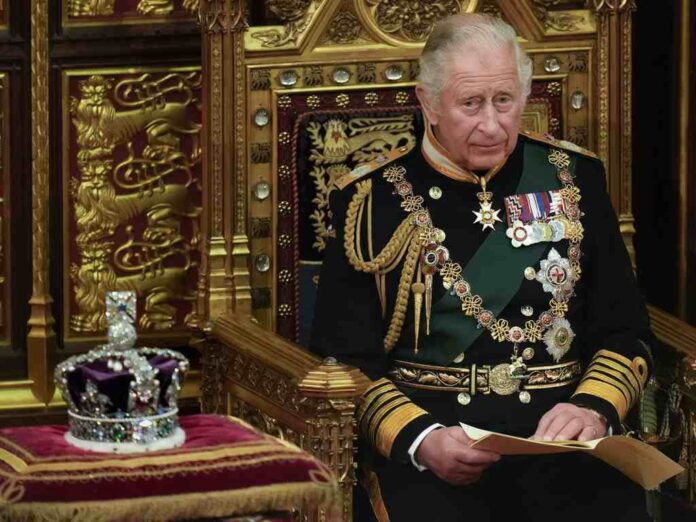
Monarchy, dictatorship, authoritarianism, and despotism, even of the benevolent kind and as a result of democratic elections, are an affront to people’s struggles over the millennia for sovereignty and freedom. However, I must confess to having mixed feelings at the Coronation of King Charles III. 

While democracy as a concept has ancient roots, seen in Athens in the fifth Century BC and even earlier in some of the republics in India, we must recognize that its acceptance as the best form of governance has been less than a hundred years old. In Nepal, the abolition of the monarchy took place only on 28th May 2008. Monarchy continues in the world today, in both its absolute form and the form of “symbolic” constitutional monarchy, with some variance in the monarch’s powers. 

In the case of the United Kingdom, the monarchy has been relegated to symbolism. On 6th May 2023, King Charles III became the titular sovereign of 15 realms – including the erstwhile settler colonies of Canada, New Zealand, and Australia. Opposition to the monarchy is rising across these countries, seen vividly in Greens and First Nations senator to the Australian Parliament Lidia Thorpe refusing to swear allegiance to Queen Elizabeth II, the reigning monarch at that time. There is also growing concern about what purpose such symbols serve in the face of the enormous cost to the public exchequer. Also, views were expressed on how the Coronation continues to celebrate centuries of colonial plunder and exploitation. At the same time, we need to recognize the continuing romance with royalty in our midst.

In any case, the abolition of the monarchy is not an end in itself. The poet Neeraj, while penning the lines of a popular song to the 1970 Hindi film Prem Pujari had written: “राजा गए, ताज गए, बदला जहाँ सारा, रोज़ मगर बढ़ता जाये कारवां हमारा (The king has gone, the crown has gone, the whole world has changed, but our caravan still has not reached its destination)”. So, while monarchy continues to exist and, in the case of the UK, a King has been crowned, I must confess to some hope.

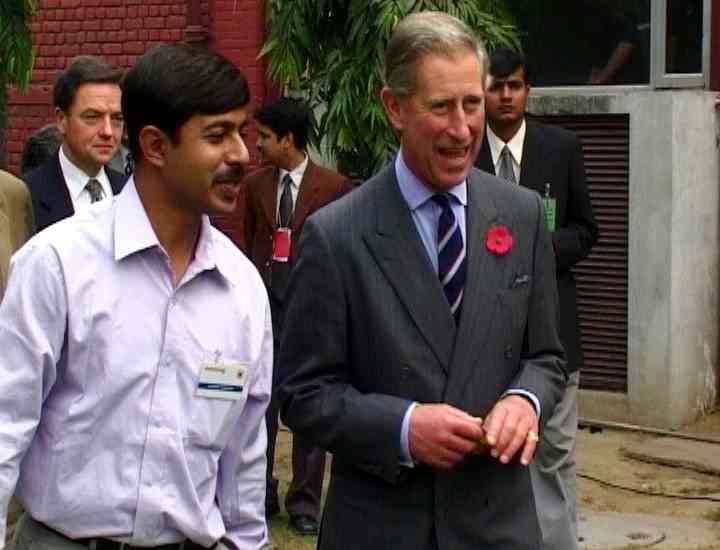
I have, with other social justice defenders, interacted with the Prince of Wales in 2003 when he visited India. I shared with him about the work that ActionAid Association was doing. I have no hesitation in stating that I saw a sense of commitment to justice, peace, ecology, and sustainability in Prince Charles.
- Advertisement -
Prince Charles 11 with Sandeep Chachra Executive Director ActionAid Association.

That is why I feel that if the institution of monarchy is to remain, and tragically it will despite my antipathy, shared by many, to the institution of Kingship, having King Charles III as the monarch could have some positive impact.

Even if the Coronation may not be a turning point, it may form an opportunity to contribute to a process of healing that the majority of the people of the world and the planet need desperately.

The first step could be a series of apologies to indigenous people across the world for participating and leading what should only be called a genocidal attack on indigenous people to build settler colonies for Europe.

In much of the Americas, Africa, and Oceania – which is constituted by Australasia, and the land masses in the Pacific Ocean, it was only through the brutal killing and dispossession of the indigenous people that Europe could create the settler colonies and then maintain them by the equally inhuman trans-Atlantic slave trade. True, Britain did not front-end this assault.

- Advertisement -

Instead, this dubious honor rests with the Spanish and Portuguese conquistadors or soldier-explorers who, from the 16th Century itself, had begun destroying communities, cultures, and civilizations in Africa and the Americas.

The British Empire began taking shape during the 17th Century. It soon overtook all other rivals and remained the supreme unchallenged world imperial power for at least one Century till the challenge in 1914 and the breakdown of the empire after the second world war. 

While not as severe as settler colonialism, the colonialism faced by countries in Asia and Africa, many of which were vibrant economies and cultures, left a legacy of deprivation, distorted social relations, and legacies of partition and internecine conflict in their wake. Colonialism stole people’s lands, their families, their children, and their futures, and in many cases left people stateless or aliens in their lands, haunted and hunted.

Under King Charles III, the United Kingdom could lead the path to reconciliation to the world’s imperialist history by being the first to apologize for its role in this inglorious past. However, this apology would be more meaningful if the UK were to immediately rename “Most Excellent Order of the British Empire”, their order of chivalry, rewarding contributions to the arts and sciences, work on charitable and welfare causes, and public service – the name smacks of a romance with heinous colonial past.

A second step would be to support, advance, and energize the process of decolonization by returning art and artifacts acquired through the loot and plunder that the UK indulged in across the centuries of colonialism, including the Kohinoor diamond on the crown that now can rest on the head of King Charles III. 

Another meaningful step would be to set up and promote a research agenda that would help build a strategy to reverse the continuing impact of colonialism in the current context in economic, social, and cultural fields.

As monarch to the realms of Australia, New Zealand, and Canada, King Charles III could provide valuable support to the land back movements as a meaningful reconciliation to deprivations of the past. Finally, the UK can meaningfully engage with continuing colonial mindsets by canceling the policy to transfer refugees and migrants to the UK to Rwanda.   

Symbolism can have a complex role to play. One cannot rule out small acts of subversion from the most popular icon of monarchy currently in the world. Some leaders of indigenous communities from Canada have shared this hope. It may remain unfulfilled, and in the face of the inglorious past, it most likely is an illogical hope, but it is there. 

THE SNAPSHOTS

Sign up to get quick snaps of everyday happening, directly in your inbox.

We don’t spam! Read our privacy policy for more info.

- Advertisement -
Sandeep Chachra
Sandeep Chachrahttps://www.actionaidindia.org/
Sandeep Chachra, Executive Director, Action Aid.

More Latest Stories

More Articles

From IP to Global Leadership: Aum Ventures’ Chetan Mehta on India’s Next Deeptech Breakout Companies

Speaking with TechGraph, Chetan Mehta, Founding Partner at Aum Ventures, outlined why deeptech remains one of the most underpriced opportunities in India’s startup ecosystem...

How Machine Learning Is Redefining Short-Term Borrowing for Tech-Savvy Consumers

Short-term lending has long relied on limited snapshots of a borrower’s history. That approach often left gaps, especially for people with thin credit files or recent financial shifts. Machine learning changes the equation by pulling in wider signals such as payment patterns from utility...

Why Players Buy LoL Boost and How the Process Works

If you’re researching why players buy lol boost, you’re usually trying to understand two...

CasinoBonusesFinder UK: how filters, Telegram alerts and real bonus matching work in practice

Anyone who has spent serious time on casino bonus hunting knows the drill. You...

The Importance of Keeping Up to Date With Auto Maintenance

Auto maintenance is one of the most important responsibilities that comes with owning a...

PatexOne: Could This Platform Be Smarter Than Your Impulses?

Australian investors are used to platforms that shout about leverage and “opportunity”. PatexOne takes...

India’s Air Crisis Needs a Deeptech Answer, Not a Consumer Gadget

Twenty years ago, an air conditioner in an Indian home was a luxury. Today...

India’s Cloud Cost Crisis: Why Startups Are Rethinking Their Tech Stack

Over the last ten years, startups in India have experienced an incredible boom driven...

The Detroit Region’s Role in Modern Global Supply Chains

As global commerce continues to expand its reach, the Detroit region has emerged as a pivotal player in modern supply chains. Strategically positioned along...

Top No-KYC Crypto Casino Sites in 2026

Most online casinos demand a lot of personal information from you before you can...

Redrob AI Launches Professional AI Platform for India’s Workforce

In a bid to help students and professionals navigate an increasingly fragmented digital work...

The Business of Recycling: Profit, Waste, and Sustainability

The business of recycling stands at the intersection of environmental responsibility and economic opportunity....

Why Resume-Based Hiring Is Failing India’s Workforce

India needs a shift from credential-first hiring to skill-first validation

Why BFSI Is Moving from AI Experiments to AI Systems

For the past few years, Artificial Intelligence in banking, financial services, and insurance has been all about trying new things. Organizations started projects to...

Capabilities Over Credentials: Scrabble’s Naveen Tiwari on the Changing Nature of Leadership Hiring

Speaking with TechGraph, Naveen Tiwari, Co-Founder of Scrabble, discussed how leadership hiring is shifting from a credentials-led approach to one focused on demonstrated capabilities, and how organisations are increasingly seeking executives who can create measurable impact from the outset. Tiwari also highlighted how Scrabble uses...

From Intuition to Analysis: How AI Is Becoming Every CEO’s Second Brain

Most CEOs are making important decisions with partial information. The challenge is not just...

Rethinking Executive Search: Venator Search Partners’ Deepraditya Datta on Leadership Hiring in a Changing Talent Market

In an interview with TechGraph, Deepraditya Datta, Founder and Managing Director of Venator Search...

AI and Fake Content: Can Technology Win the Battle Against Misinformation?

Artificial Intelligence has transformed how content is created, manipulated, and distributed at scale. News,...

Why Micro Learning at 3 Minutes Works Better Than Lectures at 3 Hours

In the fast-moving world of digital education, there is one myth that continues to...

More Than Just a Scratch: The Importance of Windshield Care

Maintaining your vehicle’s windshield often appears as a seemingly minor task that can easily...

The world’s largest crypto market is building in the dark

India remains one of the few significant economies without a comprehensive crypto and stablecoin...

Beyond Nvidia: The Hidden Winners of the AI Stock Rally

Nvidia stock (NASDAQ:NVDA) has returned roughly 1,200% since ChatGPT launched in late 2022. Most...

What PM Modi’s Appeal to Avoid Gold Buying Could Mean for India’s Jewellery Economy

When Prime Minister Narendra Modi recently urged citizens to avoid purchasing gold for a...

Serhii Tokarev Spoke About The Third Season Of The Generation H Accelerator

Serhii Tokarev spoke about the Generation H 3.0 HealthTech accelerator, which is opening applications...

The Business of Recycling: Profit, Waste, and Sustainability

The business of recycling stands at the intersection of environmental responsibility and economic opportunity....

“Budget should focus on reducing taxes on capital gains,” Says Abhishek Gupta of Hex N Bit

Speaking in the upcoming Union Budget 2021, Abhishek Gupta, Founder, and CEO, Hex N...

“China is a Global thief” Rep. Tom Rice on Uyghur Forced Labor Prevention Act

Speaking at the House on Uyghur Forced Labor Prevention Act, Rep. Tom Rice (R-SC)...

How AI is Rewriting the Economics of India’s $300 Bn IT Services Sector

When Microsoft CEO Satya Nadella recently disclosed that artificial intelligence now generates nearly 30...

Why India Must Own Its Education Intelligence Stack

India has rapidly digitised large parts of its education ecosystem over the last decade....

Why Resume-Based Hiring Is Failing India’s Workforce

India needs a shift from credential-first hiring to skill-first validation

Alphabet Discloses $2.14 Billion in Public Equity Holdings as of June 30

Alphabet Inc. disclosed $2.14 billion in equity securities held across 39 positions as of...

The Role of Edtech in Addressing Equity Gaps in Higher Education

In the fast-paced world of EdTech today, the opportunity to bridge educational gaps and...

India to generate $100 bn from telephonic investments

India expects to attract $100 billion in investments in the telecom sector, a union...