



spot_img

Consumer Expectations vs. Delivery Reality: The Real Challenges of Food Delivery Platforms

Date:

Trending

Getting food delivered at the doorstep has completely changed how people eat and live. Whether it’s a working professional with a 9-to-5 job, a homemaker, or even a student craving a treat, food delivery apps have become a go-to. They’re perfect for days when you just don’t feel like cooking or going out, it’s all about comfort and ease. But while it all seems super convenient on the surface, there’s another side to the story, one that’s not as perfect as it looks.

- Advertisement -

The Bigger Picture to the industry

Currently as per the IMARC Group, India’s online food delivery market is booming. In 2024, the market is worth about USD 45.15 billion and is expected to hit USD 320.31 billion by 2033, growing at 23.1% each year. The rise is being driven by wider smartphone use, higher incomes, and more demand for different kinds of food. Still, beneath this rapid growth, customers face some challenges. These include:

Instant vs Real : What people see online, especially on social media, creates a craving for fast service. Food delivery apps add to this by offering quick convenience, making people expect everything to happen instantly. However, the smooth experience is disrupted when there is a delay or when a certain meal item is unavailable. A wait of even ten or fifteen minutes may seem longer than it actually is. The effort required to prepare and transport meals is frequently disregarded, and the discrepancy between quick taps and actual timing causes silent annoyance.

- Advertisement -

Logistics Issues : Sometimes, your order might take a bit longer and it’s not in direct control. Bad weather, traffic, or roadblocks can slow things down. There aren’t always enough drivers available, especially during rush hours, and they can run into issues like parking or tricky addresses. Some platforms have their own delivery teams, while others use third-party partners who might not be close by when the order comes in. And if a delivery is part of a batch, it might take longer if it isn’t the first stop.

Visual Drift : Food delivery apps often present a perfect picture visually stunning meals paired with smooth, effortless ordering building an expectation of an equally flawless overall experience. However, once the food is in transit, reality tends to shift. Despite good packaging, items may arrive less hot, a bit soggy, or not quite as picture-perfect, leaving the actual experience feeling just a little short of what was imagined.

- Advertisement -

However, what’s actually far from reality is the idea of ‘free delivery’, a catchy promise that’s hardly ever truly free. Hidden fees like rain charges, festive surcharges, or long distance delivery costs frequently appear at checkout, even for those with premium memberships. Most “free” offers only apply beyond a certain order value or within a limited area, and don’t cover platform fees or taxes.

Restaurants, especially smaller ones, end up bearing the burden of extra charges, including high commissions, making it harder for them to stay profitable. Meanwhile, platforms quietly tweak policies, leaving both customers and businesses paying more than expected. A recent example is the introduction of extra charges by an online food aggregator for long-distance deliveries on orders above ₹150. These added costs are absorbed by restaurants, not the customers, making it even harder, especially for smaller outlets to stay financially healthy.

What’s the Way Out?

With new players like BigBasket and Rapido stepping into the online food delivery scene, the landscape is starting to shift. Rapido, for example, claims it will charge restaurants a lower commission of just 8–15%, depending on the order value, compared to the higher rates demanded by established platforms.

On the surface, that sounds like a win for restaurants. But even small commission fees add up quickly, especially for smaller outlets. The cumulative cost per order can become a burden, often pushing restaurants to raise menu prices to make up for the lost margin.

Some newer platforms are now offering alternative models, such as zero-commission structures with a fixed monthly subscription fee. This approach can be more sustainable because:

  • Fixed costs: Restaurants know what they’re paying each month, regardless of how many orders come in.
  • Better profit control: No matter the order value, the profit margin remains more stable.
  • Customer trust: Transparent pricing helps avoid hidden costs that might be passed on to customers.

Hence, while lower commission rates are a step in the right direction, models that remove per-order fees altogether could offer a more viable, long-term solution for both restaurants and customers.
THE SNAPSHOTS

Sign up to get quick snaps of everyday happening, directly in your inbox.

We don’t spam! Read our privacy policy for more info.

- Advertisement -

Support our independent journalism PayPal (Outside India) For PayU (For Indian Readers).

Anirudha Kotgire
Anirudha Kotgire
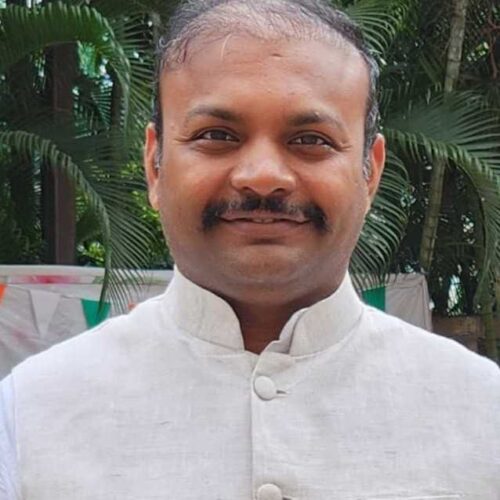
Anirudha Kotgire, Managing Director & Co-Founder of Waayu

More Latest Stories

More Articles

Meta Declares Quarterly Cash Dividend Of $0.525 Per Share

Facebook parent company, Meta Platforms Inc. (NASDAQ:META) said its board of directors has declared a quarterly cash dividend of $0.525 per share on its...

Lok Sabha: Government releases ₹68K crore under MGNREGS; wage payments routed via DBT

New Delhi, India: Union Agriculture Minister Shivraj Singh Chouhan said the government has released 68,393.67 crore rupees to states and Union Territories under the Mahatma Gandhi National Rural Employment Guarantee Scheme (MGNREGS) in the current financial year 2025-26. In a written reply in the Lok...

The Evolving Classroom: Venkateshwar International School’s Pooja Sharma on Changing Role of Schools in Delhi’s CBSE Ecosystem

Speaking with TechGraph, Pooja Sharma, Vice Principal of Venkateshwar International School (VIS), discussed how...

Digital Generics: How AI is Redefining the Future of Affordable Medicine

It was with pride that global headlines described India as the world's pharmacy, supplying...

Why NoSQL Databases Are the Future for Tech Startups

In today’s digital-first economy, tech startups continue to dominate the startup landscape. A startup...

Delhi IGI Airport Revamped Terminal 2 with Advanced Baggage screening systems

Delhi’s Indira Gandhi International Airport (IGI) has reopened its reconstructed Terminal 2, inaugurated by...

The Rise of the AI Agent Economy: How Voice AI Agents Are Becoming the New Frontline Workforce For Call Centers

The work inside a call center has always depended on two things: speed and...

The Road to Equality in Tech: Women In Cloud’s Chaitra Vedullapalli on Reshaping Opportunity for Women Entrepreneurs Globally

In an interview with TechGraph, Chaitra Vedullapalli, Co-Founder of Women In Cloud, discussed how...

Understanding What Makes Sunscreen Truly Effective

Many people pick a sunscreen merely based on its SPF, thus they think that a higher number means better protection. However, SPF is only...

How AI is Improving Risk Management Among Crypto Traders

Over the past few years, the role of Artificial Intelligence in almost every sector...

The AI Advantage: How Intelligent Learning Solutions Are Rewriting Workforce Productivity in 2025 and Beyond

In 2025, artificial intelligence is no longer a futuristic concept — it’s the invisible...

Bajaj Financial Securities Acquires Stake in Lemnisk from Early Investors

Bajaj Financial Securities has acquired stakes in Bengaluru-based customer data platform Lemnisk through a...

The Rise of Cyber Cartels: How the Dark Web Fuels Digital Extortion?

In 2025, cybercrime has evolved beyond individual hackers or little ransomware criminal gangs into...

AI Research Startup Redrob Draws $10 Mn In Series A Funding Led By Korea Investment Partners

AI research startup Redrob has secured $10 million in its Series A round led by Korea Investment Partners with KB Investment, Kiwoom Investment, Korea...

The Future Employability Equation: PrepInsta’s Manish Agarwal on How AI Is Reshaping Student Readiness for Hiring in India

Speaking with TechGraph, Manish Agarwal, Co-Founder of PrepInsta, discussed how the increasing adoption of AI-led assessments and automated hiring platforms is shifting campus recruitment away from reliance on pedigree and location toward a more merit-driven model that values consistency, analytical reasoning, and practical application...

Norovex Review: Inside the Trading Platform Gaining Momentum

The online trading industry has entered one of its most dynamic periods in years....

Why Zero Code Exposure Is the Future of Trust in AI

AI coding assistants have quickly become indispensable for developers, promising faster deployment, cleaner code,...

Trump Says He Will Sue BBC Over Edited Broadcast of Jan 6 Speech

US President Donald Trump has said he plans to take legal action against the...

Starbucks Baristas Rally in New York as Strike Over Pay and Staffing Extends Nationwide

Starbucks baristas rallied in New York City as part of an open-ended strike that...

Demystifying Private Equity Market: WWIPL MD Krishna Patwari on Expanding Retail Access to India’s Unlisted Ecosystem

Speaking with TechGraph, Krishna Patwari, Founder and Managing Director of Wealth Wisdom India Pvt....

The Aesthetic of Longevity: Aesthetica’s Tanisha Bansal Gokharu on Redefining Luxury Home Interiors

Speaking with TechGraph, Tanisha Bansal Gokharu, Founder and Principal Designer at Aesthetica, discussed how...

Empowering Creators: Studiobackdrops’ Archisman Misra on Making Professional Production Accessible Across India

Speaking with TechGraph, Archisman Misra, CEO and Founder of Studiobackdrops, discussed how India’s fast-growing...

Trade Gaia Emerges as a Key Player in Global Altcoin Trading

While Bitcoin continues to dominate headlines, the real growth in 2025 is coming from...

The Conversation Shift: Doceree CRO Thomas Shea on Making Healthcare Marketing More Relevant for Physicians

Speaking with TechGraph, Thomas Shea, Chief Revenue Officer (CRO) at Doceree, discussed how artificial...

Bajaj Financial Securities Acquires Stake in Lemnisk from Early Investors

Bajaj Financial Securities has acquired stakes in Bengaluru-based customer data platform Lemnisk through a...

Digit Life Insurance posts 31% rise in H1 FY26 revenue to ₹858 crore

India-based, Go Digit Life Insurance said its revenue for the first half of FY...

Debt Recovery Reinvented: Collectedge’s Ranjan Agarwal on Reshaping India’s Collections Ecosystem for Lenders

Speaking with TechGraph, Ranjan Agarwal, CEO and Co-Founder of Collectedge, discussed how India’s debt...

AI as a Growth Multiplier: How Smart Companies Accelerate Without Breaking

In today’s business environment, smart growth is just as important as any other form...

Beyond Price Points: Unix India’s Imran Kagalwala on Redefining Consumer Expectations in the Mobile Accessories Market

Speaking with TechGraph, Imran Kagalwala, Co-founder of Unix India, discussed how a crowded accessories...

The Rise of Cyber Cartels: How the Dark Web Fuels Digital Extortion?

In 2025, cybercrime has evolved beyond individual hackers or little ransomware criminal gangs into...

Trade Gaia Emerges as a Key Player in Global Altcoin Trading

While Bitcoin continues to dominate headlines, the real growth in 2025 is coming from...

How Fleet Maintenance Scheduling Supports Business Vehicle Performance

Managing a fleet of vehicles can be challenging for any business. From delivery vans...

The Conversation Shift: Doceree CRO Thomas Shea on Making Healthcare Marketing More Relevant for Physicians

Speaking with TechGraph, Thomas Shea, Chief Revenue Officer (CRO) at Doceree, discussed how artificial...