



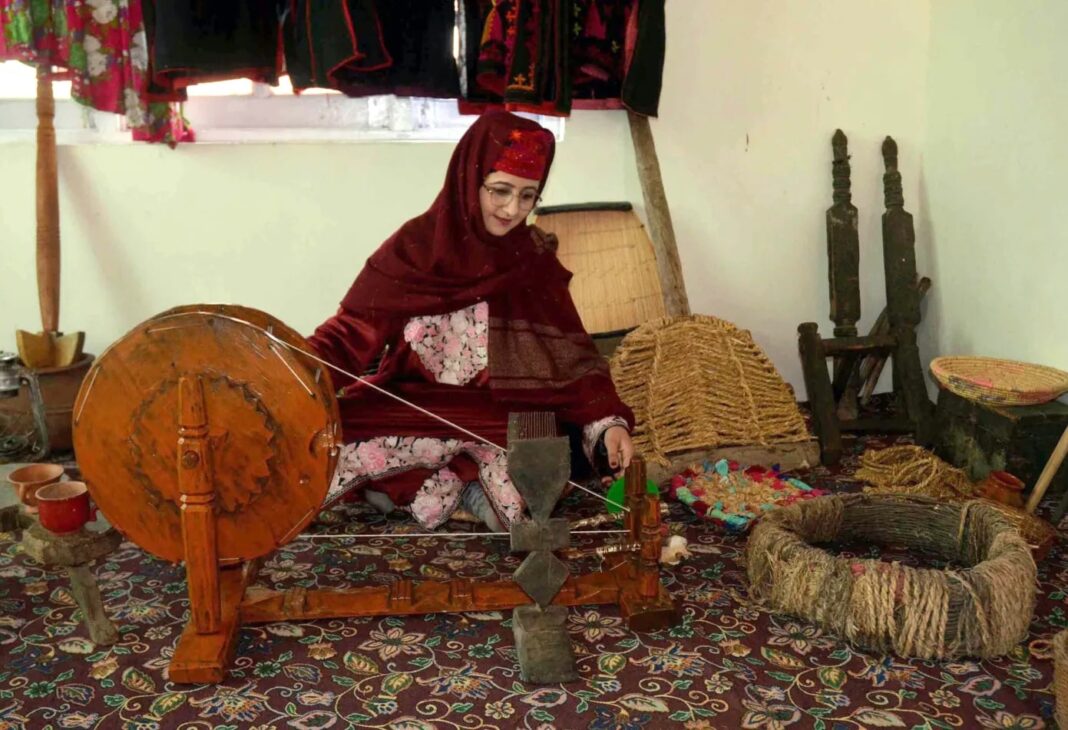
In a groundbreaking cultural initiative, Shahida Khanam, a young tribal girl from Aragam village in Bandipora district, has established Kashmir’s first-ever Tribal Museum by transforming her ancestral home into a heritage space dedicated to the Gujjar-Bakarwal community.
The museum, which is open to the public without any entry fee, houses an array of traditional artifacts including utensils, tools, attire, jewelry, and crafts that reflect the nomadic life and rich history of the Gujjar-Bakarwal tribe — one of the largest tribal groups in Jammu and Kashmir.

Driven by a deep commitment to preserving her community’s legacy, Shahida collected these rare items from elders, deserted homes, and far-flung villages. Her initiative has created a living archive that offers a learning platform for students, researchers, and tourists interested in Kashmir’s tribal heritage.
Shahida Khanam has been widely recognized for her contribution, earning several awards for cultural preservation. Her dedication stems from a desire to ensure the younger generation remains connected to their roots and understands the lives and values of their forebears.
The museum has been welcomed by the local community, academics, and cultural activists alike, who view it as an inspiring model of grassroots heritage conservation. Many believe her efforts will encourage other youth to take pride in their identity and contribute to the documentation of indigenous knowledge systems.
Nestled in the picturesque landscape of Aragam, the museum is accessible to all and serves as a symbol of resilience, identity, and inclusive cultural recognition in Jammu and Kashmir. Shahida has urged people from all walks of life to visit the museum and engage with the traditions that define Kashmir’s tribal fabric.
