

Bridging Academia and Industry: SP Jain’s Prof Abhijit Dasgupta on Collaborative Curriculum Development

Date:

Trending

- Advertisement -

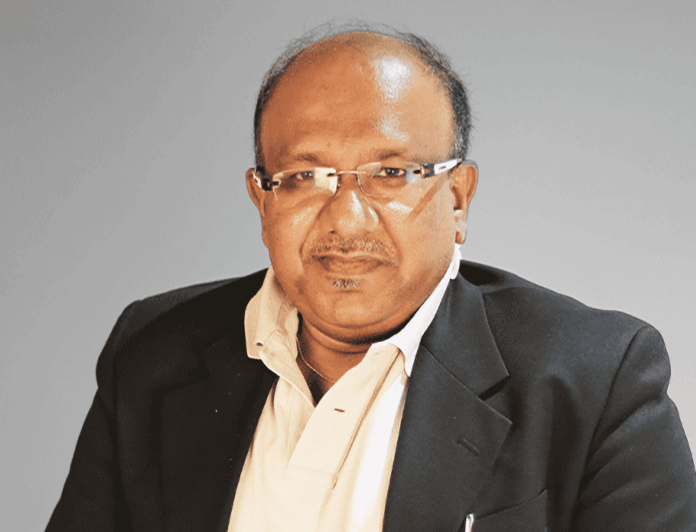
Speaking to TechGraph, Prof Abhijit Dasgupta, Director Bachelor of Data Science discussed SP Jain School of Global Management’s collaborative efforts with industry partners to align the Bachelor of Data Science curriculum with current job market trends. He also talked about the institution’s commitment to enhancing employability through regular curriculum updates, ensuring students are equipped with the latest skills and knowledge demanded by the industry.

Read the complete interview:

TechGraph: Can you provide an overview of the current demand for Bachelor of Data Science program graduates in the job market, particularly in industries relevant to big data and analytics?

Prof Abhijit Dasgupta: As of our last review in May 2023, the demand for graduates with a Bachelor of Data Science (BDS) degree is on the rise and projected to continue growing. In India According to McKinsey, there will be a shortage of more than 150,000 data scientists in 2024, which has led to an increase in demand for data science jobs and wages.

According to Indeed, data science, data analysis, and machine learning engineering are among the highest-paying job roles based on data science.

The sector showed 64% growth in demand, and around 2000 positions, on average, are open on recruitment portals like Indeed, LinkedIn, and Glassdoor; at any point in time. In India, the average salary is estimated at around Rs 14.50 lacs, in Australia about A$ 93,500 and in the US, it is about US$108,000. As of today, every industry sector is relevant to big data & analytics; and companies worldwide are slowly adopting data science to improve their business.

- Advertisement -

TechGraph: How do you prepare students to meet the demands of the rapidly evolving job market in data science and analytics?

Prof Abhijit Dasgupta: Preparing students for a career in data science requires a multifaceted approach that combines theoretical knowledge with practical skills and real-world experience. Theoretical fundamentals are required to be supported by product-specific skills.

Some of the training areas are (a) Foundational Knowledge in mathematics, statistics, and computer sciences (b) Programming Skills in Python, SQL et al with some emphasis on working with APIs, and therein training is imparted in JavaScript, RestAPIs, JSON, developing APIs in Flask, etc. (c) Coding & Problem Solving: training students to solve problems in data structures & algorithms (d) Machine Learning & AI: imparting skills training on PyTorch, SK Learn, TensorFlow, SAS (d) Data Visualization in React-REDUX, PowerBI, Tableau (e) Technologies for Data at Scale, like Distributed computing, Cloud computing, distributed databases, NoSQL, Kafka, Spark, CI-CD frameworks, and to some extent functional management knowledge/domain skills to make a student ready for a job.

TechGraph: What specific skills or knowledge areas do employers often seek when hiring graduates from your program, and how does your curriculum address these requirements?

Prof Abhijit Dasgupta: This depends largely on the employer and their immediate objectives in using data sciences, and therefore there is no cookie-cutter approach here. Typically, if a student is well versed in the ML algorithms, and databases, comfortable working with PyTorch/TensorFlow, and can fetch and write into the big-data stack of the project; that is considered reasonable. Of course, he has to know Python well and his coding skills have to be top-class.

Prof Abhijit Dasgupta: There is no shift, but adoption: this is how I would like to characterize the industry. They are learning, and academia is quite ahead of what the industry in general is.

- Advertisement -

TechGraph: Sustaining high placement rates is crucial for the reputation and success of any academic program. What strategies does your institution employ to ensure that graduates consistently secure fulfilling and relevant positions in the field of data science?

Prof Abhijit Dasgupta: The placement rate of an institution is reflective of the factor of employability, and employability depends on skills. We keep on updating our syllabus, especially the skills part to make the students employable.

Prof Abhijit Dasgupta: We primarily collaborate with big-tech companies and universities that are at the forefront of innovation in this area. In our experience, the industry does adopt the technologies supported by bell-weather companies (and they are mostly in the USA).

TechGraph: Lastly, do you support students in building their professional networks and gaining exposure to potential employers throughout their time in the Bachelor of Data Science program?

Prof Abhijit Dasgupta: At a college-grad level, networking does not work as much in India as it would in the USA. However, the institution must be well networked to attract the companies to recruit their students. Professional Networking works at a later stage of the career somewhere with at least 3 years of experience. At the level of a college grad, one has to get assisted by the institution or search for jobs / open positions on LinkedIn, Glassdoor, and other job portals.

THE SNAPSHOTS

Sign up to get quick snaps of everyday happening, directly in your inbox.

We don’t spam! Read our privacy policy for more info.

- Advertisement -
Krishna Mali
Krishna Mali
Founder & Group Editor of TechGraph.

More Latest Stories

More Articles

How Air Can Become Urban India’s New Water Source

India's cities are running dry. Chennai nearly ran out of groundwater in 2019. Bengaluru's lakes are shrinking. Delhi's borewells are drawing from depths unimaginable...

The Human Algorithm: Why the Future of Digital Marketing Belongs to Empathetic Strategists

The modern marketing department is quieter than it used to be. The frantic tapping of copywriters racing against deadlines and the loud debates of creative directors have largely been replaced by the hum of servers processing natural language. Today, an enterprise can generate ten...

How AI is Rewriting the Economics of India’s $300 Bn IT Services Sector

When Microsoft CEO Satya Nadella recently disclosed that artificial intelligence now generates nearly 30...

Bounce House Rental vs Inflatable Slides: Which Option Delivers More Excitement?

Planning a family gathering or a children's party often involves finding the perfect entertainment...

How Hiring a Qualified Plumber Solves Major Household Issues

For many homeowners, maintaining a functional and safe home is a top priority. Plumbing...

Why India Must Own Its Education Intelligence Stack

India has rapidly digitised large parts of its education ecosystem over the last decade....

Why Micro Learning at 3 Minutes Works Better Than Lectures at 3 Hours

In the fast-moving world of digital education, there is one myth that continues to...

More Than Just a Scratch: The Importance of Windshield Care

Maintaining your vehicle’s windshield often appears as a seemingly minor task that can easily...

How Choosing A Licensed Plumber Ensures Quality Repairs

When it comes to maintaining a safe and comfortable home, the quality of plumbing repairs can significantly impact your daily life. From leaky faucets...

The world’s largest crypto market is building in the dark

India remains one of the few significant economies without a comprehensive crypto and stablecoin...

How Location Data Storage Technology is Making City Travel Smoother

India’s mobility ecosystem is undergoing a quiet but powerful transformation, driven not just by...

India Is Building Cities Without Building the Systems That Make Them Work

India is in the middle of the largest urban expansion in its history. By 2050,...

Why Cyber Resilience Is Replacing Cybersecurity as a Boardroom Priority

Traditionally, cybersecurity was hard-wired to be a technology concern that was only taken care...

Infrastructure 4.0: How AI & Predictive Analytics Are Transforming Real Estate

The new era of technology and innovation has changed operations in many industries. The integration of artificial intelligence in different industries is making processes...

The Rise of Integrated Solar Tech Ecosystems in India

India’s clean energy is all about building an ecosystem that is interconnected with various elements and goes beyond just installing solar panels at scale. Renewable energy generation, storage, digital intelligence, manufacturing, financing, and grid infrastructure work together within the said ecosystem in a coordinated...

Beyond Nvidia: The Hidden Winners of the AI Stock Rally

Nvidia stock (NASDAQ:NVDA) has returned roughly 1,200% since ChatGPT launched in late 2022. Most...

What PM Modi’s Appeal to Avoid Gold Buying Could Mean for India’s Jewellery Economy

When Prime Minister Narendra Modi recently urged citizens to avoid purchasing gold for a...

How Agentic AI Is Personalising the End to End Salon Experience

Walk into a salon today, and more often than not, the experience still depends...

From Black Box to Trusted AI: Why Defence Needs Constitutional AI Models

For decades, the defence and intelligence agencies have followed one non-negotiable rule: trust nothing...

Apple Reports $111.18 Billion Revenue in Q2 FY26, Net Profit Rises to $29.6 Bn

Apple Inc. (NASDAQ:APPL) has reported its financial results for the quarter ended March 28,...

Hermès vs MetaBirkin: The NFT Case That Redefined Ownership on Ethereum

The NFT boom of 2021 and early 2022 pushed digital assets into the mainstream,...

Bihar Police, Vehant Technologies Partners to Deploy Screening Systems Across 40 Courts

In a bid to enhance safety and security across court premises for judges, lawyers,...

Rethinking Hospital Security: TrioTree Technologies CEO Surjeet Thakur on Securing Fragmented Hospital IT Environments

In an interaction with TechGraph, Surjeet Thakur, Founder and CEO of TrioTree Technologies, outlined...

What the Next Phase of Growth Looks Like for Indian and Global E-commerce Players

For close to a decade, metrics for evaluating the growth of e-commerce included customer...

India Is Building Cities Without Building the Systems That Make Them Work

India is in the middle of the largest urban expansion in its history. By 2050,...

“Budget should focus on reducing taxes on capital gains,” Says Abhishek Gupta of Hex N Bit

Speaking in the upcoming Union Budget 2021, Abhishek Gupta, Founder, and CEO, Hex N...

“China is a Global thief” Rep. Tom Rice on Uyghur Forced Labor Prevention Act

Speaking at the House on Uyghur Forced Labor Prevention Act, Rep. Tom Rice (R-SC)...

Borade AI Founder Shiv Kumar Borade on Building an AI Growth Engine for Small Businesses

Speaking with TechGraph, Shiv Kumar Borade, Founder & CMD of Borade.AI, discussed how many...

When AI-Generated Documentation Hurts More Than Helps

AI-generated documentation has quickly become a selling point for modern SaaS and developer platforms,...

Why Cyber Resilience Is Replacing Cybersecurity as a Boardroom Priority

Traditionally, cybersecurity was hard-wired to be a technology concern that was only taken care...

Alphabet Discloses $2.14 Billion in Public Equity Holdings as of June 30

Alphabet Inc. disclosed $2.14 billion in equity securities held across 39 positions as of...

Gaming for Good: Boosting the Indian Gaming Community through Technology

The Indian gaming industry is transforming remarkably, driven by technological advancement and a growing...

India to generate $100 bn from telephonic investments

India expects to attract $100 billion in investments in the telecom sector, a union...