


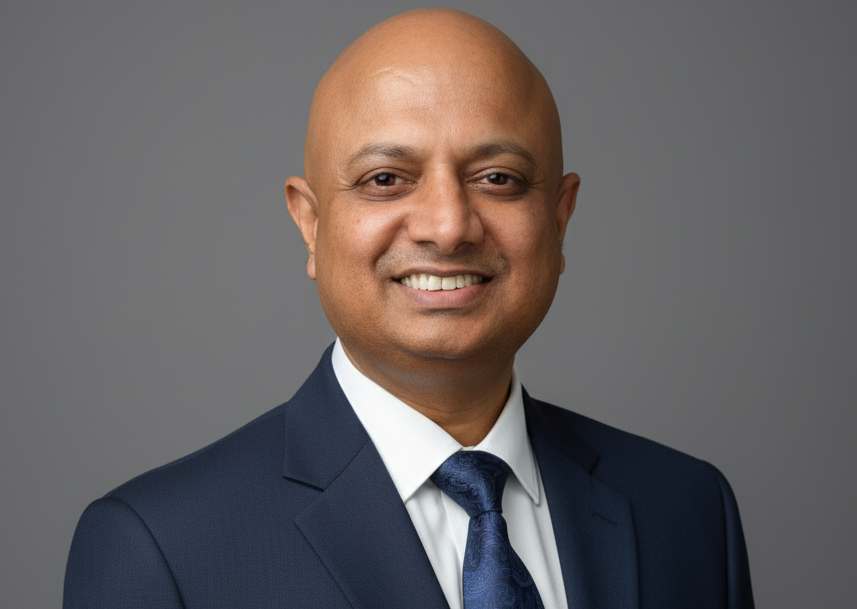
Speaking with TechGraph, Satisha Naraharimurthy, Founder and CEO of Roombr, discussed how schools have spent years adding smart boards, LMS platforms, and different video teaching tools, but teachers continue to struggle with fragmented workflows that interrupt teaching rather than support it, and how Roombr is building a single classroom system that brings teaching, collaboration, assessment, recording, and device management into one single classroom environment.
Read the interview in detail:

TechGraph: Schools often invest heavily in standalone smart boards, LMS platforms, or video-conferencing tools, yet teachers still struggle with fragmented systems. What gap in digital classrooms did you see that convinced you there was room for a fully integrated solution rather than another incremental upgrade?
Satisha Naraharimurthy: For years, schools kept adding more devices and platforms—smart boards from one vendor, LMS from another, conferencing tools from a third. What we saw was not a technology problem, but a coordination problem. Teachers were juggling five systems that didn’t talk to each other. Classrooms became digitally cluttered instead of digitally empowered.
Roombr was born to fix that. We built a single, integrated AI-powered classroom platform that combines teaching, collaboration, content creation, assessment, analytics, and device management in one place. No switching tabs, no fragmented workflows—just one seamless ecosystem that works the way teachers actually teach.
TechGraph: In India, many schools still struggle with infrastructure constraints, budget limitations, and inconsistent connectivity. How, then, does Roombr ensure that its digital classroom experience remains seamless, even in tier-two and tier-three cities where technology adoption patterns differ significantly from those in metro schools?
Satisha Naraharimurthy: We designed Roombr for India’s real classrooms, not just its metro schools.
Three principles make it work everywhere:
Offline-first architecture – Teachers can record, teach, annotate, and manage classes with zero internet. The system syncs automatically whenever connectivity is available.
Edge AI – Most AI processing happens locally on the Roombr device, reducing bandwidth dependence and ensuring reliability even in low-network regions.
Cost-efficient deployment – Schools don’t need multiple devices or expensive infrastructure. One Roombr system replaces the smart board, LMS, recording software, assessment engines, and teacher tools.
Roombr is built to be metro-grade technology at small-town practicality.
TechGraph: You talk about empowering teachers through technology. In practice, many classroom tech platforms end up increasing the workload rather than reducing it. How did Roombr ensure that teachers spend more time teaching and less time managing the system?
Satisha Naraharimurthy: Our design philosophy is simple:
If it doesn’t save teachers time, it doesn’t ship.
Roombr automates the tasks teachers usually lose hours on:
“Create a quiz from this chapter” → auto-generated assessments.
“Translate this slide to Hindi” → instant multilingual support.
“Summarize this lecture” → auto chaptering and content packaging.
Attendance, timetables, class setup → fully automated.
What earlier took 30–40 minutes now takes 30 seconds. Teachers finally get to focus on teaching, not admin. That’s the real impact.
TechGraph: Recorded sessions that can be edited with AI, turned into structured chapters, and then linked to assessments. That is a big departure from the traditional classroom. What kind of mindset shift is needed from educators to truly unlock the power of this approach?
Satisha Naraharimurthy: This shift is not about replacing traditional teaching; it’s about capturing and amplifying it.
The mindset educators need is simple:
Your teaching is content. Your explanations, diagrams, and examples are intellectual assets.
For the first time, teachers can:
Record lessons naturally while teaching
Auto-convert them into chapters, notes, and assessments.
Build their own digital library with zero extra effort.
The shift is from “teach and forget” to “teach once, impact many times.”
Educators who adopt this mindset unlock massive productivity and student outcomes.
TechGraph: The pandemic made online learning mainstream, yet it also exposed deep inequities in access and teaching quality. Do you see Roombr’s hybrid classroom model becoming a standard in Indian schools, where physical and remote learning exist seamlessly rather than as separate tracks?
Satisha Naraharimurthy: Yes—hybrid is no longer an emergency response; it’s the future classroom.
Parents want flexibility, schools want continuity, and students learn best when physical and digital support each other. Roombr makes this possible by ensuring:
In-class teaching is immersive and collaborative.
Remote learners feel present.
Everything taught physically becomes digitally available instantly.
Hybrid learning is not about replacing schools—it’s about making them future-proof. India is ready, and Roombr is enabling that transition at scale.
TechGraph: Classroom data, recordings, and student performance analytics raise natural questions around privacy and ownership. What safeguards and policies has Roombr put in place to ensure transparency and security for schools, teachers, and parents?
Satisha Naraharimurthy: We take this responsibility extremely seriously. Our principles are clear:
- Schools own their data—always.
- No student data is ever used for training AI models.
- All recordings and analytics stay encrypted end-to-end. Local edge storage ensures sensitive content doesn’t depend on the cloud.
We follow global standards (GDPR, FERPA-aligned frameworks) and provide complete transparency to schools, teachers, and parents. Trust is non-negotiable in education, and our architecture is built around that belief.
TechGraph: EdTech has become a crowded space, with many companies focusing on content, tutoring, and marketplace models. Roombr is taking a very different route by building infrastructure inside the classroom. What does this strategy mean for your long-term scale plans, and where do you see Roombr in the next five years?
Satisha Naraharimurthy: While most EdTech companies chase content or tutoring, we’re building the rails on which the future of classroom learning will run. Our strategy has three long-term implications:
- Deep penetration – Once Roombr enters a classroom, it becomes the central teaching system for years.
- High retention – Schools don’t churn because Roombr becomes mission-critical infrastructure.
- Scalable AI ecosystem – Every new classroom strengthens our network of teacher workflows, assessments, and learning insights.
In five years, we see Roombr powering over 25,000 schools, 1,00,000+ classrooms, and becoming the default operating system for Indian classrooms across metros and small towns.
Roombr isn’t another edtech product—it’s a platform redefining how India teaches and learns.