


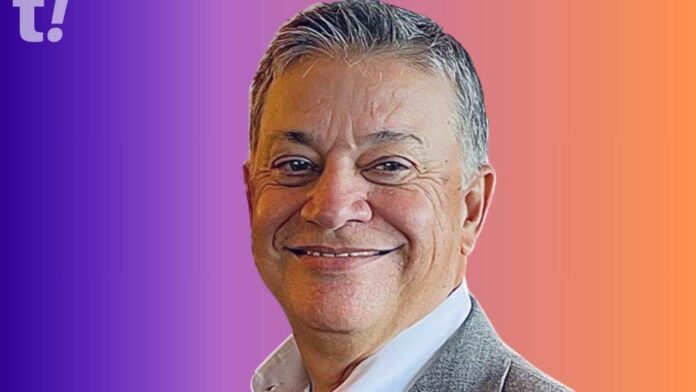

In an interview with TechGraph, Brij Sharma, Founder and Chairman of MDIndia Health Insurance spoke about how cutting-edge technologies and third-party administrators (TPA) are transforming the ever-evolving Indian health and insurance industry.
Read the complete interview:
TechGraph: Could you provide an overview of MDIndia Health Insurance’s role in the Indian healthcare and insurance industry, particularly regarding third-party claims administration services?
Brij Sharma: A Third Party Administrator (TPA) plays a very important role in the Indian Health and Insurance sector. TPAs have built the technology and service foundation for Health insurance to be efficiently delivered across the country.
MDIndia Health Insurance TPA (“MDIndia”) is more than 2 decades old and a highly customer-focused company that uses cutting edge People, Process, and Technology practices, with a focus on continuous improvement and business excellence.
MDIndia, through its increasingly automated and digital claims adjudication platform in combination with a specialized workforce, provides the following End to End Key Services – which are both generic and more often customized to meet the unique demands of our individual clients; namely, Identification of Beneficiaries, Beneficiary Enrolment, Claims Processing, including Cashless and Reimbursement Modes, Provider/Hospital Management, Fraud and Abuse Detection and Control, Customer Support and Service through a multichannel information exchange network consisting of contemporary modes, like call center services, email, sms; and modern modes, such as web services, portals, mobile-apps, chatbot, and interactive WA; Data Services, MIS and Analytics and PIMS.
As of date, MDIndia services an “equated” annual premium of about Rs. 10,500 Crores, with an annual growth of about 10% to 15%. A competent and highly customer-focused staff of about 8000 people, (direct and indirect), consistently provides bespoke health and health insurance-related services to about 24 Crore Indian lives. We have a cost-effective network of about 24,000 medical facilities, with more than 120 offices/points of presence pan-India.
Also, in one day, we collectively process about 25,000 claims (cashless, reimbursement, and add.), issue about 20,000 cashless preauthorizations, and conduct about 1200 Pre-Insurance Medical Diagnostic Tests (“PIMS”). Our increasing client and customer base consists of 14 Mass Health State and Central Govt. Programs, and we service about 2700 Corporate Mediclaim Policies and 9,00,000 Retail Policies.
MDIndia is committed to a deep sense of customer focus and customer care and the several industry excellence awards conferred upon us each year are an ample testimony of our untiring efforts to drive sustainable value to the entire Health Insurance Industry.
TechGraph: What challenges and opportunities have you encountered while operating in the Indian market, and how have they shaped your approach to claims administration services?
Brij Sharma: Previously, the India Health Insurance Industry was largely very conservative, with the existence of only a few Public Sector Insurance Companies. The entire operations were manual, labor centric and there was very limited penetration across the population of India. Also, there were a very limited number of fairly straightforward health insurance policies/products.
Over the years, with the proliferation of Private Insurance Companies, and a mass realization of the dire need for health Insurance, especially after the COVID-19 pandemic, today, the Indian Health Insurance Industry is extremely fast-paced, complex, and dynamic.
There is severe competition and there is tremendous health insurance penetration and coverage. There is a significant increase in the number of Hospitals, healthcare costs, and incidence rates. There is a deep focus on solvency and loss ratios, management of underwriting & actuarial risks, and investment profits.
The customers are very knowledgeable and demanding, with active consumer forums. We have regulator appellate channels, consumer courts, Brokers, Agents, Online Aggregators, and specialized EB functions in corporations.
Today, we have myriad health insurance policies and products with extensive terms and conditions but also there is a steep increase in abuse and intelligent fraud.
Based on its vast and highly specialized experience of several years, MDIndia constantly endeavors to keep a few steps ahead of the market and draws out its plans based on an assessment, anticipation, and prediction of short- and long-term market trends and expected/forthcoming changes.
This essentially involves reskilling our people, continuously aligning their competencies to dynamic market changes, and keeping our workforce well-trained, customer-focused, and performance-optimized.
TechGraph: In India, healthcare is a rapidly evolving sector. How has MDIndia Health Insurance adapted to changes in the medical insurance landscape over the years?
Brij Sharma: The most significant change due to numerous factors, is the extent to which technology, automation, and standardization have become critical in the Indian Health Insurance Industry attendant, simultaneously with the need for highly skilled manpower and the need to control spiraling healthcare costs and render health insurance affordable.
MDIndia is engaged with different entities viz. Insurers, Govt. Mass Health Insurance Schemes, Hospitals and Diagnostic Centres, Corporate Clients, Brokers, Agents, and Retail Customers – all of whom adopt different and unique technology platforms and computer systems.
Therefore, over the years MDIndia has integrated with all of these diverse systems and hence is a melting pot for several different unique market systems.
As individual market entities continuously evolve their systems, therefore, so does MDIndia have to evolve its backend systems to keep pace with these continuous changes, to allow a seamless flow of continuous information and data exchange for real-time operational results, market deliverables, and seamless, full-digital, upstream and downstream operations/processes.
Simultaneously, MDIndia also has to continuously evolve and improve its technology and systems across its claims adjudication engine, CRM and customer service platforms, PIMS systems, and others, to deliver faster, better, and cheaper, remain competitive and maintain its leadership position as a distinctive service provider/TPA of choice across all its business verticals.
This is achieved through the development of our modular claims adjudication system, flexible and highly adaptive configuration engines, a push button approach, database mgt., operations-friendly UI’s, increased automation, and adopting the relevant elements of ML and AI to deliver higher rates of auto-adjudication through linear frameworks, and auto-adjudication bots through compound logic frameworks, instant detection of fraud and abuse, better data sciences and analytics, instant information and data availability to all our customers, robust control on claims processing accuracy, ability to instantly respond to and absorb market changes, etc.
MDIndia has also uniquely organized itself and is a highly structured organization with highly specialized departments, each headed by a highly competent, experienced, and expert leader, of the designation of a Vice President.
Whereas, once upon a time, MDIndia would largely hire doctors and medical professionals for health claims adjudication, today, we not only hire from the relevant health insurance entities, but we also actively hire from the technology majors and engineering companies.
TechGraph: Can you explain the key benefits of third-party claims administration services for insured clients in India and how MDIndia Health Insurance differentiates itself in this space?
Brij Sharma: There are several significant benefits for Insurers by utilizing the services of TPA’s, prime amongst those is that the Insurance Companies can focus their energies on increasing insurance penetration, retaining and increasing market share, etc, while all of the end-to-end operational nuances are smoothly managed by the TPA.
In addition, the health insurance environment consists of a very heterogeneous pool of market entities and the TPA interacts with them, relieving the Insurer of this often complex task and leaving them free to focus on their core business.
Besides, a TPA operates at a much lower cost base due to economies of scale as compared to that of an Insurance Company. The scale comes with the added advantage of making a TPA much more effective and efficient at absorbing any operational changes, improvements, and enhancements as devised by the Insurer or any of the related market entities.
From a policyholder perspective, a TPA remains an unbiased and fair entity when dealing with beneficiary claims and their related financial outgo, and this keeps the health insurance environment sanitized, honest, and reliable for all parties involved.
As one of the largest and leading technologically focused TPAs, MDIndia provides economies of scale, the ability to manage a large volume of daily claims with rapid turn-around times, and market response with accuracy, quality, and customer focus.
MDIndia is also a technology leader in the TPA industry and not only has the largest pool of doctors, multi-skilled, highly specialized staff across focused functions, and a significant pool of engineering talent for catering to its people, process, and technology needs; but but India also has the largest network of empaneled hospitals and medical facilities, with well-negotiated treatment rates and discounts, thereby providing economic and prompt cashless hospitalization services to any of the beneficiaries at any location across the country.
MDIndia also has inbuilt automation, like auto-enrolment, auto adjudication, bot adjudication, trigger-based fraud and abuse detection, early warning systems, and various other such automated features.
Through its large network of Regional, Branch, and Project Offices, MDIndia has the largest points of presence across the Country and hence its ability to provide “at point, on location” services to the beneficiaries it services and the market entities it interfaces/engages with, like Hospitals, etc.
MDIndia provides a vast array of value-added services to the beneficiaries and policyholders, like e-pharmacy at highly discounted rates, economic online consultation, wellness programs, health risk assessments, preventive health guidance, data sciences, dashboards, analytics, etc. MDIndia also provides robust Pre-Insurance Medical Services with the largest presence and network of highly reliable diagnostic centers across the Country.
TechGraph: What is the typical process involved in claims administration, and how does MDIndia Health Insurance streamline this process to ensure efficiency and customer satisfaction?
Brij Sharma: A typical claims administration process consists of configuring product/policy terms and conditions in the system, beneficiary enrolment, beneficiary education, and awareness, providing the serviced market entities with instant access to information, data, and status, provider and hospital networking, package rates and discount management, claim notification, verification/fraud and abuse monitoring, registration, documentation, claims adjudication, decision communication, payment fulfillment, customer support and services, appeals handling, and final decisions.
MDIndia is an insuretch TPA with a highly specialized workforce woven into a well-defined and well-structured organization, with high levels of automation resulting in bespoke services and rapid turn-around and response times with accuracy, quality, and customer focus. We have successfully established the largest network of cashless hospitals and medical facilities across the entire Country in every location, with well-negotiated treatment tariffs and hospital discounts, thereby providing economical and reliable treatment to our beneficiaries and their family members.
Our achievements include having the largest pool of claims processing doctors, a significant technology, engineering, and management staff, efficient and customer-focused services, a culture of listening and understanding our customers and focusing deeply on customer care and the human aspects of customer service, industry knowledge, a deep understanding and foretelling of the health insurance industry, streamlined protocols, impeccable service quality, standardized procedures, enhanced healthcare information, new management systems, increased insurance enrollment, cost minimization and our overall people, process, and technology capabilities which are handcrafted for the health insurance industry and enhanced through methods for continuous improvement.
TechGraph: The medical world is constantly evolving and so are medical treatments and technologies. How does MDIndia Health Insurance stay up to date and ensure that claims processing is in line with all the new advances?
Brij Sharma: In the Indian Hospital Industry, there has been a significant transformation with the emergence of advanced hospitals and healthcare chains. This has led to rising healthcare costs, driven by modern treatments and an increase in severe illnesses.
We have a specialized Provider and Hospital Management Team that maintains communication with hospitals and insurance companies. We ensure treatment appropriateness through a stringent review process and adhere to regulatory standards. MDIndia’s comprehensive approach includes continuous education and updates, and we actively collaborate with hospitals and insurers to control costs.
TechGraph: What are the main challenges insured clients face when making claims in India, and how does MDIndia Health Insurance assist them in overcoming these challenges?
Brij Sharma: Historically, Indian health insurance beneficiaries faced challenges like policy understanding, cashless hospitalization access, claim delays, and fraud. To tackle these issues, the company provides resources during onboarding, has a resolute claim assistance team, uses a system for deficiency communication, conducts client orientation programs, reviews claim denials with clear explanations, offers documentation guidelines, collaborates with healthcare providers, and maintains a Fraud & Abuse Control Cell for transparency and quality services.
TechGraph: What technological advancements and digital solutions does MDIndia Health Insurance utilize to improve the claims administration experience for clients and providers?
Brij Sharma: MDIndia is a leading insure tech TPA that pioneers technology innovations in the Indian health insurance sector to streamline operations and improve customer experiences. They offer a wide range of digital customer service solutions, including web services, online portals, mobile apps, chatbots, and virtual assistants. Their claims adjudication system is highly automated and continuously enhanced in-house as they aim to go fully digital.
MDIndia leverages technology extensively, incorporating machine learning (ML) and artificial intelligence (AI) for process automation, fraud detection, early warning systems, and more. They seamlessly integrate with various market entities, ensuring efficient health insurance operations. They utilize OCR technology for document scanning and data digitization, explore blockchain for data security, and use data sciences and analytics for insights and response planning. They offer features like online claim submission, electronic fund transfers for settlements, real-time claims tracking, automated reminders, and chat-based customer support. Additional services such as e-pharmacy, telehealth, and virtual OPD wallets enhance the overall claims administration experience and customer satisfaction.
TechGraph: In your opinion, what are the critical factors that contribute to the growth and development of the medical insurance sector in India, and how does MDIndia Health Insurance contribute to these factors?
Brij Sharma: MDIndia has transformed from a TPA (Third Party Administrator) to an Insuretech organization in collaboration with insurers, thanks to the growth of Healthtech startups and innovations in insurance product delivery. The expansion of the Indian medical insurance sector is driven by various factors such as government health insurance schemes, rising healthcare costs, increased awareness, urbanization, changing demographics, technology adoption, and more.
MDIndia actively participates in sector expansion initiatives, including managing government health insurance schemes, awareness campaigns, cost-effective network management, fraud reduction, and various health-related support services. Their goal is to improve healthcare access and financial security for individuals and families, with a focus on serving the last mile effectively.
TechGraph: Lastly, what advice or insights would you like to share with individuals seeking to navigate the complex world of medical insurance and claims administration in India?
Brij Sharma: Navigating the complex world of medical insurance and claims administration in India is crucial for financial security and healthcare access. Key advice includes choosing a dependable TPA, understanding your needs and policy terms, seeking expert advice, declaring pre-existing conditions, and paying premiums timely. Know cashless network hospitals, follow claim submission guidelines, and track your claims. Avoid policy abuse, report abuses confidentially, and understand the appeals process. Most importantly, prioritize preventive health practices and routine checkups. Patience, diligence, and knowledge are key in maximizing health insurance benefits, ensuring fair reimbursements, and promoting holistic well-being, both physically and mentally.