

spot_img

Interview: PingPong India’s Mukesh Sahu On Cross-Border Payments And Global Expansion Support For Indian Businesses

Date:

Trending

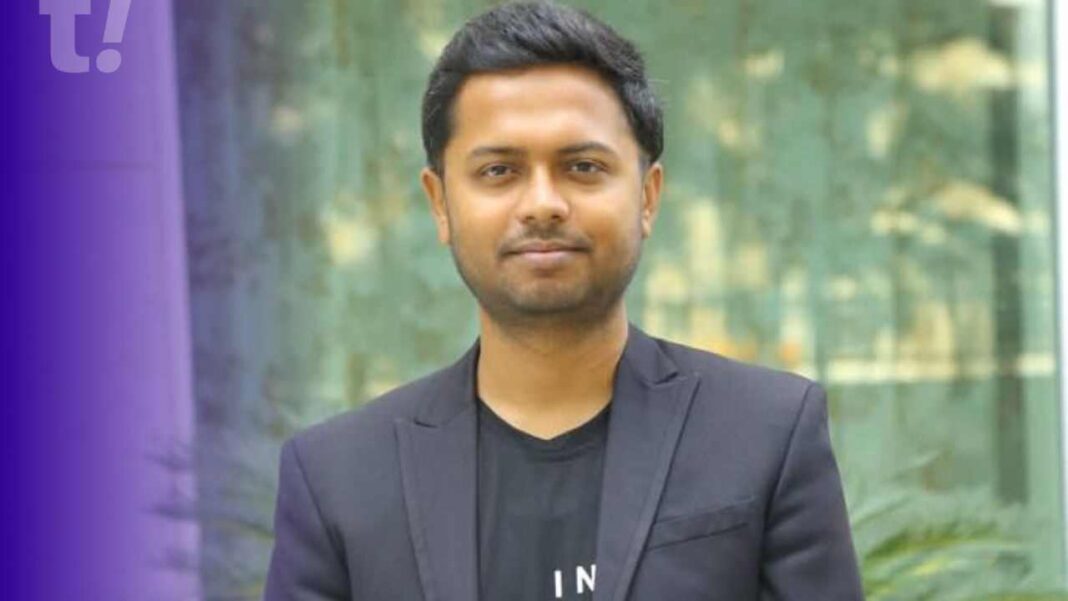
In an interview with Mukesh Sahu, Country Manager for PingBong highlighted how it is effectively addressing global cross-border payment challenges and ensuring Indian businesses receive the necessary support to propel their business growth.

- Advertisement -

Read the complete interview

TechGraph: Can you tell us about Pingpong, and how it sets you apart from other similar companies?

- Advertisement -

Mukesh Sahu: PingPong is a rapidly growing innovative payment service provider for cross-border e-commerce merchants, freelancers, and service providers. Founded by a group of payments and finance professionals in New York in 2015, PingPong has offices in the US, Hong Kong, Luxemburg, Vietnam, Japan, and India. PingPong’s global headquarters are based in Hangzhou, China.

With global employee strength of over 1400, the PingPong team is committed to bringing best-in-class services to our customers and helping them grow their businesses. We are also the first Fintech Company to obtain regulatory access in mainstream countries in Europe and the United States.

- Advertisement -

Cross-border payments are easy with PingPong. Irrespective of your geographical location in India, our team helps your business to grow and expand across all marketplaces around the world. We ease global payment issues and ensure your business gets the support it needs to move to the next level.

TechGraph: How does Pingpong ensure online payment security and protect customer information during cross-border transactions?

Mukesh Sahu: PingPong Global Solutions Inc. (USA) is registered as a Money Services Business with the Financial Crimes Enforcement Network (FinCEN) of the U.S. Treasury, and a non-depository financial institution on the National Mortgage State Licensing System. We have an OPGSP license from the Reserve Bank of India in India.

Wherever we operate, we abide by local rules and regulations and acquire the required licenses. All the necessary steps are taken to ensure the data security of customers.

TechGraph: How does Pingpong ensure that its cross-border payment system is reliable and able to handle high volumes of transactions across different currencies and payment methods?

Mukesh Sahu: PingPong doesn’t use third-party organizations – companies have never heard of – to protect their money. We acquire our own licenses to prevent surprises with your money from happening.

We have partnered with reputable brands such as Citibank, J.P. Morgan, and Wells Fargo. These brands are licensed to operate efficiently, protect customers’ money, and are subject to regulatory and supervisory frameworks across the U.S., Europe, and Asia.

We also provide the highest level of security to keep your money safe including two-factor authentication (personal pin and SMS verification). Moreover, PingPong is the only company that protects customers’ money. No third parties loan us their licenses or services to conduct the business we help you conduct.

TechGraph: What are some of the biggest challenges Pingpong faces in the cross-border payments industry, and how is the company addressing them?

Mukesh Sahu: Cross-border payments present a range of critical challenges that demand immediate attention. In order to facilitate seamless international transactions, the following areas need to be addressed effectively:

Cost – bringing the lowest cost of FX conversion to the customers which in special cases can reach up to less than 0.1% when the volume transacted is high.

Keeping money safe – with so much money being transacted globally, it becomes paramount to ensure high standards in the compliance process to weed out bad actors and ensure a hassle-free experience for the genuine exporter. The idea is to keep money safe for those who transact with us while providing a smooth onboarding and payment experience as well.

Speed – They say time is money, hence this is the third most relevant vertical which needs to be addressed to ensure exporters get their money in the fastest time possible to keep their supply chain operating at an optimal pace.

Interoperability of messaging system – In order to be able to operate with multiple banking channels for collection and remittance, a highly interoperable messaging system is essential. It’s vital that we adopt widely accepted Swift or ISO standards to make it happen.

TechGraph: How does Pingpong minimize transaction fees for your customers when processing cross-border payments?

Mukesh Sahu: We strive to provide competitive pricing to our customers, thereby helping them increase their profit margins. Our goal is to let e-commerce sellers, freelancers, and service providers “Bring Home More Money” with a transparent pricing system. We charge only 1% service provider fees while others charge 2% service fees. Also, we don’t have any third-party involvement which means that money will get transferred directly into the client’s account and that too in your country’s currency.

TechGraph: What are some of the key trends or developments shaping the future of online payment gateways and cross-border payments?

Mukesh Sahu: One of the major developments that have shaped the cross-border payment domain is Neo-banking.

TechGraph: How does Pingpong handle disputes or issues related to cross-border payments, and what measures are in place to ensure that customers are protected and their payments are processed quickly and efficiently?

Mukesh Sahu: In most cases, licensing banks set standards for resolving disputes. Like in the case of traditional offline payments whenever a recall of payment is involved usually the collection banks mandate certain standards of dispute resolution. These standards can involve tracing the source of payments, business details to back a real transaction, and standards for the timely resolution of such issues. We make sure we ascertain those standards to assure our customer’s fair responses are acceptable and compliant with the best practices in the industry.

TechGraph: Can you discuss any recent updates or improvements to your online payment gateway and cross-border payment capabilities that you’re particularly excited about?

Mukesh Sahu: There are multiple ongoing developments in the domain of cross-border payments. UPI is being integrated with multiple payment methods globally. Recently India partnered with Paynow Singapore and is considering over 10 more countries for payment integrations.

UPI is being added as a payment option in the payment gateway by global websites and D2C brands making it easier for Indian customers without a credit card to still order or shop products from global platforms and BNPL is being added as an option by cross-border payments gateways. Digital currency acceptance as an alternate payment option while sourcing products globally are some of the major updates governing the cross-border payment gateway.

THE SNAPSHOTS

Sign up to get quick snaps of everyday happening, directly in your inbox.

We don’t spam! Read our privacy policy for more info.

- Advertisement -
Krishna Mali
Krishna Mali
Founder & Group Editor of TechGraph.

More Latest Stories

More Articles

Roombr Founder Satisha Naraharimurthy On Scalable Digital Learning Beyond Metro Schools

Speaking with TechGraph, Satisha Naraharimurthy, Founder and CEO of Roombr, discussed how schools have spent years adding smart boards, LMS platforms, and different video...

Techugo Appoints Akshay Gupta as Vice President of IT for Global Markets

In a move to expand into new markets, Techugo, a global mobile application and digital transformation company, has appointed Akshay Gupta as Vice President of IT for Global Markets. In his new role, Gupta will lead Techugo’s global IT strategy and oversee the development of...

Foreign Secretary Cooper Denies UK’s Role in U.S. Operation Against Venezuela’s Maduro

The British Foreign Secretary, Yvette Cooper, said the UK was not involved in the...

6 Realities Every Independent Professional Eventually Faces

Choosing to work independently is a dream for many. The freedom to set your...

India Extends Textile PLI Application Deadline to March 31

India has extended the deadline for submission of fresh applications under the Production Linked...

NCB Advises Indian Travellers to Seek Clearance for Carrying Medicines to Saudi Arabia

The Narcotics Control Bureau has advised Indian travellers to obtain the required approvals before...

Bulgaria Becomes 21st Member of the Eurozone

Bulgaria became the 21st nation to adopt the euro as its official currency on...

India, Pakistan Share Details of Prisoners and Fishermen Held in Custody

India and Pakistan today exchanged the lists of civilian prisoners and fishermen in each...

US President Trump Says PM Modi “Knew I Was Not Happy,” Links India’s Russian Oil Import Cuts to Tariff Threats

US President Donald Trump praised Indian Prime Minister Narendra Modi for what he described as a reduction in India’s purchases of Russian oil, linking...

India, Pakistan Exchange List of Nuclear Facilities Under Bilateral Agreement

India and Pakistan today exchanged the list of Nuclear Installations and facilities covered under...

Scaling Conversations: Superbot AI’s Sarvagya Mishra on Building Regional Voice AI for India’s Linguistic Markets

Speaking with TechGraph, Sarvagya Mishra, Founder and Director of Superbot, discussed how India’s shift...

Vimal Singh on ReadyAssist’s Role in Modernising Roadside Assistance in India

Speaking with TechGraph, Vimal Singh, Founder of ReadyAssist, discussed how traditional roadside assistance models...

When Cybersecurity Tools Break the System: The Hidden Risk Behind Digital Defenses

Cybersecurity solutions are designed to protect businesses from threats, but increasingly, these very tools...

Rewiring Academic Research: MBU’s Dr. T.V.V. Satyanarayana on How IECom Is Shaping India’s Intelligent Electronics Agenda

Speaking with TechGraph, Dr. T.V.V. Satyanarayana, Professor at Mohan Babu University (MBU), discussed how IECom-2025 was curated not as a traditional academic conference but...

Building a Future-Ready Portfolio in a Digitally Driven Economy

The rapidly changing investment landscape in India has the nation's fast-growing digital economy at its center. Technology is affecting how companies operate, how consumers behave, and how investors, especially retail ones, should think about the future of their portfolios. This isn't about making life easy...

Why BFSI Needs Generative AI, Not Rule Engines

The Banking, Financial Services, and Insurance (BFSI) sector has been using rule engines for...

How Unified Intelligence Is Transforming the Future of Device Security

Device security has always been a balancing act; protecting sensitive data without slowing the...

Serhiy Tokarev on the Four Hidden Advantages of the CEE Startup Ecosystem

Central and Eastern Europe (CEE) has changed a lot in the last ten years....

How Self-Service Analytics Is Reshaping Everyday Business Decisions

For years, analytics ran on a predictable cycle. Business teams raised requests and waited...

How can mid-career professionals transition into AI-assisted roles without going back to college?

Artificial intelligence is reshaping industries worldwide, from healthcare to finance, marketing, logistics, and education....

Adda247’s Bimaljeet Singh Bhasin on Career247 and the Push for Job-Ready Education

In an interview with TechGraph, Bimaljeet Singh Bhasin, CEO of Skilling and Higher Education...

Dr Kamal Chhabra on KC GlobEd’s Approach to Global Finance and Accounting Education

Speaking with TechGraph, Dr Kamal Chhabra, Founder and CEO of KC GlobEd, discussed how...

Rethinking Medical Training: MedLern Co-founder Deepak Sharma on Digital Resuscitation Learning and Patient Safety

Speaking with TechGraph, Deepak Sharma, Co-founder and CEO of MedLern, discussed how traditional instructor-led...

India’s AIF Shift: Steptrade Capital’s Kresha Gupta on the Evolution of Alternative Investments in India

Speaking with TechGraph, Kresha Gupta, Director and Fund Manager at Steptrade Capital, discussed how...

Vimal Singh on ReadyAssist’s Role in Modernising Roadside Assistance in India

Speaking with TechGraph, Vimal Singh, Founder of ReadyAssist, discussed how traditional roadside assistance models...

Enterprise Blind Spots: 3 Cubed’s Shammik Gupta on Building a Digital Twin for Real Operational Clarity

Speaking with TechGraph, Shammik Gupta, Founder of 3 Cubed, discussed how enterprises invested in...

Why Solar Panels Are a Worthwhile Investment

With the increasing urgency to transition to sustainable energy sources, investing in solar panels...

Democratising Tech: The AI Revolution Across India’s Healthcare and Finance Sectors

A historic shift is sweeping through India: technology is no longer confined to metro...

Ensuring Your Building is Technologically Modern and Eco-Friendly

In the contemporary world, where the balance between innovation and sustainability is paramount, modernizing...

When Cybersecurity Tools Break the System: The Hidden Risk Behind Digital Defenses

Cybersecurity solutions are designed to protect businesses from threats, but increasingly, these very tools...

Rethinking Medical Training: MedLern Co-founder Deepak Sharma on Digital Resuscitation Learning and Patient Safety

Speaking with TechGraph, Deepak Sharma, Co-founder and CEO of MedLern, discussed how traditional instructor-led...

Home Improvements That Benefit You Today and Boost Value Tomorrow

When it comes to home improvements, the best upgrades are those that provide immediate...

India’s AIF Shift: Steptrade Capital’s Kresha Gupta on the Evolution of Alternative Investments in India

Speaking with TechGraph, Kresha Gupta, Director and Fund Manager at Steptrade Capital, discussed how...