


spot_img

Inside ZET’s Credit Inclusion Strategy: Manish Shara on FD-Backed Cards and Building Healthy Credit Habits Across India

Date:

Trending

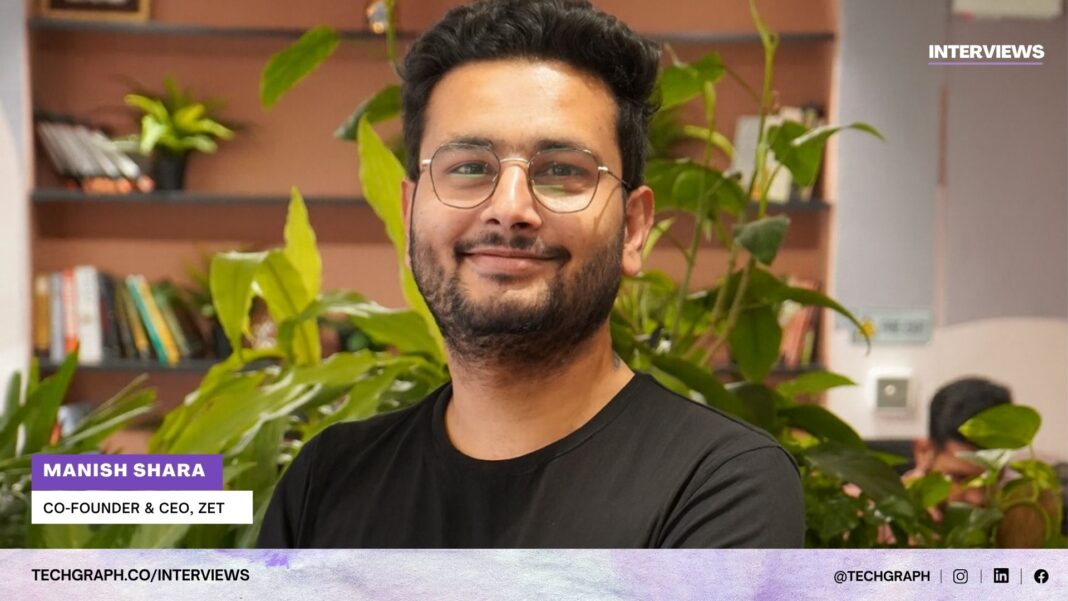
Speaking with TechGraph, Manish Shara, Co-founder and CEO of ZET, said the company is helping first-time credit users in smaller cities build confidence in formal finance through its FD-backed credit card, which guarantees approval without income proof and secures the limit with an RBI-insured deposit.

- Advertisement -

He added that ZET’s partnership with SBM Bank supports its long-term vision of combining repayment-based credit building with alternative data insights to create a fairer and more inclusive credit ecosystem for underserved Indians.

Read the interview in detail:

- Advertisement -

TechGraph: Many first-time credit users in Tier 2 and Tier 3 cities often see credit cards as risky or inaccessible. How do you break through that mindset and build trust with them around a product like the SBM ZET Credit Card?

Manish Shara: Trust begins with simplicity and clarity. For many new users, credit cards can seem complex, with hidden charges or rejection risks. With an FD-backed card like the SBM ZET Credit Card, we change that perception by eliminating uncertainty. There is no income proof required, and the user’s own RBI-insured FD secures the card, eliminating the risk of rejection.

We also focus on guidance by explaining repayment cycles and credit utilisation by sending reminders, and showing users how responsible usage can improve their credit score. In addition, the card is designed to be convenient with UPI payments on RuPay, as well as discounts and cashback on top brands. This combination makes the product less intimidating and helps build confidence that credit can be a safe, transparent, and useful tool.

- Advertisement -

TechGraph: With traditional banks tightening their lending to customers with thin or weak credit files, where do you see ZET fitting into the larger credit ecosystem, especially as India’s consumption story grows outside metros?

Manish Shara: We see ourselves as the on-ramp for those left out of the formal credit system. Traditional banks are cautious with thin-file customers, but the demand for credit in Tier 2 and Tier 3 is rising faster than ever. The SBM ZET Credit Card provides a responsible bridge: consumers get access without overexposure, and lenders see secured, low-risk growth. By taking this route, ZET complements rather than competes with banks by expanding the pool of credit-ready borrowers who can later graduate to unsecured products.

TechGraph: Credit scores are often seen as abstract numbers for new-to-credit individuals. How is ZET translating these insights into something tangible that users can act on to improve their financial profile?

Manish Shara: We focus on making credit scores actionable. Instead of simply presenting a number in isolation, we connect it to everyday behaviour. For example, users can see how paying a bill on time improves their score, or how over-utilising their credit limit may drag it down.

We provide practical tips, simple explanations, and even AI-powered video analyses of their credit report. Data from our own users shows that  100% of all new-to-credit customers reach a 700+ score within their first 30 to 45 days of responsible use. This turns the score into a progress tracker that helps users understand what to do next to strengthen their financial profile.

TechGraph: Partnerships like your co-branded card with SBM show fintechs and banks working together rather than competing. What challenges do you face in aligning the speed of a fintech with the regulatory caution of a traditional bank?

Manish Shara: The pace of product development at a fintech is always faster, while banks operate with the highest degree of caution to ensure greater compliance, which in turn results in relatively longer processes. When it comes to partnerships like ours, this balance works well.

While the bank, as the regulated entity, carries the primary responsibility for compliance in the eyes of regulators, we also work closely to align our processes with the same standards. This creates a natural system of checks where fintechs bring agility and innovation, and banks bring guardrails and stability. Together, it helps deliver products quickly without compromising on trust or regulatory requirements.

TechGraph: India’s financial inclusion narrative has been ongoing for years, but access doesn’t always translate to usage. How is ZET ensuring that customers actually build healthy credit behaviours instead of just gaining access to credit?

Manish Shara: Access is only the first step. Usage with discipline is what creates long-term change. Our design goes beyond issuing cards. We build in nudges, education around billing cycles and utilisation, and celebrations of milestones like an increase in credit scores. This makes the journey feel progressive and positive.

We also support customers in protecting their financial health, whether through fraudulent loan detection or helping them report and resolve errors in their credit reports with bureaus. Our recent nationwide study on credit score awareness found that while many still face barriers to access, an equally big challenge lies in understanding and using credit responsibly. By combining access with reinforcement, we ensure that inclusion leads not just to more cards, but to healthier habits

TechGraph: As more fintechs move into the secured credit card and credit-building space, how do you see ZET differentiating itself, both in terms of product design and user experience?

Manish Shara: Our differentiation is twofold. First, the FD-backed SBM ZET Credit Card is designed to be inclusive, with no income proof required, guaranteed approval, a lifetime free structure, and full RuPay-UPI functionality. It works seamlessly for daily transactions such as QR payments, bill payments, and discounts and cashbacks on purchases from top brands. Second, we prioritise experience.

From intuitive onboarding to transparent communication and 24/7 digital support, the user journey feels easy, intuitive,  and empowering. While others may view secured credit as a stopgap, we see it as the foundation for trust and long-term engagement.

TechGraph: Looking ahead, do you believe credit score building will remain product-led through cards and loans, or do you see a future where alternative data sources reshape how lenders evaluate millions of underserved customers?

Manish Shara: Both approaches will continue to evolve in parallel. Products like FD-backed cards remain the most proven way to establish a repayment record, and they will remain the backbone of credit score building. At the same time, alternative data such as digital footprints, utility payments, and behavioural signals will increasingly shape how lenders assess risk.

The future of inclusion lies in combining the two: reliable repayment products that anchor trust, supported by new data sources that expand coverage. We are constantly working on developing novel products that help consumers strengthen their profiles in practical, transparent ways. Together, these shifts can create a richer and fairer picture of creditworthiness for underserved Indians.

THE SNAPSHOTS

Sign up to get quick snaps of everyday happening, directly in your inbox.

We don’t spam! Read our privacy policy for more info.

- Advertisement -

Support our independent journalism PayPal (Outside India) For PayU (For Indian Readers).

Krishna Mali
Krishna Mali
Founder & Group Editor of TechGraph.

More Latest Stories

More Articles

Meta Declares Quarterly Cash Dividend Of $0.525 Per Share

Facebook parent company, Meta Platforms Inc. (NASDAQ:META) said its board of directors has declared a quarterly cash dividend of $0.525 per share on its...

Lok Sabha: Government releases ₹68K crore under MGNREGS; wage payments routed via DBT

New Delhi, India: Union Agriculture Minister Shivraj Singh Chouhan said the government has released 68,393.67 crore rupees to states and Union Territories under the Mahatma Gandhi National Rural Employment Guarantee Scheme (MGNREGS) in the current financial year 2025-26. In a written reply in the Lok...

The Evolving Classroom: Venkateshwar International School’s Pooja Sharma on Changing Role of Schools in Delhi’s CBSE Ecosystem

Speaking with TechGraph, Pooja Sharma, Vice Principal of Venkateshwar International School (VIS), discussed how...

Digital Generics: How AI is Redefining the Future of Affordable Medicine

It was with pride that global headlines described India as the world's pharmacy, supplying...

Why NoSQL Databases Are the Future for Tech Startups

In today’s digital-first economy, tech startups continue to dominate the startup landscape. A startup...

Delhi IGI Airport Revamped Terminal 2 with Advanced Baggage screening systems

Delhi’s Indira Gandhi International Airport (IGI) has reopened its reconstructed Terminal 2, inaugurated by...

The Rise of the AI Agent Economy: How Voice AI Agents Are Becoming the New Frontline Workforce For Call Centers

The work inside a call center has always depended on two things: speed and...

The Road to Equality in Tech: Women In Cloud’s Chaitra Vedullapalli on Reshaping Opportunity for Women Entrepreneurs Globally

In an interview with TechGraph, Chaitra Vedullapalli, Co-Founder of Women In Cloud, discussed how...

Understanding What Makes Sunscreen Truly Effective

Many people pick a sunscreen merely based on its SPF, thus they think that a higher number means better protection. However, SPF is only...

How AI is Improving Risk Management Among Crypto Traders

Over the past few years, the role of Artificial Intelligence in almost every sector...

The AI Advantage: How Intelligent Learning Solutions Are Rewriting Workforce Productivity in 2025 and Beyond

In 2025, artificial intelligence is no longer a futuristic concept — it’s the invisible...

Bajaj Financial Securities Acquires Stake in Lemnisk from Early Investors

Bajaj Financial Securities has acquired stakes in Bengaluru-based customer data platform Lemnisk through a...

The Rise of Cyber Cartels: How the Dark Web Fuels Digital Extortion?

In 2025, cybercrime has evolved beyond individual hackers or little ransomware criminal gangs into...

AI Research Startup Redrob Draws $10 Mn In Series A Funding Led By Korea Investment Partners

AI research startup Redrob has secured $10 million in its Series A round led by Korea Investment Partners with KB Investment, Kiwoom Investment, Korea...

The Future Employability Equation: PrepInsta’s Manish Agarwal on How AI Is Reshaping Student Readiness for Hiring in India

Speaking with TechGraph, Manish Agarwal, Co-Founder of PrepInsta, discussed how the increasing adoption of AI-led assessments and automated hiring platforms is shifting campus recruitment away from reliance on pedigree and location toward a more merit-driven model that values consistency, analytical reasoning, and practical application...

Norovex Review: Inside the Trading Platform Gaining Momentum

The online trading industry has entered one of its most dynamic periods in years....

Why Zero Code Exposure Is the Future of Trust in AI

AI coding assistants have quickly become indispensable for developers, promising faster deployment, cleaner code,...

Trump Says He Will Sue BBC Over Edited Broadcast of Jan 6 Speech

US President Donald Trump has said he plans to take legal action against the...

Starbucks Baristas Rally in New York as Strike Over Pay and Staffing Extends Nationwide

Starbucks baristas rallied in New York City as part of an open-ended strike that...

Demystifying Private Equity Market: WWIPL MD Krishna Patwari on Expanding Retail Access to India’s Unlisted Ecosystem

Speaking with TechGraph, Krishna Patwari, Founder and Managing Director of Wealth Wisdom India Pvt....

The Aesthetic of Longevity: Aesthetica’s Tanisha Bansal Gokharu on Redefining Luxury Home Interiors

Speaking with TechGraph, Tanisha Bansal Gokharu, Founder and Principal Designer at Aesthetica, discussed how...

Empowering Creators: Studiobackdrops’ Archisman Misra on Making Professional Production Accessible Across India

Speaking with TechGraph, Archisman Misra, CEO and Founder of Studiobackdrops, discussed how India’s fast-growing...

Trade Gaia Emerges as a Key Player in Global Altcoin Trading

While Bitcoin continues to dominate headlines, the real growth in 2025 is coming from...

The Conversation Shift: Doceree CRO Thomas Shea on Making Healthcare Marketing More Relevant for Physicians

Speaking with TechGraph, Thomas Shea, Chief Revenue Officer (CRO) at Doceree, discussed how artificial...

Bajaj Financial Securities Acquires Stake in Lemnisk from Early Investors

Bajaj Financial Securities has acquired stakes in Bengaluru-based customer data platform Lemnisk through a...

Digit Life Insurance posts 31% rise in H1 FY26 revenue to ₹858 crore

India-based, Go Digit Life Insurance said its revenue for the first half of FY...

Debt Recovery Reinvented: Collectedge’s Ranjan Agarwal on Reshaping India’s Collections Ecosystem for Lenders

Speaking with TechGraph, Ranjan Agarwal, CEO and Co-Founder of Collectedge, discussed how India’s debt...

AI as a Growth Multiplier: How Smart Companies Accelerate Without Breaking

In today’s business environment, smart growth is just as important as any other form...

Beyond Price Points: Unix India’s Imran Kagalwala on Redefining Consumer Expectations in the Mobile Accessories Market

Speaking with TechGraph, Imran Kagalwala, Co-founder of Unix India, discussed how a crowded accessories...

The Rise of Cyber Cartels: How the Dark Web Fuels Digital Extortion?

In 2025, cybercrime has evolved beyond individual hackers or little ransomware criminal gangs into...

Trade Gaia Emerges as a Key Player in Global Altcoin Trading

While Bitcoin continues to dominate headlines, the real growth in 2025 is coming from...

How Fleet Maintenance Scheduling Supports Business Vehicle Performance

Managing a fleet of vehicles can be challenging for any business. From delivery vans...

The Conversation Shift: Doceree CRO Thomas Shea on Making Healthcare Marketing More Relevant for Physicians

Speaking with TechGraph, Thomas Shea, Chief Revenue Officer (CRO) at Doceree, discussed how artificial...