


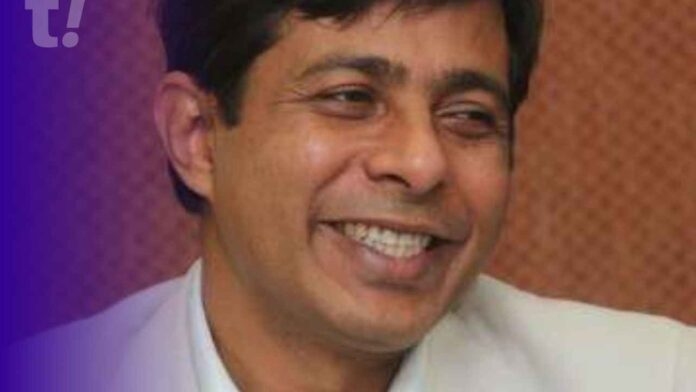

On Monday morning, Sandeep Chachra, Executive Director, of Action Aid sat down with the TechGraph editorial team for a wide-ranging interview. This was to understand Action Aid’s journey, how it empowers women through innovative programs and more.
Read the complete interview here.
TechGraph: How does ActionAid India ensure transparency and accountability in its operations and funds use?
Sandeep Chachra: At ActionAid Association we are mindful of the need to protect and promote the organization’s credibility and accessibility by ensuring transparency and accountability to the greatest degree possible. This extends both to operations or what we call program work and the funds that we raise. These funds are given to us by individuals, foundations, corporate social responsibility, governments, and other donor organizations. In terms of our work, it starts with an annual planning and review process and has a 360-degree aspect to it.
These processes start with engagement with the communities we work with and serve. These processes are led by staff and feed into collective processes, structures, and systems, overseen by a general assembly and governing board composed of social movement leaders, academicians, senior activists, media persons, and retired bureaucrats.
Thus all the work we do is planned and reviewed in two cycles, one as an annual collective process and the second in terms of the project cycle with an inception workshop, a mid-term review, and an end term-review. The organization as a whole subject itself to a strategic review and planning process every five years. All these processes start with community engagement and reporting.
On the financial side, we have robust internal and external financial audit systems that help us fulfill statutory needs and processes and build the confidence of all staff, associates, and supporters. 360-degree aspects are also taken into account here, especially when relief material is distributed. Transparency boards clearly show to all concerned at the distribution site what is being distributed and at what price each item was purchased. Feedback forms and complaint boxes are kept to collect feedback from communities.
Our communication policy is to welcome and reply to all queries we receive from any quarter. We see that as part of our accountability to the communities we serve and the supporters and partners we work with.
TechGraph: How has the COVID-19 pandemic impacted ActionAid India’s work, and what measures have been taken to adapt to these challenges?
Sandeep Chachra: The COVID-19 pandemic has reversed many of the development advances that our country has made in the past. Our national survey “Workers in the Tome of COVID-19” highlighted acute distress among informal workers, especially migrant workers, with extremely high levels of livelihood loss (78%) and indebtedness (53%). More than half of the migrant workers reported that they were stranded for over a month and nearly three-fifths said that they had to vacate their housing during the lockdown.
As an organization, we also faced many challenges due to restrictions on movement and COVID-related constraints. However, we witnessed the most heartening aspect of our work. Community-based volunteers from across the country, many of whom themselves are survivors of adversity and violence and from marginalized and vulnerable backgrounds took the initiative to help vulnerable people in their communities.
We had the privilege of having the support of almost 50,000 volunteers in alliance with almost 800 NGOs, community-based organizations, and thousands of youth groups and other community-based formations. Working alongside them we were able to multiply rapidly our efforts to reach the people most in need across geographies. Talat was among the survivors of the Gauravi – One-Stop Crisis Centre.
We trained Talat to drive an auto rickshaw as part of a drive to make survivors financially independent. During the pandemic, Talat and others delivered vital supplies and emergency aid to vulnerable people in Bhopal. Similarly, the pandemic relief efforts of the women acid attack survivors who own and run Orange Café are truly inspiring. Orange café was inaugurated in February 2020 and within a month of the café’s inauguration, the pandemic was imposed.
Amid the unfolding COVID-19 pandemic, the acid attack survivors running the Orange Café decided to continue serving food, not to paying customers but to support the most vulnerable communities living in the city. It was also heartening to see the dedication and commitment of the youth volunteers from Antaranga in Kandhamal district in their disaster relief efforts during various natural disasters and during the pandemic.
In the aftermath of communal violence in the Kandhamal district of Odisha in 2008, a youth mobilization platform called Antaranga was started in the district with support from ActionAid Association and other civil society organizations in collaboration with the district administration.
Since then, Antaranga has been working towards mobilizing youth for peace and communal harmony. It has also channeled its energies towards sustainable, equitable, and rights-based development of communities in the district. In the wake of the COVID-19 outbreak, Antaranga and Jagruti initiated awareness campaigns among local communities on how to prevent infection spread, starting on March 10, 2020.
Jagruti is a grassroots-based civil society organization who were part of the group that founded the Antaranga youth platform. To prevent the spread of the virus in the district, the Antaranga volunteers have been working towards building resilience among communities in close collaboration with the district administration.
Our bottom-up planning and review processes and our extensive network helped us overcome all challenges and deliver significant support to communities across the country. In the early stages of the pandemic and the lockdown, we provided rations, food, sanitation supplies, and income support to vulnerable families. We also established migrant worker helpdesks and awareness campaigns.
Through our direct actions, we reached over 23 lakh individuals in 2020. By supporting local administrations and linking people with government entitlements we ensured support for another 53 lakh. In the second wave, needs changed. While we continued to reach out to people through direct support in the form of rations, food, and cash assistance, we also had to focus our efforts on saving lives and strengthening public health infrastructures.
We set up 23 COVID care centers, and two oxygen plants, and provided 6,700 oxygen concentrators to 435 hospitals and Community Health Centres across the country. Recognizing the importance of prevention and vaccinations we have run COVID protocol awareness campaigns that have reached over 18 lakh people and vaccination drives that have reached over 16 lakh individuals. We have assisted almost 1.3 lakh people vaccinated so far. We were also actively involved in providing information to people regarding COVID, treatment facilities, free food services, and psychosocial counseling through our helplines. So far, our direct relief efforts have reached over 26 lakh people.
While funding constraints are something the social sector faces, including us we have been fortunate with the support extended to us by old and new supporters and partners. In many cases, partners have extended their work from the supply of relief materials to more long-term livelihood support. It, of course, remains a challenge to secure funding support for rights-based development work, but we continue to reach out for support from individuals, CSR funds, foundations, and donor organizations and we have been able to achieve significant success.
TechGraph: How does ActionAid India involve and empower women and marginalized groups in its programs and decision-making processes?
Sandeep Chachra: India is recognized for its diversity. The tragedy is that as a society and as a nation we do not celebrate these diversities or leverage the varied wisdom they contain. We do not remember that these diversities are compounded and confounded by hierarchies. Economic class, gender, caste, and minority religions lay behind these inequalities, which are perpetuated by discrimination, oppression, and violence. The question we also need to ask, as individuals and collectives is whether we do what is needed to break these hierarchies and end the social practices that support them.
The Constitution of India, our laws, and numerous schemes provide a robust legal and policy framework within which we can celebrate diversity and promote inclusion. The need is to change social attitudes and practices. ActionAid Association seeks all opportunities to engage with and participate in initiatives to further this cause.
Over the past few decades, community-based human rights defenders, community-based organizations, and district-level, state-level, and national-level platforms have created meaningful moments of change and lasting impact on their status and condition.
ActionAid Association strives to be a feminist organization. Our understanding of the crisis we face and the path to resolving it is clear. However, it requires some introspection, vigil over self, and constant effort. We see that women face discrimination, oppression, and violence in society stem from patriarchal structures and processes in society.
At the basic level, gender equality lies in promoting women’s livelihood, right to work, and right to property. In the world of work, women face the overwhelming burden of care work, alongside underpaid and undervalued contributions and a lack of equal opportunity.
We have seen that the promotion of women’s livelihoods and feminist solidarity economies through women’s collective enterprise creates new avenues to sustainable incomes and builds gender equality. However, feminist solidarity economies is not without challenges.
Women from vulnerable communities find it difficult to sustain economic enterprises, even micro-enterprises. By building collectives, getting training and exposure visits, receiving start-up support, creating market linkages, and accessing policies and schemes, women can overcome all challenges. Moving from strength to strength, women in feminist solidarity economies can provide life-transforming support to their sisters, and society as a whole.
TechGraph: What role does gender justice play in ActionAid India’s work, and how does the organization address gender-based violence and discrimination?
Sandeep Chachra: As an organization that seeks to be a valued partner for all who seek to build a better world, ActionAid Association also puts itself under the scanner. We strive to create an organizational culture that ensures equal opportunity for everyone, irrespective of caste, class, race, age, gender, sexual orientation, color, disability, location, and religion.
Since the early 1990s, ActionAid Association has zero tolerance for sexual harassment. This predates the Supreme Court of India’s Vishakha Guidelines of 1997 and the Protection of Women from Sexual Harassment Act promulgated in 2013. Grievance redress mechanisms and anti-sexual harassment committees are well established. While confidentiality is ensured, the board, the management, and the wider leadership of the organization remain updated on all proceedings of these bodies.
ActionAid Association instituted vacation and leave for six months. It was only in 2017 that the Maternity Benefit Act was amended to increase maternity leave from 12 to 26 weeks. We commit to creating an inclusive organization the path towards maximum diversity among our staff will also be monitored and evaluated. Over half of the ActionAiders come from diverse backgrounds. This is made possible through specific provisions, including affirmative action, in organizational policies, strategies, norms, and guidelines. Women and candidates from socially diverse backgrounds get a 10% weightage in recruitment.
As an organization that nurtures all individuals and promotes a shared value system, ActionAid Association can respond to people’s needs more effectively. As mentioned earlier, this was what enabled us to roll out the humanitarian response to the COVID-19 pandemic starting in March 2020, which in some ways is continuing. We believe that celebrating diversity and promoting inclusion is not just the right thing to do, it makes us more effective as collectives, as a society, and as a nation.
TechGraph: How does ActionAid India work towards building sustainable and resilient communities, and what initiatives has the organization taken to mitigate climate change?
Sandeep Chachra: We strongly believe that climate change cannot be addressed without furthering the idea of climate justice. The costs of ecological distress and climate change are frontally and disproportionately borne by those lowest in class, caste, and gender hierarchies, and it is on these shoulders that the burden of climate action is also passed on. Climate justice requires us to take an intersectional approach to the climate crisis. Poverty compounds the effects of historically rooted sources of social marginalization (age, gender, caste, and class exclusion or cultural and religious othering), making marginalized communities more vulnerable to climate change impacts. Social justice, then, should not remain an add-on to climate action but should be a central component of any climate adaptation design.
Climate action must prioritize locally-led and people-centric mitigation and adaptation solutions. Climate-change discourse has long been elitist, focused on energy transitions and macroeconomic carbon intensity. Instead, we must recognize vulnerable communities’ silent and unassessed contribution to climate action. These include indigenous communities, fisherfolk, pastoralists, and many informal workers such as waste pickers. These communities continue to provide ecological services, protect carbon sinks in the form of natural resources and provide waste management services. We need to help these communities deliver these services with dignity and respect for their rights.
ActionAid Association was part of a global campaign to institute the “loss and damage fund” announced at COP 27 in Egypt. We need to take advantage of this advance to make on-ground support to developing countries that are particularly vulnerable to the adverse effects of climate change. While it should be emphasized that calls for compensation at international climate negotiations are an extension of calls for reparations, both are intrinsically linked to the language of the climate debt.
We need to start building national frameworks for loss and damages about compensation and reparations due to the impact of climate change. This is faced by workers and peasants, and other communities including pastoralists, fisherfolk, tribal and other communities dependent on natural resources.
We also need to recognize, celebrate and enable those communities who play the role of custodians of ecological resources and those communities who provide ecological services. We need to create a system by which payments for ecosystem services can provide them with benefits and do what they do to mitigate climate change better. We are undertaking research and campaign work to promote these aforementioned issues.
TechGraph: In your opinion, what is the most pressing issue facing marginalized communities in India today? How is ActionAid India addressing this issue through its programs and advocacy efforts?
Sandeep Chachra: Firstly we need to recognize our many achievements. At a time when almost every country across Asia, Africa, and Latin America has witnessed military dictatorships, Indian democracy has never faltered. This is despite a few challenges, especially in 1975. Secondly, the Indian economy demonstrates healthy diversification across all sectors with a strong base.
Our control over financial systems has helped us weather crises that have overwhelmed other economies. We have gained significant advances in poverty alleviation, and hunger and famine are now crises of the past. We have an extensive welfare system in place, and the survey of informal workers during COVID-19 mentioned earlier shows that the PDS was the source of rations for most of our respondents.
Despite this progress, we also must recognize the continuing structures of discrimination and deprivation that many communities and sections face. We need to acknowledge that marginalized communities and minorities, including Dalits, Adivasis, Muslims, women, landless labor, small farmers, and informal laborers, still struggle for dignity. Gender inequalities continue to be a reality despite strides made in closing the gap in access to essential services and changes in gender norms such as child marriage or son preference.
ActionAid Association builds on the resilience and capacities of vulnerable communities to enable them to face adversities. We also seek to build better and equal futures for all through people-led action. We need to recognize how India’s people are a significant source of strength for the country.
People’s diversities can be seen in faith, languages, and ways of living; this lived wisdom is an invaluable resource. At ActionAid Association, our core belief is in the power of positive and sustainable change that lies in vulnerable communities. Our mission is always to enable and support their protagonist. We believe diversity and our people are our biggest strengths. ActionAid Association focuses on finding resolutions to the problems of vulnerable communities through human-centered and participatory programs and campaigns.
TechGraph: How does ActionAid India envision the future of its work, and what are the organization’s priorities moving forward?
Sandeep Chachra: We have very ambitious plans for the future. These are based on the learnings we have gained from past achievements. We want to expand further by encouraging communities to work with local administrations to protect children from child labor, child marriage, and trafficking. We want to work with education departments to strengthen public education and ensure that communities also step up and collaborate with local administrations to ensure that children’s teaching and learning experience is meaningful and provides security for all children’s well-being and better futures.
We want to launch a campaign celebrating women in the world of work, protecting their property rights, and encouraging men and boys to share in care work, which continues to fall unfairly on the shoulders of women and girls. In rural areas, we believe that feminist solidarity economies, by which we mean all forms of collective enterprise in the farm and non-farm sector, which is gender-sensitive, can go a long way in easing rural crises.
We need to recognize that the meteoric rise in industrial productivity and profits has not resulted in equal changes in workers’ well-being. There is, of course, the aspect of jobless growth and the growing formalization of the world of work – a rollback on workers’ rights, including a fair wage and dignity in labor processes. We want to promote dignified work, fair wages, decent working conditions, and social security. We would like to explore how we could make the right to work a meaningful right for all.
In urban areas, too, collectives of informal workers with gender sensitivity and feminist leadership can make a long way in helping workers access social security. This will create livelihood opportunities. These collectives can also make a long way in helping secure the right to the city and the city we need now. These are all ideas calling for ensuring that our cities are inclusive and protective of the rights of the most vulnerable of its inhabitants.
In the face of rising contestations over identity and culture, we also want to promote equality, justice, and social harmony. We feel that a better future for all can only lie in a world where no one faces the burdens of history and discrimination.
In an increasingly fragile world where climate change impacts vulnerable communities that are least responsible for greenhouse gas emissions, we want to help transition to climate justice. This calls for setting up a National Framework for Climate Change-Induced Loss and Damage. This would include not just a fund to compensate for loss and damage but also a framework for assessing and computing damage. At the global level, of course, this needs to be supported by a fund to which the most industrialized nations should contribute.
We would also like to campaign to encourage vulnerable communities to take up the custodianship of ecological resources. This is because their lifestyle has protected these precious resources for centuries. Furthermore, we will campaign to secure the dignity of labor and livelihood for all those who provide ecological services – these include rag pickers, waste recyclers, small farmers, and agricultural laborers practicing agroecology.
Mindful of how our planet has been revealed to be increasingly fragile due to uncontrolled, over-extractive, and over-polluting industrial processes, we need to promote the environment and ecosystems as the Global Commons, not just for humankind but for all life on Earth.
Finally, recognizing how conflict and climate change are making more and more people leave their homes and, in some cases, cross borders, we will campaign to make this world more welcoming of refugees and migrants. As mentioned before, our plans are ambitious. Still, we see them as the need of the hour and provide a strategic vision to help ensure our everyday interventions resonate with a broader goal.