

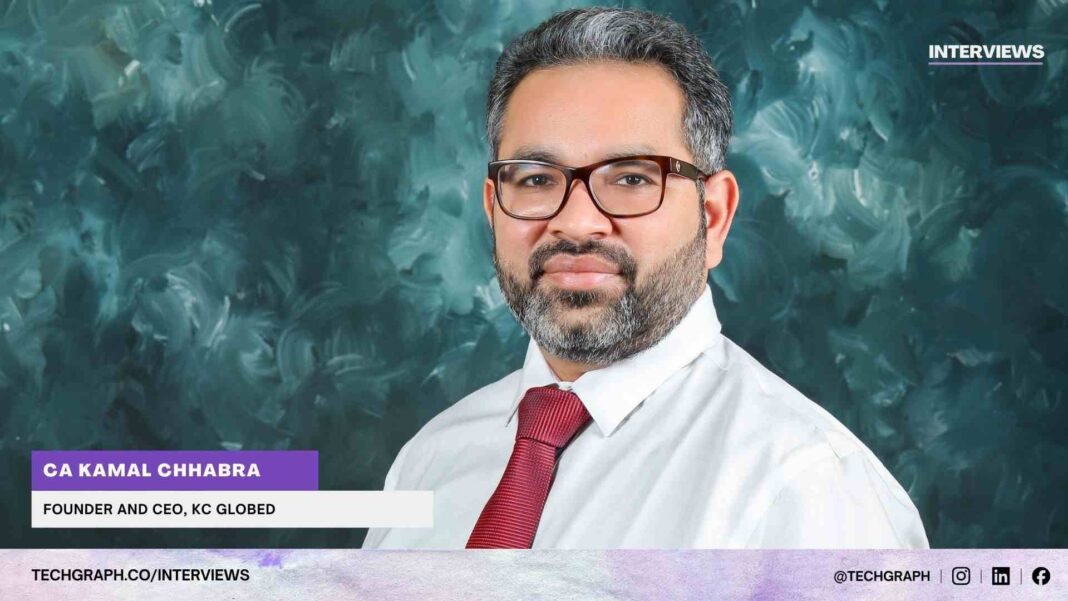
Speaking with TechGraph, Dr Kamal Chhabra, Founder and CEO of KC GlobEd, discussed how traditional classroom and franchise-led models in global finance and accounting education are finding it difficult to keep pace with changing learner expectations, and how the company is positioning itself as a credible alternative by integrating physical learning centres with a standardized, technology-led academic framework.
Chhabra also spoke about how KC GlobEd operates a hybrid ecosystem in which its franchise network is closely aligned with an AI-powered learning platform, allowing students across locations to access consistent content, analytics, and mentorship, while helping the institution improve learning outcomes without compromising the rigor and credibility associated with global certifications.

Read the interview in detail:
TechGraph: The global certification market in finance and accounting has long been dominated by conventional classroom and franchise-led models. What, in your view, has fundamentally changed in that system, and how is KC GlobEd positioning itself as a credible alternative rather than just another digital layer?
DR Kamal Chhabra: Classroom and franchise-led models have played a critical role in shaping finance education. They brought structure, accountability, and local accessibility. The one thing that has shifted is the manner in which today’s students want to learn. Learners today want flexibility, personalization, and equal access, no matter where they are. Legacy systems have a tough time providing that consistency at scale.
KC GlobEd has changed this model into a hybrid ecosystem. We operate 80+ franchise centers, but each one is fully integrated with our AI-powered learning platform. That means a student walking into a center in Ahmedabad or logging in from Dubai experiences the same quality of content, analytics, and mentorship.
The local presence provides touchpoints and guidance, while the digital platform ensures standardization, efficiency, and personalization. We’re not replacing physical learning, we’re reimagining it with technology at the core.
TechGraph: Despite the surge in demand for qualifications like ACCA, CFA, and CPA, global pass rates remain stubbornly low. Does this reflect shortcomings in the way candidates are prepared, or does it say something deeper about the certification ecosystem itself, and where does KC GlobEd intervene in that cycle?
DR Kamal Chhabra: The exams are designed to be rigorous, and that’s important for credibility. But preparation methods haven’t evolved enough. Many students are still taught in a one-size-fits-all format, which doesn’t reflect their individual strengths and gaps. That’s why pass rates remain low despite more candidates entering the system.
At KC GlobEd, our T.E.E.E technology personalizes preparation. The platform identifies where each student is slipping, adapts their study plan, and provides continuous feedback. It makes the preparation smarter, so effort is directed where it’s needed most. We see our role as improving outcomes without diluting the global standards of these exams.
TechGraph: As professional bodies revise their syllabuses to include themes such as ethics, technology, and sustainability, how ready is a platform like KC GlobEd to adapt meaningfully to these shifts while avoiding token or surface-level inclusion?
DR Kamal Chhabra: Curriculum changes are an opportunity & not a challenge. When themes like sustainability or data analytics enter the syllabus, we don’t limit ourselves to adding notes. We work with domain experts to create applied modules, case discussions, and interactive content that show how these ideas work in real businesses.
TechGraph: The ed-tech sector has been under scrutiny after years of rapid expansion followed by corrections in credibility and sustainability. What hard lessons has KC GlobEd absorbed from this phase, and how has that shaped the way you define growth?
CA Kamal Chhabra: The sector grew fast, but in many cases, growth was measured in sign-ups and valuations, not outcomes. That led to a credibility gap. Students want results & not promises. We’ve shaped our definition of growth differently.
For us, credibility comes from higher pass rates, stronger employability, and transparent pricing. That’s why we built an all-access subscription model instead of multiple upsells. Growth for us is not confined to how many learners join, but how many succeed and move into better roles. It’s a harder metric, but it keeps us student-first.
TechGraph: Global certifications are often seen as gateways to international careers, yet many candidates struggle to convert qualifications into employability. How do you see KC GlobEd’s responsibility in bridging that gap between exam success and real workplace readiness?
DR Kamal Chhabra: Our responsibility goes beyond helping a student pass an exam. We see ourselves as preparing them for the workforce. That means integrating mentorship, career support, and real-world tools into the learning journey. We align this with the hiring needs of over 1,800 GCCs in India. So when our students graduate, they bring applied skills that employers need from day one.
TechGraph: Scaling across geographies exposes platforms to different regulatory, cultural, and economic realities. How do you reconcile the need for global consistency in quality with the nuances that students in emerging markets or developed economies bring to the learning experience?
DR Kamal Chhabra: We maintain the same core engine everywhere: the AI-powered learning system, content quality, and mentor expertise don’t change by geography. That consistency is non-negotiable. Where we adapt is in delivery.
In emerging markets, affordability and language matter, so we offer multilingual learning and subscription pricing. In developed economies, students prioritize flexibility and advanced simulations, so we emphasize modular content and analytics. The philosophy is simple: global standards with local sensitivity.
TechGraph: Lastly, if you were advising a student starting a professional qualification today, what industry changes should they plan for, and how should that alter their preparation strategy?
DR Kamal Chhabra: I would say three things. First, technology is now central to finance. Build comfort with data analytics, automation, and AI alongside your certification. Second, expect ethics and sustainability to matter more in business decisions, so treat those themes seriously. Third, remember that your competition is global.
Employers compare talent across borders, not just within India. So treat your qualification as part of a broader career toolkit, rather than an end in itself. The exam provides you with the credential, but curiosity, flexibility, and hands-on skills will make you relevant in an evolving industry.