


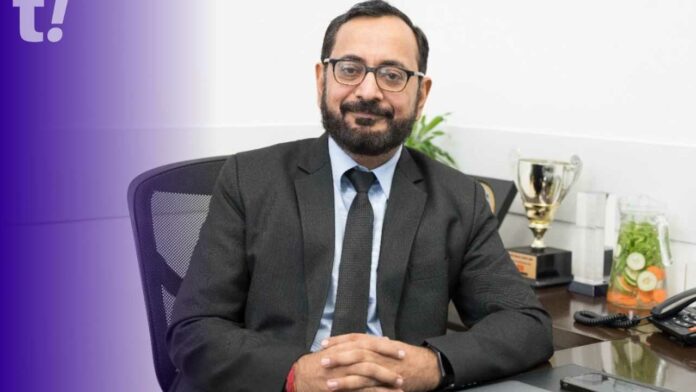

In an interview with TechGraph, Beetel Managing Director & CEO, Sanjeev Chhabra, discusses the company’s innovation in outpacing competitors, and how it has transitioned successfully from its landline roots to become a leader in the smart telecommunication industry by continuously investing in research and development and on its employees.
Read the complete interview:
TechGraph: Can you tell us about Beetel’s history and how it evolved to become a leading manufacturer of mobile accessories, IT peripherals, and telecom equipment?
Sanjeev Chhabra: Beetel has a 3-decade-old legacy in the landline domain. Along with being manufacturers of landlines and smart accessories under the brand FLiX, we are value-added distributors working in the enterprise and network solutions ecosystem, reaching out to customers on behalf of our partners.
We have three business units: Consumer, Network, and Enterprise and one of our biggest strengths is our channel network and presence across India. We have more than 1500 channel partners in 400+ cities in India. We are growing our footprint in international markets, with 19 cities already served.
Beetel has been an ever-evolving organization and is always keeping up with the latest tech trends/solutions, focusing on providing the latest solutions to industry customers.
TechGraph: How does Beetel stay up-to-date with the latest trends and technologies in the mobile and telecom industries, and how does this inform the company’s product development strategy?
Sanjeev Chhabra: Beetel has been an ever-evolving organization and keeping in line with the new trends and technologies has increased its footprint and driven growth. Our goal is to drive growth for our partner brands and channel partners. We have been introducing new product categories to drive width while increasing our reach to drive depth, resulting in growth for us and our partner brands and channel partners alike.
TechGraph: What are some of the biggest challenges facing Beetel and other companies in the mobile and telecom manufacturing space? How is Beetel working to address these challenges?
Sanjeev Chhabra: Beetel understands the significance of addressing various challenges in the mobile and telecom manufacturing space. Here are some specific strategies Beetel employs to tackle these challenges:
We at Beetel use the time to market as an important strategy and recognizes the importance of delivering products to the market on time. To achieve this, the company has implemented improved processes, such as streamlining product development and manufacturing cycles.
By optimizing internal workflows and leveraging efficient project management techniques, Beetel minimizes time-to-market and ensures timely availability. And places a strong emphasis on quality control and maintaining exceptional product quality.
The company’s state-of-the-art manufacturing unit, equipped with the latest technology and machinery, plays a crucial role in this regard. By investing in advanced quality control mechanisms, rigorous testing protocols, and comprehensive inspection processes, Beetel ensures that every product leaving its manufacturing facility meets stringent quality standards.
We understand that customers and prospects have high expectations in terms of performance, features, and reliability. To meet these demands, Beetel actively engages with its customers through feedback channels, surveys, and market research. This customer-centric approach enables Beetel to identify and prioritize customer requirements, incorporate them into product design and development, and deliver solutions that exceed expectations.
We strive to differentiate ourselves from the intensified competition by continuously improving various aspects of operations. Increased employee engagement is fostered through training programs, career development opportunities, and a supportive work environment, which cultivates a culture of innovation and excellence. By empowering its workforce, Beetel taps into its employees’ collective intelligence and creativity, resulting in improved planning and decision-making processes.
Furthermore, Beetel recognizes the importance of streamlined documentation and efficient knowledge management. By simplifying documentation processes and leveraging digital solutions, Beetel ensures information flows seamlessly across departments, enabling faster decision-making and reducing potential bottlenecks.
Moreover, Beetel understands the significance of strong supplier relationships. The company works closely with its suppliers, fostering open communication, and establishing mutually beneficial partnerships. By collaborating with reliable and responsive suppliers, Beetel ensures a smooth supply chain, reducing lead times and enhancing operations efficiency.
By implementing these strategies, Beetel can address these challenges and maintain its position as a market leader, consistently delivering high-quality products that meet customer expectations.
TechGraph: Can you speak about Beetel’s commitment to sustainability and how the company is working to reduce its environmental impact through its manufacturing processes?
Sanjeev Chhabra: E-Waste management is a significant focus for Beetel as part of its sustainability commitment. The company recognizes the environmental impact of electronic waste and has implemented effective strategies to address this issue. Here’s how Beetel manages e-waste:
Beetel ensures that all electronic waste generated during its manufacturing processes is responsibly disposed of. This includes adhering to applicable regulations and guidelines for e-waste management and partnering with certified e-waste recyclers or disposal facilities. And promote the recycling and recovery of e-waste materials to minimize their environmental impact. The company collaborates with specialized recycling partners to extract valuable components and materials from electronic waste. This diverts them from landfills and facilitates their reuse in new products or other industries.
Beetel also embraces the concept of Extended Producer Responsibility (EPR) by taking responsibility for the entire lifecycle of its products, including their disposal. This involves designing products with recyclability and ease of disassembly in mind, as well as collaborating with stakeholders to establish effective collection and recycling systems for end-of-life products.
By actively managing e-waste, Beetel demonstrates its commitment to minimizing environmental impact.
TechGraph: How does Beetel work with its partners and suppliers to ensure a seamless supply chain and timely product delivery?
Sanjeev Chhabra: Our focus is to build trust amongst our existing channel partners and expand our current partner network. As our channel partners play a very significant role in the go-to-market strategy, we plan to expand vertically and horizontally to meet the needs of our partners and customers. We always seek to grow and increase our offerings, enabling our partners with the latest skillset on the new offerings and helping them address customer requirements changes constantly because we believe in equal growth opportunities for everyone connected with us.
Our success lies in the 360-degree growth of our channel partner ecosystem. We work on an indirect model and provide adequate training for our channel partners. There are more than 1500 partners associated with us. With solid back-end support, we assist them with pre-sales, post-sales, deployment, inventory management, etc. With this kind of backing, they can win any big business in the market. Training and certifications are the keys to empowering them with new learnings and experiences. We provide a minimum of 500 training pieces of training in the entire quarter to our partners on various products and services