


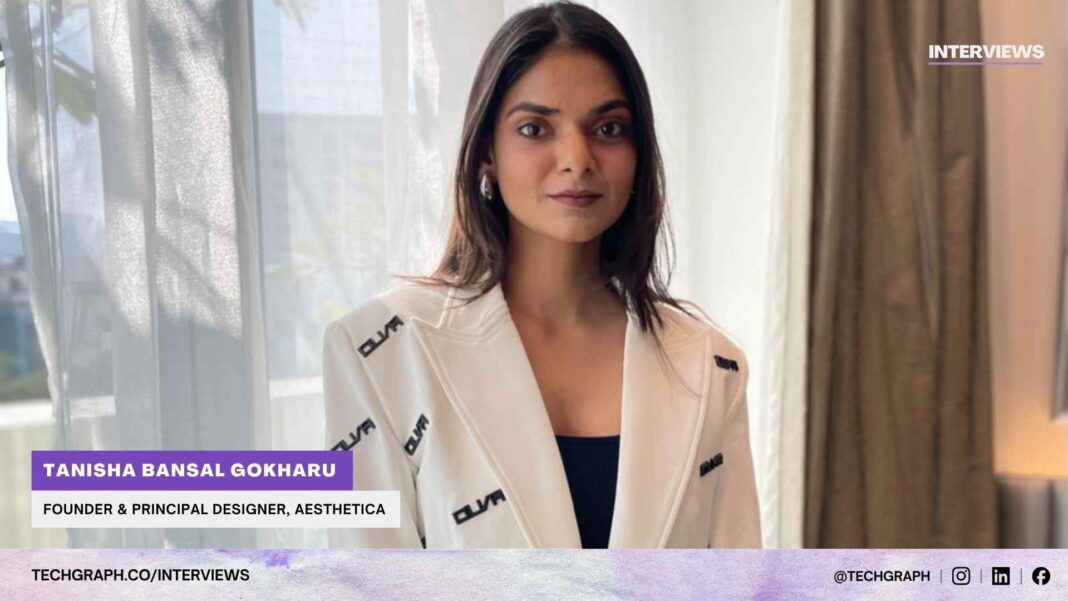
Speaking with TechGraph, Tanisha Bansal Gokharu, Founder and Principal Designer at Aesthetica, discussed how shifts in homeowner preferences are reshaping the luxury interiors market as clients increasingly look for spaces that offer comfort, emotional connection, and long-term livability rather than showpiece aesthetics, and how this shift is changing project expectations toward homes designed for everyday experience instead of high-impact visual statements.
She also spoke about how Aesthetica leverages digital tools to support precision in planning and execution while keeping craftsmanship at the emotional centre so that modern luxury continues to feel grounded, expressive, and human in its character.

Read the interview in detail:
TechGraph: Over the years, the idea of luxury in interior design has moved away from visual extravagance toward something more sensorial and experience-driven. What do you think has pushed this change, and how has it shaped the kind of expectations clients bring to you today?
Tanisha Bansal Gokharu: Five years ago, if you looked at a client’s brief for their home, it often read something like: “We want a space where our guests are left speechless” or “If we’re spending this much money, we want to show it.”
Today, that isn’t the case anymore (at least for 90% of the clients I work with). People now understand that the real meaning of luxury isn’t about showing off; it’s about creating a home where you genuinely look forward to waking up, where you can envision yourself growing old.
As that definition of luxury evolves, designers today are also expected to balance aesthetic ambition with environmental responsibility. Given that both can sometimes pull in different directions, how should the industry redefine “luxury” to make sustainability an intrinsic part of design rather than an optional add-on?
One of the challenges I often face is helping clients see that sustainability can be luxurious. A wall made of natural stone, carefully detailed, can feel far more sophisticated than a dozen misaligned marble laminates that don’t even speak to the character of the space. It’s about patience, thoughtfulness, and giving materials the dignity they deserve.
TechGraph: India has a deep craft heritage that could easily define its design identity, yet much of the luxury market still leans on imported materials and finishes. Do you think designers are missing a chance to create a distinct language of Indian luxury by not engaging more with traditional craftsmanship?
Tanisha Bansal Gokharu: Indian craftsmanship can never be a trend because it’s timeless. Its beauty doesn’t age or fade with passing years. No amount of lights can recreate the quiet awe you feel in a century-old queen’s quarters.
The detailing, the proportions, the subtle elegance that is the soul of Indian architecture. Through our projects, we’ve tried to honor this heritage: whether it’s a storytelling ceiling in a fashion boutique that elevates a shopping experience, or a statement display piece in a meeting room that exudes confidence and courage as soon as we enter the space.
TechGraph: Technology is transforming how designers work, from digital rendering to the use of advanced materials. Where should the line be drawn between efficiency and creative instinct? And can true craftsmanship survive in an era where design processes are increasingly automated?
Tanisha Bansal Gokharu: Technology, of course, is now an inseparable part of life and design. I challenge you to observe your surroundings right this moment and start counting the integration of technology around you. You can easily spot a minimum of 10 examples. But at the end of the day, it’s the human instinct that should set the limits. Efficiency should enhance creativity, not dictate it.
Many studios talk about creating spaces that tell a story, but often those stories end up serving the brand more than the client.
TechGraph: How do you make sure the narrative in your work reflects the client’s real life rather than the studio’s signature style?
Tanisha Bansal Gokharu: A space without experience is just a room. That’s why I always ask my clients: “Where can you imagine waking up most comfortably? In a room with EDM lights that make you feel like you’re at a Travis Scott concert, or in a space where soft sunlight drifts in naturally as part of your day?” This shift in thinking has made people realize that focusing on the experience of a home is far more important than chasing clichéd design trends.
TechGraph: A new generation of homeowners has entered the market, people who are well-travelled, culturally aware, and less interested in conventional ideas of luxury. How has this shift in mindset changed the way projects are conceptualised and the way conversations about luxury now unfold?
Tanisha Bansal Gokharu: The new generation of clients we work with is different. They want personal, meaningful spaces rather than performative luxury. They want their homes to be an extension of them: the little moments, the memories, the objects they care about.
From the magnets on their fridge to the console with photo frames from little moments in their living room, every detail tells a story. Luxury today is defined by authenticity and relevance, not big blingy things.
TechGraph: Interior design, especially at the luxury level, has always existed in private spaces, away from public view. Do you think the future of this industry lies in opening up and engaging with a wider audience, or will it remain a world that thrives on exclusivity and quiet refinement?
Tanisha Bansal Gokharu: Even in a world of private luxury, I believe it’s important for us to share knowledge and insights. Information about craft techniques, design philosophy, or innovative methods can be crucial in shaping better, more thoughtful design practices.
As designers, we hold the power to uplift the crafts and artisans around us, to give value to what might otherwise go unnoticed.
After all, one person’s overlooked material or idea can become another’s treasure, a source of inspiration, or the foundation for something extraordinary. By sharing and exchanging knowledge, we not only enrich our own work but also create a ripple effect that strengthens the craft ecosystem and elevates design as a whole.