


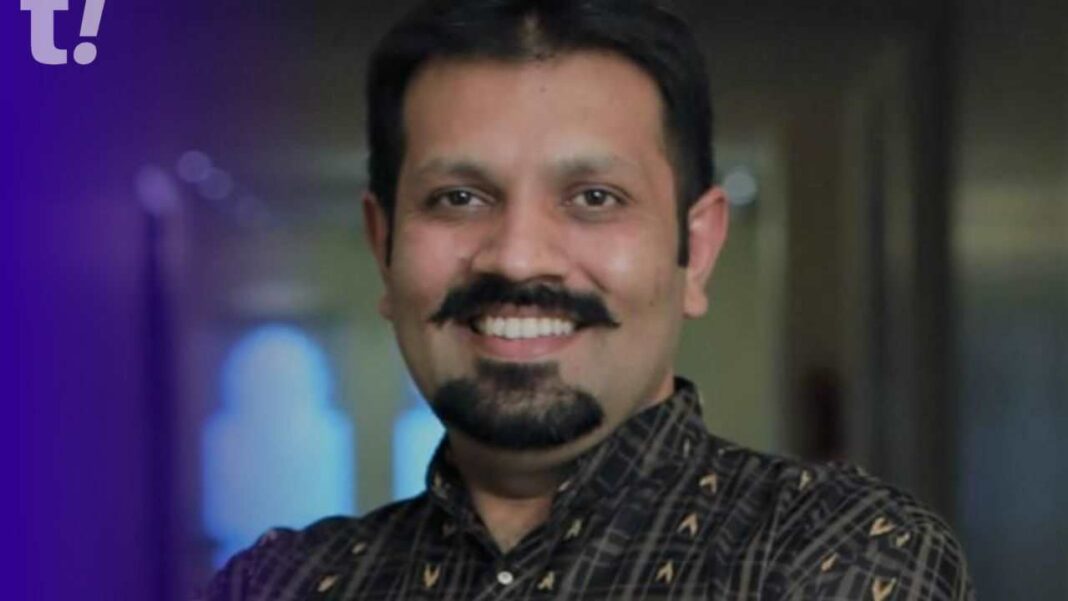
In this interview, Manan Dixit Founder & CEO of FidyPay talked about the company’s uniquies strategy to provide tailored financial services like UPI QR and eKYC to bridge the gap between businesses and residents in rural areas, and how it is contributing to India’s cashless economy mission.
Read the complete interview:

TechGraph: Can you elaborate on FidyPay’s unique features and advantages in the online payment industry, particularly in comparison to other established players?
Manan Dixit: FidyPay, in comparison to the other players in the same market, is much more focused on helping every Indian retail or online business be able to accept or be part of the digital payment infrastructure. We are not just using superior technology but are also trying to bring in every possible digital solution for businesses to avail seamlessness in accepting payments or paying their bills.
In comparison to other players, in a number of ways, FidyPay differs from other service providers who provide services that are equivalent. To start, we give users access to a variety of straightforward financial products and services that may be used immediately. By providing a variety of payment options, it also makes it simple and secure to transfer money across accounts. These consist of point-of-sale (PoS) systems, API banking, BBPS, UPI/QR code, Payment Links, UPI autopay, and eNACH.
Finally, FidyPay gives users the option to link their current bank accounts to the system, removing the need for them to remember several sets of login information. Customers will find the platform more convenient as a result. FidyPay also offers minute-by-minute bulk payments, customization options, and APIs for Omni Channel in addition to these functionalities. FidyPay distinguishes itself from its competitors in the financial technology market with a large assortment of goods and services, an intuitive interface, and a wide range of secure payment options.
TechGraph: With the rapidly evolving fintech landscape, what measures does FidyPay take to ensure the security and privacy of its users’ financial transactions?
Manan Dixit: FidyPay values privacy and security. We’ve taken many steps to protect our users’ financial transactions:
First, we protect critical data sent between users’ devices and our servers with cutting-edge encryption. This secures financial data. Second, we secure our infrastructure with numerous levels. Our systems are regularly inspected for vulnerabilities to ensure user security.
Thirdly, we follow industry norms and data privacy laws. Regulatory compliance safeguards our users’ financial activities. Secure Two-Factor Authentication (2FA) is also available. 2FA adds security by requiring users to enter a code sent to their mobile device. We regularly monitor transactions and use strong fraud detection tools. Machine learning and data analytics let us spot risky patterns and act quickly.
We choose secure banking institutions and service partners that share our security and privacy values. Our ecosystem-wide interactions protect financial data. Security also requires user education. We educate people about data security and financial scams. Knowledge empowers people to make informed decisions and improve their security.
TechGraph: How does FidyPay plan to stay ahead of the competition and adapt to changing customer preferences and technological advancements in the payment industry?
Manan Dixit: FidyPay stays abreast of global FinTech innovations to be at the forefront of the industry. We attend conferences and technology events to democratize finance through technology. These engagements help our sector grow and evolve while teaching us.
We can meet industry leaders, thought leaders, and innovators at technology conferences. We learn about new trends, best practices, and cutting-edge technologies via this dialogue. It helps us improve our services and give the most cutting-edge solutions to our clients.
We react to our clients’ evolving needs by learning and growing with the industry. As we grow, we want to help our clients and consumers reach their financial goals.
Attending conferences and technology events helps us grow and reinforces our commitment to financial reform. We acknowledge that technology transforms financial services access and use, and we are dedicated to using technology to build a more inclusive and accessible financial environment for all.
TechGraph: FidyPay operates in a highly regulated industry. How does the company navigate and comply with regulatory requirements while maintaining a seamless user experience?
Manan Dixit: FidyPay strikes a balance between regulatory compliance and user satisfaction by employing the following regulatory strategy. First, our team of professionals diligently monitors regulatory changes and stays up-to-date with industry-specific regulations to ensure a comprehensive understanding.
Second, we actively engage with regulatory organizations and industry associations, participating in discussions, providing feedback on draft rules, and collaborating to create policies that foster innovation while safeguarding consumer interests.
Third, our robust compliance framework incorporates policies, procedures, and controls that meet regulatory standards, and we regularly update it to align with evolving best practices.
Fourth, we prioritize both compliance and user experience, designing our products and services to seamlessly integrate compliance measures into the customer journey, minimizing any friction.
Fifth, we leverage automated compliance tools powered by smart technology, enabling us to efficiently monitor and report transactions, conduct due diligence checks, and implement risk management policies while minimizing any impact on the user experience.
Sixth, user education is a key aspect, and we provide clear and accessible information on our website, mobile app, and support channels to help users understand their rights, responsibilities, and the measures we have in place to ensure compliance.
Lastly, we conduct regular internal audits and assessments to proactively identify and address any compliance gaps or areas for improvement. By combining regulatory expertise, user-centric design, and smart technology, FidyPay adeptly navigates the regulatory landscape while ensuring a seamless user experience. We remain committed to upholding regulatory compliance as a cornerstone of our operations, safeguarding user trust and the security of their financial activities.
TechGraph: Could you provide insights into FidyPay’s target market and the strategies employed to attract and retain customers, especially in a competitive environment?
Manan Dixit: The geographic regions that have shown the greatest reluctance to adopt digital payment systems constitute FidyPay’s target market. We are moving forward with the notion of making India entirely cashless, and we believe that this will become a reality once areas that have been resistive to adopting new technologies, most likely rural areas, tier-2 or tier-3 cities, are able to do so.
In terms of strategy, we provide businesses with a variety of services, including UPI QR, customized POS, eKYC, UPI AutoPay, and many others, so that they can extend their financial services to individuals who live in rural areas or other areas where people are averse to using digital payment methods.
TechGraph: Can you shed light on FidyPay’s partnerships and collaborations within the industry, and how these alliances contribute to enhancing the overall payment experience for customers?
Manan Dixit: We have a lot of reason to be proud of our partnerships, since these titans of business have opened the way for FidyPay to meet the requirements that individuals have for their financial dealings. There are several companies that we are honored to call partners, including NPCI, ICICI Bank, Yes Bank, Axis Bank, Worldline, and Signzy.
Each of our partners has worked together to ensure that their service offerings are properly integrated into our network. As a result, our efforts are assuring that both parties will flourish in all aspects of their businesses.
TechGraph: FidyPay has a strong focus on innovation. Could you share some examples of recent technological advancements or product enhancements that have set the company apart from its competitors?
Manan Dixit: FidyPay’s dedication to innovation sets us apart from our competitors. Here are some recent technological advancements and product enhancements that showcase our commitment:
FidyPay has integrated advanced AI algorithms into our risk management systems. These cutting-edge models analyze transaction patterns, user activity, and market data in real-time, enabling us to detect and prevent fraudulent activities more effectively.
We provide a comprehensive dashboard that offers users a centralized platform to manage their accounts, access transaction details, and monitor financial activities. Our user-friendly interface, intuitive navigation, and robust performance ensure a seamless experience.
These recent technological advancements and product updates highlight our commitment to innovation and meeting the evolving needs of our users. We continue to explore new technologies and improve our services to provide a secure, convenient, and user-centric fintech experience.
TechGraph: As FidyPay continues to grow, what is the long-term vision for the company, and how do you plan to maintain customer trust and loyalty in an ever-evolving payment landscape?
Manan Dixit: FidyPay’s long-term goal is to help everyone and every business adopt digital payment infrastructure. Digital payments need confidence and reliability, especially in rural areas and tier-2/tier-3 cities. We’ve always been committed to this vision. From the start, we’ve worked to earn client trust.
In a competitive market, embracing digital payments might be difficult. Thus, we educate consumers and businesses on the benefits of digital payments. We educate our consumers through informative content, workshops, and individual assistance. Digital payments offer convenience, speed, security, and financial management. Our commitment to digital payment confidence and reliability continues. We are prepared for the long haul to change mindsets and habits.
We will always educate and help customers. FidyPay thinks digital payments can transform the financial landscape for consumers and organizations regardless of location or economic background. We seek to bridge the gap and encourage digital payment infrastructure adoption by building trust, providing reliable services, and advertising its benefits. We will continue to improve our tactics, create new solutions, and reach rural and tier-2/tier-3 cities. We want to empower everyone with digital payments.