

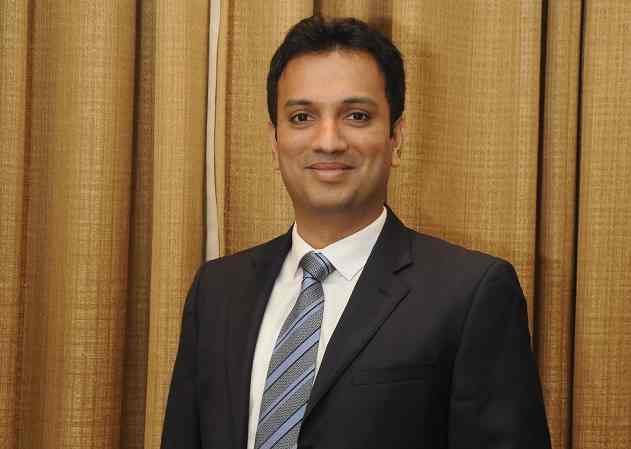
“Interesting Investment Opportunities Emerges in Challenging Times,” says Karan Desai, Founder of Interface Ventures

Date:

Before Article Content · 728×90
Advertise Here

Trending

- Advertisement -

Speaking to the TechGraph editorial team, Interface Ventures’ Co-founder, Karan Desai said, “We believe that interesting investment opportunities emerge in slightly more challenging times.”

Read the complete experts:

TechGraph: Could you help give a sense of how far Interface Ventures has come since its existence? From when it began to where it is now?

Karan Desai: Interface Ventures has evolved considerably since the platform was launched full throttle in the first quarter of FY 23. It is now considered one of the go-to partners for a large ticket, structured debt solutions in the larger lending ecosystem, and prides itself on the top-quality client partners that it works with.

Interface Ventures is the Promoter shareholder of a fintech company that owns 3 retail lending/investment and savings-related assets which will launch commercially in Q1 of FY 24.

- Advertisement -

The company believes that these platforms will create exponential shareholder value given the very strong distribution network that Interface has in the financial services space.

TechGraph: What’s the investment philosophy that you follow at Interface Ventures?

Karan Desai: We follow a straightforward and transparent investment philosophy at Interface Ventures. We invest primarily in financial services platforms where we either have full operational control or hold a minority position.

Our focus is to invest in businesses that we understand the Promoters and can control the operational aspects of, which allows us to monitor the business’s growth.

- Advertisement -

We believe in creating value by leveraging our deep relationships in the financial services space to increase distribution and reduce customer acquisition costs. Our focus is on building sustainable businesses and creating long-term value rather than short-term profits.

TechGraph: What is Interface Ventures’ fund approach to the current market? Are you looking at new markets or using more stringent norms to evaluate a business?

Karan Desai: From an investment standpoint, we will double down on all the investment calls that we have already taken deploying more capital to scale them up faster. New opportunities will be considered opportunistically, only if they are directly synergistic with our existing bets.

TechGraph: What does the deal-making environment look like amid looming recession fears?

Karan Desai: We believe that interesting investment opportunities emerge in slightly more challenging times. Valuations tend to get more real, and people appreciate capital, backed by a strong support ecosystem a lot more.

There is likely to be consolidation across sectors with smaller players that don’t have adequate capital support being acquired opportunistically by their larger peers.

TechGraph: How are you handling the fund’s existing portfolio and responding to challenges faced by start-up founders?

Karan Desai: We honestly don’t see any challenges in any of our existing investments given that all the investments have been made with a clear philosophy of bootstrapping the platforms until they attain organic profitability and sustenance.

We invest in platforms that address very specific use cases and each of them has a partner-driven distribution model that will help us manage and control our CAC – the make or break for any start-up.

TechGraph: What is your view on the Indian start-up ecosystem?

Karan Desai: The Indian start-up ecosystem is more vibrant than ever now but like any young phenomenon, it now has to mature and reassess what its main priorities should be. We have emerged from a period where relatively easier international capital chased and funded hyper-growth for many tech startups in India.

With the recent tightening of liquidity, poor performance of tech IPOs, and multiple start-up failures, every start-up founder must go back to the drawing board, and the basics of business to build long-term businesses that can generate enough revenue to cover costs and ultimately deliver profit and return to shareholders.

TechGraph: How do you see the recent layoffs made by startups across the sector?

Karan Desai: It is a matter of concern in the start-up ecosystem. We hope there could be another way to handle this but it is a direct outcome of the easy money phenomenon that we saw in the startup ecosystem for the last 2-3 years.

Some start-ups prioritize valuation and hyper-growth over perfecting their business model, leading to overstaffing and overspending. However, I would like to note that not all start-ups are like that, and many founders prioritize the well-being and growth of their employees.

It is also important to understand that running a start-up can be a challenging and unpredictable journey, and founders often have to make tough decisions to ensure the survival and success of their business.

TechGraph: How do you see the angel & pre-stage investment scenario in the country over the next two-three years?

Karan Desai: India is a good story and there will always be investment interest in interesting businesses across their entire lifecycle. What is probably likely to be different in FY 2024 in particular is that investors will be a lot more discerning about where they put their capital, with more preference for profit-generating businesses or early-stage businesses that have a clear path to break even and a sustainable market advantage.

THE SNAPSHOTS

Sign up to get quick snaps of everyday happening, directly in your inbox.

We don’t spam! Read our privacy policy for more info.

- Advertisement -
Krishna Mali
Krishna Mali
Founder & Group Editor of TechGraph.

More Latest Stories

More Articles

The Responsiveness Economy: DashLoc’s Sumit Singh on Redefining Customer Conversations with AI

Speaking with TechGraph, Sumit Singh, Co-Founder & CEO of DashLoc, discussed how businesses are increasingly shifting their focus beyond digital discoverability toward real-time customer...

How Generative AI Could Reshape Airline Distribution and Travel Retailing

Airline distribution is entering a new phase. For decades, the industry has relied on a framework built around fares, schedules, and availability. That model still matters, but it is no longer enough on its own. Airlines are now expected to retail more intelligently, present...

How AI Is Quietly Turning Interior Design into a Predictive Science

Predictive science uses historical data, behavioral trends, simulations, and machine learning models to predict...

AI That Serves: ImpactAI Foundry’s Arjun Balaji on Making Artificial Intelligence Accessible for Nonprofits

Speaking with TechGraph, Arjun Balaji, Co-Founder and Programme Director of ImpactAI Foundry, discussed how...

Human-in-the-Loop: Why AI in Education Still Needs the Professor

Generative AI is rapidly entering classrooms, boardrooms, and training programs. Yet a critical question...

Why Indian Men Are Quietly Moving Away From Fast Fashion

When a man opens his wardrobe, stares at a rail of clothes, and realises...

Why Indian Business Still Runs on Spreadsheets and WhatsApp for Treasury

India is home to one of the world's fastest-growing fintech ecosystems, projected to reach...

The New Age of Digital Assets: How Blockchain Is Redefining Financial Inclusion

Innovation is changing the nature of economic participation and making it more inclusive, especially...

How AI Is Building India’s Next-Generation Emergency Mobility Infrastructure

Imagine this. A customer is stranded on the roadside due to a vehicle breakdown and raises a request for assistance. In a traditional roadside...

The Efficiency Gap That Will Reshape Finance by 2030

Here is the number that should be keeping every CFO awake right now: 97%...

The rise of tier-2 GCCs: How digital infrastructure is redefining India’s technology talent map

For the better part of two decades, India's Global Capability Centre (GCC) story was...

Rethinking Executive Search: Venator Search Partners’ Deepraditya Datta on Leadership Hiring in a Changing Talent Market

In an interview with TechGraph, Deepraditya Datta, Founder and Managing Director of Venator Search...

Nexchain AI Sets Mainnet and Presale Token Launch in Motion With Final $0.06 Access

Nexchain AI has entered a decisive 2026 build phase as its launch roadmap moves...

The Role of Predictive Technology in Creating Sustainable Infrastructure Ecosystems

Infrastructure development today is no longer just about building faster or expanding bigger. The conversation is gradually shifting towards building infrastructure that is sustainable,...

The Reliability Equation: Trev Mobility CEO Naveen Gupta on Building Trust in Premium Electric Ride-Hailing

During an interview with TechGraph, Naveen Gupta, Founder & CEO of Trev Mobility, highlighted why customer expectations in premium mobility are increasingly shifting beyond vehicle availability and pricing toward service consistency and travel experience, and how this shift is creating opportunities for operators that...

Nexchain Publishes New Roadmap as $0.06 Token Stage Continues

Nexchain has unveiled its updated development roadmap, providing the community with a clearer view...

Why Startups Are Turning to Virtual CFOs for Smarter Growth

​For a long time, finance leadership in startups followed a predictable path. Founders managed...

The Detroit Region’s Role in Modern Global Supply Chains

As global commerce continues to expand its reach, the Detroit region has emerged as...

The Importance of Keeping Up to Date With Auto Maintenance

Auto maintenance is one of the most important responsibilities that comes with owning a...

PatexOne: Could This Platform Be Smarter Than Your Impulses?

Australian investors are used to platforms that shout about leverage and “opportunity”. PatexOne takes...

The HiPCO Advantage: NoPo Nanotechnologies’ Gadhadar Reddy on Scaling SWCNT Manufacturing for Emerging Industries

Speaking with TechGraph, Gadhadar Reddy, Co-Founder and CEO of NoPo Nanotechnologies, discussed how manufacturing...

Why Resume-Based Hiring Is Failing India’s Workforce

India needs a shift from credential-first hiring to skill-first validation

Why BFSI Is Moving from AI Experiments to AI Systems

For the past few years, Artificial Intelligence in banking, financial services, and insurance has...

From Intuition to Analysis: How AI Is Becoming Every CEO’s Second Brain

Most CEOs are making important decisions with partial information. The challenge is not just...

Rethinking Executive Search: Venator Search Partners’ Deepraditya Datta on Leadership Hiring in a Changing Talent Market

In an interview with TechGraph, Deepraditya Datta, Founder and Managing Director of Venator Search...

“Budget should focus on reducing taxes on capital gains,” Says Abhishek Gupta of Hex N Bit

Speaking in the upcoming Union Budget 2021, Abhishek Gupta, Founder, and CEO, Hex N...

“China is a Global thief” Rep. Tom Rice on Uyghur Forced Labor Prevention Act

Speaking at the House on Uyghur Forced Labor Prevention Act, Rep. Tom Rice (R-SC)...

Why Players Buy LoL Boost and How the Process Works

If you’re researching why players buy lol boost, you’re usually trying to understand two...

CasinoBonusesFinder UK: how filters, Telegram alerts and real bonus matching work in practice

Anyone who has spent serious time on casino bonus hunting knows the drill. You...

Nexchain AI Sets Mainnet and Presale Token Launch in Motion With Final $0.06 Access

Nexchain AI has entered a decisive 2026 build phase as its launch roadmap moves...

Key differences between a burner phone & prepaid phone

You may have heard both terms mentioned when it comes to protecting your identity....

Alphabet Discloses $2.14 Billion in Public Equity Holdings as of June 30

Alphabet Inc. disclosed $2.14 billion in equity securities held across 39 positions as of...

India to generate $100 bn from telephonic investments

India expects to attract $100 billion in investments in the telecom sector, a union...