


The Union Finance Minister Nirmala Sitharaman’s proposed Interim Union Budget for 2024-25 has drawn varied reactions from leaders in the finance, banking, insurance, and non-banking financial company (NBFC) sectors. While some commend the forward-looking approach and initiatives aimed at fostering innovation and growth, others express concerns and suggest areas for improvement.
Here’s a look at the perspectives shared by industry leaders:
Chandra Shekhar Ghosh, MD and CEO, Bandhan Bank
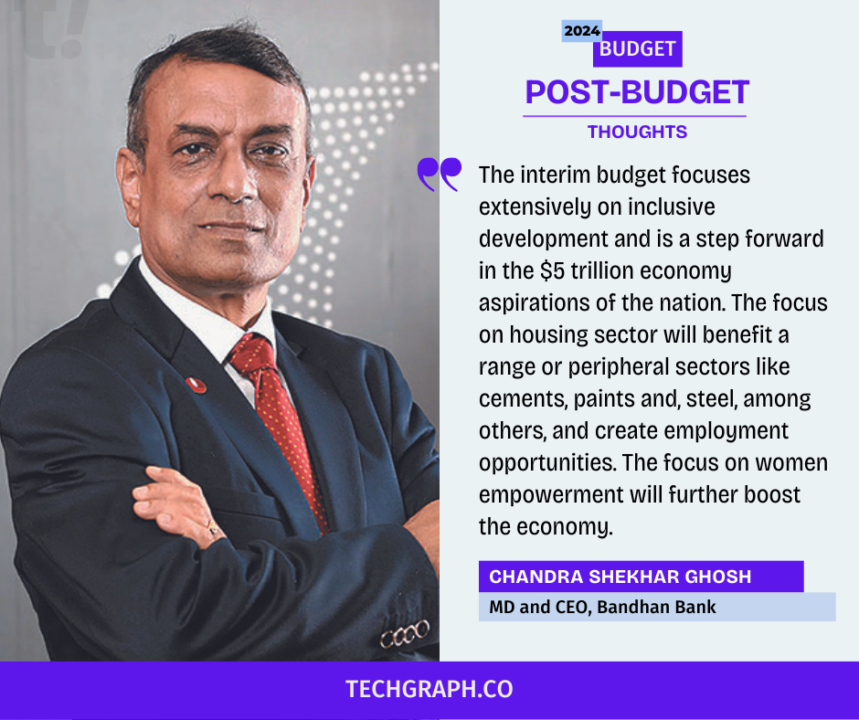
The interim budget focuses extensively on inclusive development and is a step forward in the $5 trillion economy aspirations of the nation. The focus on the housing sector will benefit a range of peripheral sectors like cement, paints, and, steel, among others, and create employment opportunities. The focus on women’s empowerment will further boost the economy. The emphasis on infrastructure and rural development will lay a strong foundation for India’s growth story.

Uttam Tibrewal, Executive Director, Au Small Finance Bank
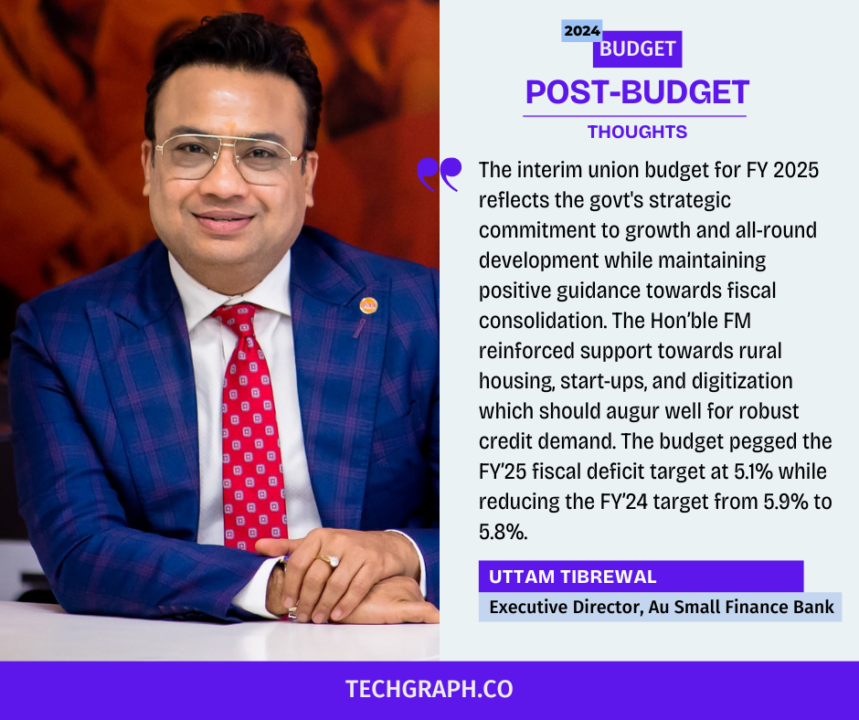
The interim union budget for FY 2025 reflects the government’s strategic commitment to growth and all-round development while maintaining positive guidance towards fiscal consolidation. The Hon’ble Finance Minister reinforced support towards rural housing, start-ups, and digitization which should augur well for robust credit demand. The budget pegged the FY’25 fiscal deficit target at 5.1% while reducing the FY’24 target from 5.9% to 5.8%.
The budget also aims to push capital spending higher to 3.4% of GDP at Rs 11.1 lakh crore in FY’25. This accompanied by lower gross borrowing of Rs 14.13 trillion should support the interest rate environment and enable room for increased private capex for growth. Overall, the interim budget displays policy continuity while maintaining a fine balance between fiscal prudence and growth.
Parimal Heda, Chief Investment Officer, Digit General Insurance

The Interim Budget presented by the finance minister was largely in line with expectations moving ahead on the fiscal consolidation path. The budget’s focus was on empowering people and thereby creating a pathway towards the government’s objective of a ‘Viksit Bharat’ by 2047. Though no direct announcements were made related to the insurance sector, various measures announced by the FM will have a trickle-down effect in multi-fold ways.
Expanding the scope of the Ayushman Bharat health insurance coverage to all ASHA workers, Anganwadi workers and helpers will bring an additional over 3 million health workers under the insurance umbrella and is a thoughtful token of appreciation to this community that acted as the frontline workers during the Covid pandemic.
The social security this provides will aid in redefining healthcare in our country and further strengthen the grassroots-level healthcare ecosystem as a whole. However, expanding the scope of insurance coverage from the current Rs 5 lakh to Rs 10 lakh in the future can ensure this vulnerable segment is adequately protected against rising medical inflation and healthcare costs in the future.
Shilpa Arora, Co-founder & COO, Insurance Samadhan
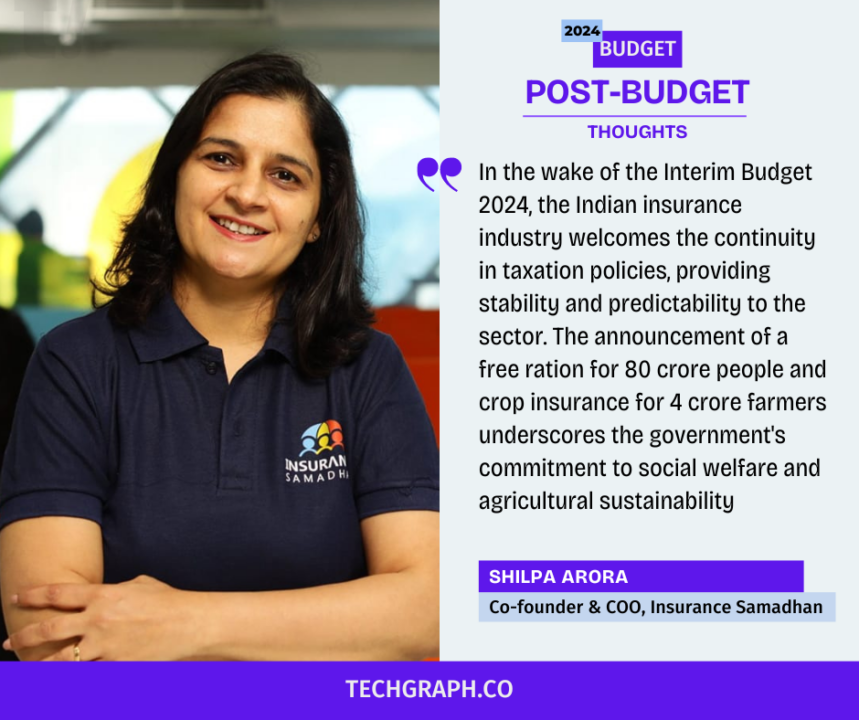
In the wake of the Interim Budget 2024, the Indian insurance industry welcomes the continuity in taxation policies, providing stability and predictability to the sector. The announcement of a free ration for 80 crore people and crop insurance for 4 crore farmers underscores the government’s commitment to social welfare and agricultural sustainability. Furthermore, the provision of tax benefits for startups and incentives for sovereign wealth and pension funds investment paves the way for a more robust and inclusive financial ecosystem.
The measures outlined in the budget align with our vision of a resilient and prosperous India. As we navigate the evolving landscape, the insurance sector remains dedicated to enhancing financial security and well-being for all. We believe that this budget sets the stage for collaborative efforts between the government and the insurance industry to promote inclusive growth, ensuring that every citizen has access to essential financial protection and investment opportunities. Together, we can build a brighter and more secure future for our nation.
Arun Poddar, CEO & Executive Director, Choice International Limited
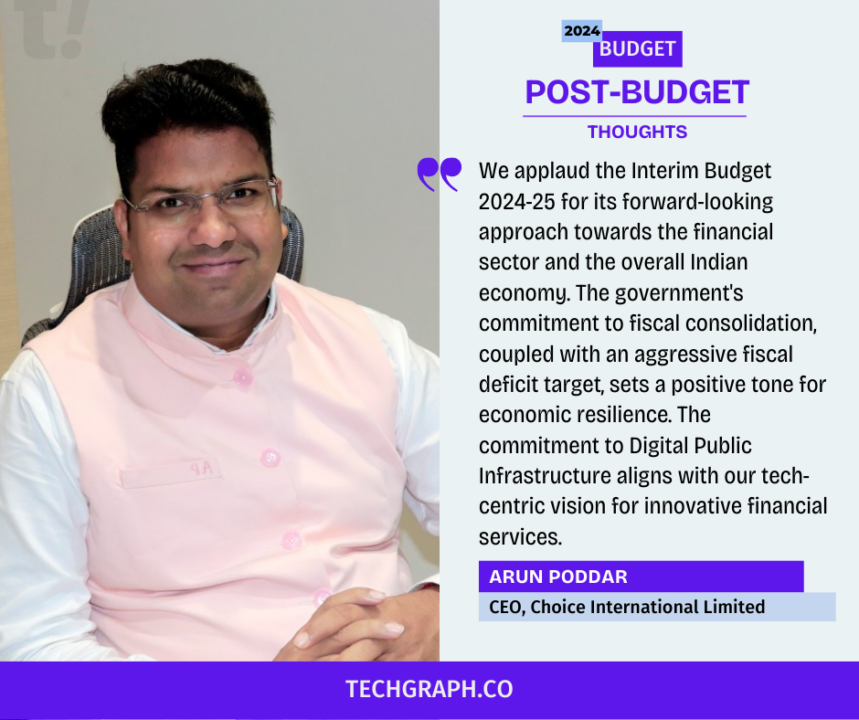
We applaud the Interim Budget 2024-25 for its forward-looking approach towards the financial sector and the overall Indian economy. The government’s commitment to fiscal consolidation, coupled with an aggressive fiscal deficit target, sets a positive tone for economic resilience. The commitment to Digital Public Infrastructure aligns with our tech-centric vision for innovative financial services.
Choice International is particularly encouraged by the focus on fostering private investment, enhancing MSME growth, and orienting the regulatory environment.
The government’s focus on International Financial Centres positions financial service providers to benefit from global capital. The decision to withdraw outstanding disputed tax demands is a significant boost for over one crore taxpayers. As we navigate these economic waters, Choice International remains dedicated to actively contributing to India’s financial sector and supporting its journey towards sustained economic prosperity.
Neeraj Gupta, MD, Branch International
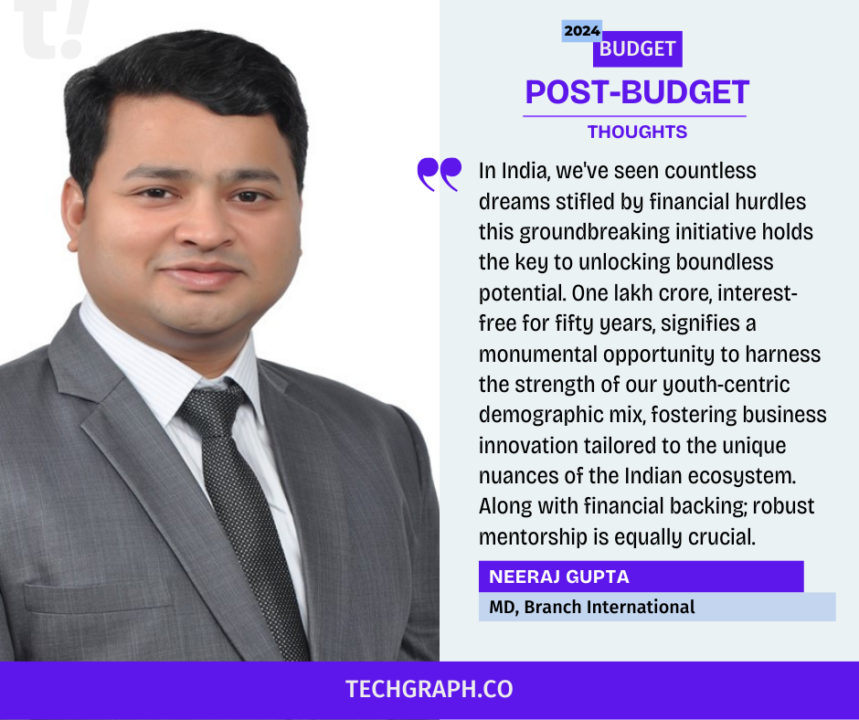
In India, we’ve seen countless dreams stifled by financial hurdles this groundbreaking initiative holds the key to unlocking boundless potential. One lakh crore, interest-free for fifty years, signifies a monumental opportunity to harness the strength of our youth-centric demographic mix, fostering business innovation tailored to the unique nuances of the Indian ecosystem. Along with financial backing; robust mentorship is equally crucial.
Nurturing the aspirations of young entrepreneurs requires experienced individuals who can provide insightful guidance and support, steering them through the complexities of their growth story. Together, with this holistic approach, we can pave the way for a flourishing era of innovation and economic empowerment in India.
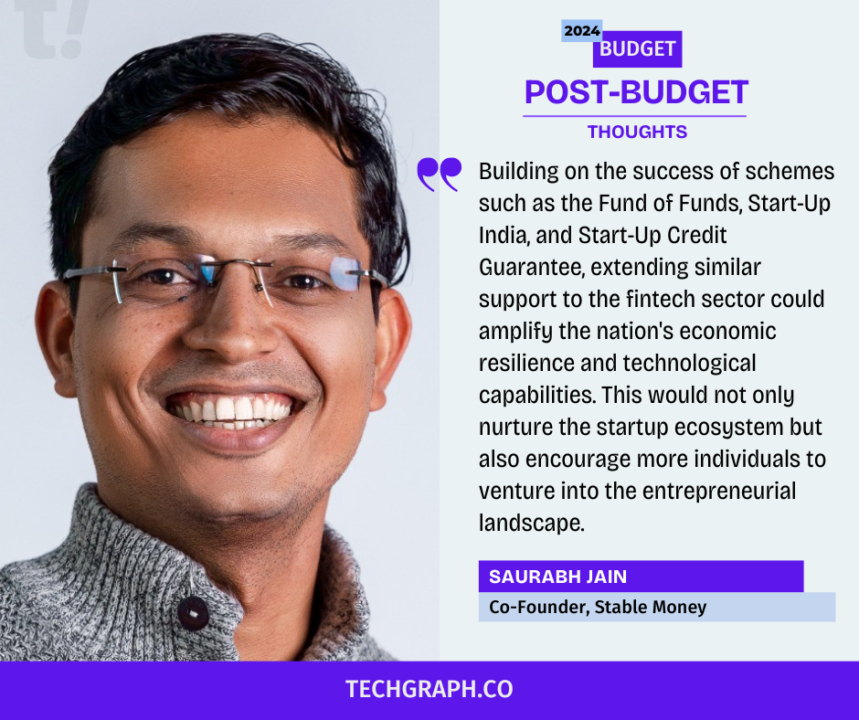
Saurabh Jain, Co-Founder, Stable Money
Effective policies have been instrumental in positioning India as the third-largest global ecosystem. Initiatives like the PM Mudra Yojana are set to accelerate this growth, offering a unique opportunity to overcome challenges faced by fintech startups and foster innovation with greater inclusivity.
Building on the success of schemes such as the Fund of Funds, Start-Up India, and Start-Up Credit Guarantee, extending similar support to the fintech sector could amplify the nation’s economic resilience and technological capabilities. This would not only nurture the startup ecosystem but also encourage more individuals to venture into the entrepreneurial landscape.
By consistently nurturing such a conducive environment, the government has not only driven India’s ascent in the global ecosystem ranking but has also actively contributed to enhancing the country’s position on the world map, demonstrating a commitment to growth and innovation.
Anand Dubey, CEO, Indkal Technologies
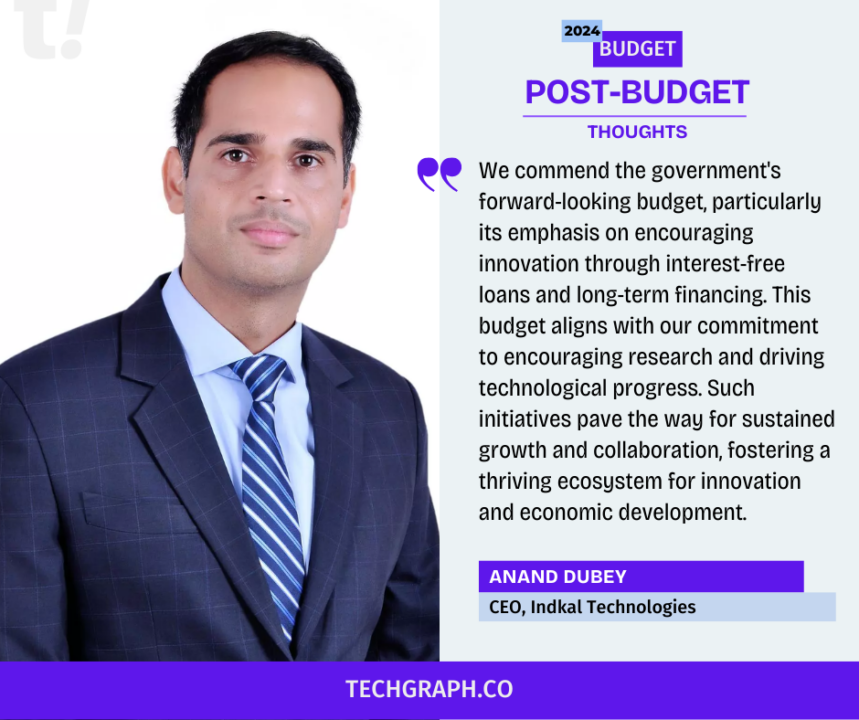
We commend the government’s forward-looking budget, particularly its emphasis on encouraging innovation through interest-free loans and long-term financing. This budget aligns with our commitment to encouraging research and driving technological progress. Such initiatives pave the way for sustained growth and collaboration, fostering a thriving ecosystem for innovation and economic development.
Anand Kumar Bajaj, Founder MD & CEO, PayNearby
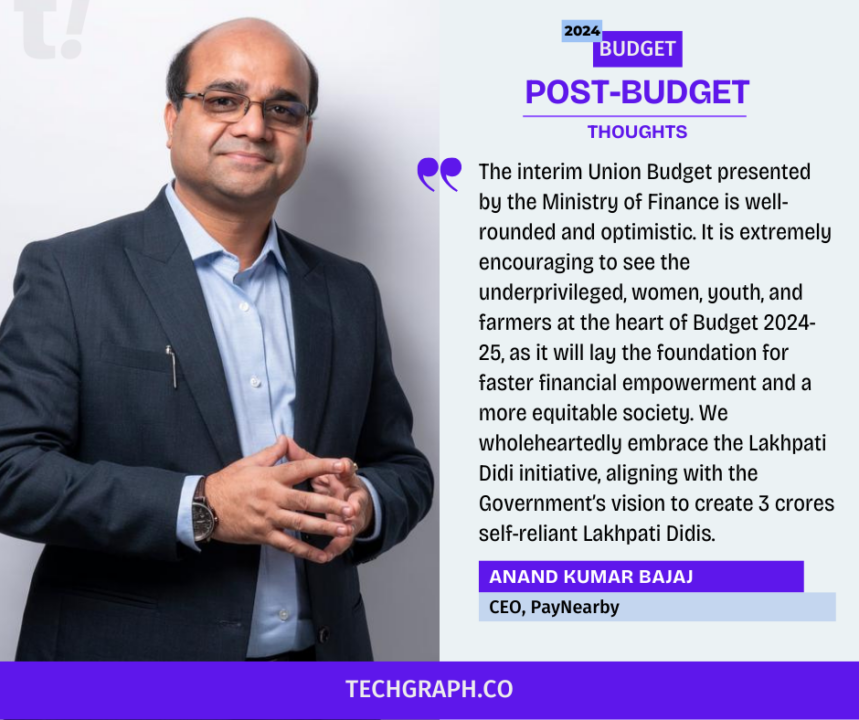
The interim Union Budget presented by the Ministry of Finance is well-rounded and optimistic. It is extremely encouraging to see the underprivileged, women, youth, and farmers at the heart of Budget 2024-25, as it will lay the foundation for faster financial empowerment and a more equitable society. We wholeheartedly embrace the Lakhpati Didi initiative, aligning with the Government’s vision to create 3 crores self-reliant Lakhpati Didis.
Through our association with various livelihood missions across states, we have successfully onboarded 100,000+ women as Business Correspondents, empowering them with skills to offer financial and digital services to their communities. As we eagerly anticipate Union Budget 2024, we seek specific measures, including a 5% GST rate for last-mile empowerment startups, a GST waiver on all financial services from BC outlets, Income Tax relief, and reduced import duty on essential financial services devices.
Roshan S Bisht, Co-Founder & CEO, Asort
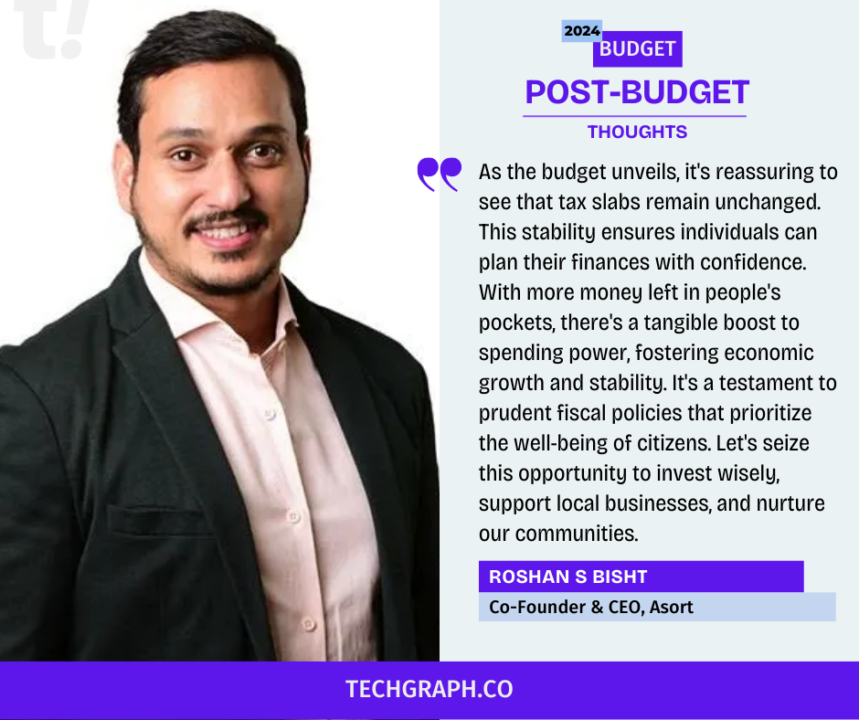
As the budget unveils, it’s reassuring to see that tax slabs remain unchanged. This stability ensures individuals can plan their finances with confidence. With more money left in people’s pockets, there’s a tangible boost to spending power, fostering economic growth and stability. It’s a testament to prudent fiscal policies that prioritize the well-being of citizens. Let’s seize this opportunity to invest wisely, support local businesses, and nurture our communities. Together, we can harness this financial resilience to build a brighter, more prosperous future for all.
Harshvardhan Lunia, Chair, Fintech Convergence Council, Founder & CEO, Lendingkart

In examining the Interim Budget, it is evident that Finance Minister Nirmala Sitharaman has crafted a vision encapsulating the themes of inclusivity, self-reliance, and comprehensive national development. The focus on marginalized groups and regional empowerment reflects a nuanced understanding of the diverse needs driving India’s progress.
Zooming into the Fintech and Lending landscape, the budget introduces strategic measures to catalyze long-term financing for private sectors, aligning with the nation’s pursuit of technological advancement. The emphasis on innovation, skilling initiatives, and MSME support underscores a forward-looking approach tailored for India’s digital age, aligned with the imperative of steering India’s economic growth in the digital era.
The financial sector’s preparation and borrowing targets for the upcoming year signify a well-balanced approach to meeting investment requirements. From a bird’s eye view, the budget appears to set a positive tone for the convergence of technology and finance, contributing to the overarching goal of national development.
Ankit Ratan, Chair, Regtech Committee, Fintech Convergence Council & Co-founder, Signzy
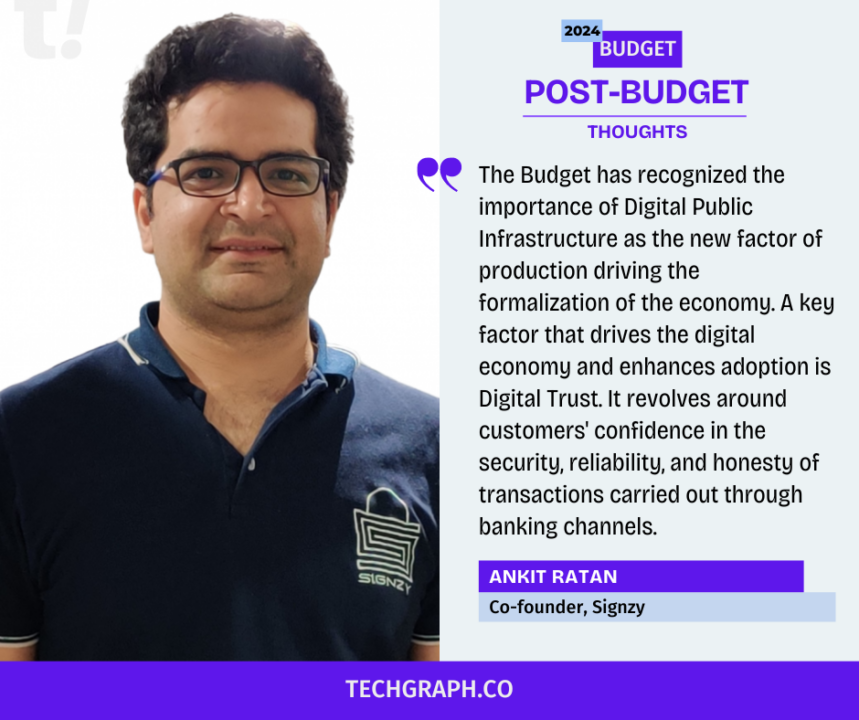
The Budget has recognized the importance of Digital Public Infrastructure as the new factor of production driving the formalization of the economy. A key factor that drives the digital economy and enhances adoption is Digital Trust. It revolves around customers’ confidence in the security, reliability, and honesty of transactions carried out through banking channels.
We believe a robust digital public infrastructure along with an enhanced digital trust ecosystem will promote responsible innovation while risk-proofing businesses from cybersecurity concerns. Creating an environment of trust beyond the established physical branches of a bank through real-time monitoring of biometric systems and cybersecurity resilience among others is the way forward. This promises an economy where technology empowers trust that paves the way for a brighter and more equitable future.