


spot_img

G20 and Technological Innovations for Environmental Solutions in the Era of Web 3

Date:

Trending

The Group of Twenty (G20) was initially established in 1999 to promote international financial stability and economic cooperation. Over the years, its agenda has evolved to encompass a wider array of global challenges, including environmental issues. Climate change, in particular, has become a recurring theme in G20 discussions, reflecting the recognition that the world’s largest economies must take a leadership role in addressing the environmental crisis.

- Advertisement -

Outcome of G20 2023 – India’s Presidency

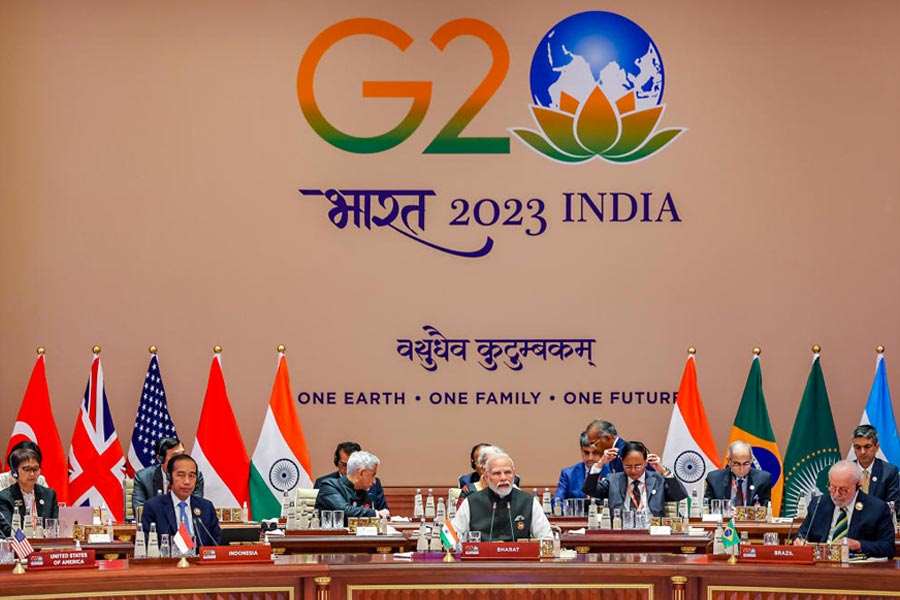
At the 2023 G20 summit in New Delhi, leaders from these major economies made significant commitments for 2030. These commitments encompass tripling global renewable energy capacity by that year and recognizing the imperative of phasing out unabated coal power.

Additionally, the G20 nations collectively embraced the goal of tripling global renewable energy capacity by 2030, emphasizing the importance of existing targets, policies, and efforts, while demonstrating similar ambition for zero and low-emission technologies, including abatement and removal technologies, tailored to individual national circumstances.

- Advertisement -

Technological Innovations Driving Environmental Solutions:

Renewable Energy Technologies: The transition to renewable energy sources, such as solar, wind, and hydropower, has gained momentum within the G20 countries. India, for instance, has made significant strides in solar energy production. The country’s renewable energy capacity is projected to grow to 280 GW by 2025, accounting for 37% of the total energy supply and 450 GW by 2030.

Global Biofuels Alliance: Another big takeaway of the declaration was the launch of the Global Biofuels Alliance (GBA). The GBA’s objectives include promoting international collaboration, developing robust biofuel markets, intensifying the use of sustainable biofuels in transportation, sharing policy lessons, and offering technical support for national biofuels programs.

- Advertisement -

Advancing Financial Inclusion: The G20 also embraced the voluntary and non-binding G20 Policy Recommendations for Advancing Financial Inclusion and Productivity Gains through Digital Public Infrastructure, recognizing the critical role played by digital public infrastructure in promoting financial inclusion for inclusive growth and sustainable development.

Precision Agriculture: In the agricultural sector, India’s adoption of precision farming techniques has led to increased crop yields and reduced resource consumption. The use of IoT sensors and data analytics is helping Indian farmers make informed decisions.

Artificial Intelligence (AI) and Big Data: India is harnessing AI and big data analytics for environmental monitoring and management. AI-based weather prediction systems, for instance, are helping mitigate the impact of natural disasters like cyclones and floods.

Global Digital Public Infrastructure Repository:

As outlined in the declaration, represents a significant step towards fostering international collaboration and knowledge sharing in the realm of digital public infrastructure.

This repository, envisioned by India, is essentially a virtual platform that will serve as a centralized hub where both G20 and non-G20 countries can voluntarily contribute and access open-source mechanisms. These mechanisms encompass a wide range of digital tools, technologies, and solutions aimed at enhancing various aspects of public infrastructure.

G20’s Role in Harnessing Web 3 for Environmental Solutions:

India’s strong presence in software development and IT services positions it as a valuable contributor to collaborative research and development efforts focused on harnessing the potential of Web 3 technologies for environmental solutions.

Within the G20, Indian policymakers have a crucial role in shaping proactive policy frameworks that promote the adoption of eco-friendly technologies while addressing India’s unique challenges.

Moreover, India has an opportunity to work alongside other G20 nations in establishing international standards for data sharing, blockchain applications, and AI ethics, fostering responsible and sustainable technology adoption on a global scale.

The Way Ahead:

With its vast population and diverse environmental challenges, India’s role within the G20 is pivotal in the quest for global environmental solutions. AI and Web3 hold the promise of not only transforming our approach to sustainability but also accelerating progress toward achieving the SDGs.

As these two technological titans join forces, we stand on the brink of a future where innovation safeguards our planet and secures a better world for generations to come.

With these technologies becoming increasingly integrated into India’s development agenda, the G20’s commitment to collaborative research, policy development, and international standards can pave the way for a sustainable future where technological progress is harnessed to protect the planet. By embracing these innovations and leveraging India’s expertise, the G20 can leave a lasting legacy of environmental stewardship for generations to come.

THE SNAPSHOTS

Sign up to get quick snaps of everyday happening, directly in your inbox.

We don’t spam! Read our privacy policy for more info.

- Advertisement -
Prasiddhi Singh
Prasiddhi Singh
Social Entrepreneur, Environment activist & Founder of PRASIDDHI FOREST FOUNDATION

More Latest Stories

More Articles

Foreign Secretary Cooper Denies UK’s Role in U.S. Operation Against Venezuela’s Maduro

The British Foreign Secretary, Yvette Cooper, said the UK was not involved in the recent U.S. operation targeting Venezuela, including the reported capture of...

6 Realities Every Independent Professional Eventually Faces

Choosing to work independently is a dream for many. The freedom to set your own schedule, pick your projects, and steer your career exactly where you want it is undeniably appealing. Yet, beneath the surface, there are certain realities that every independent professional eventually...

US President Trump Says PM Modi “Knew I Was Not Happy,” Links India’s Russian Oil Import Cuts to Tariff Threats

US President Donald Trump praised Indian Prime Minister Narendra Modi for what he described...

India Extends Textile PLI Application Deadline to March 31

India has extended the deadline for submission of fresh applications under the Production Linked...

Why Edge Data Centres are India’s Next Growth Frontier

India's digital economy has entered a stage where promoting growth is no longer sufficient,...

Bulgaria Becomes 21st Member of the Eurozone

Bulgaria became the 21st nation to adopt the euro as its official currency on...

India, Pakistan Exchange List of Nuclear Facilities Under Bilateral Agreement

India and Pakistan today exchanged the list of Nuclear Installations and facilities covered under...

Scaling Conversations: Superbot AI’s Sarvagya Mishra on Building Regional Voice AI for India’s Linguistic Markets

Speaking with TechGraph, Sarvagya Mishra, Founder and Director of Superbot, discussed how India’s shift...

NCB Advises Indian Travellers to Seek Clearance for Carrying Medicines to Saudi Arabia

The Narcotics Control Bureau has advised Indian travellers to obtain the required approvals before carrying medicines while travelling to Saudi Arabia. The advisory follows the...

The Hidden Business Layer Behind IoT Connectivity

When people talk about the Internet of Things, the focus is usually on devices....

When Cybersecurity Tools Break the System: The Hidden Risk Behind Digital Defenses

Cybersecurity solutions are designed to protect businesses from threats, but increasingly, these very tools...

The Cost of Blind Trust: How Inadequate Verification Is Fueling India’s Data Scam Epidemic

India’s digital economy is expanding faster than ever. From gig platforms and financial services...

Building a Future-Ready Portfolio in a Digitally Driven Economy

The rapidly changing investment landscape in India has the nation's fast-growing digital economy at...

Why BFSI Needs Generative AI, Not Rule Engines

The Banking, Financial Services, and Insurance (BFSI) sector has been using rule engines for decision automation, workflow management, and regulatory compliance for decades. These...

How Unified Intelligence Is Transforming the Future of Device Security

Device security has always been a balancing act; protecting sensitive data without slowing the business. With remote work, more IoT devices, and smarter attacks, the old siloed approaches don't work anymore. Unified intelligence is an integrated framework that uses AI and machine learning to...

Enterprise Blind Spots: 3 Cubed’s Shammik Gupta on Building a Digital Twin for Real Operational Clarity

Speaking with TechGraph, Shammik Gupta, Founder of 3 Cubed, discussed how enterprises invested in...

Why Solar Panels Are a Worthwhile Investment

With the increasing urgency to transition to sustainable energy sources, investing in solar panels...

How can mid-career professionals transition into AI-assisted roles without going back to college?

Artificial intelligence is reshaping industries worldwide, from healthcare to finance, marketing, logistics, and education....

Adda247’s Bimaljeet Singh Bhasin on Career247 and the Push for Job-Ready Education

In an interview with TechGraph, Bimaljeet Singh Bhasin, CEO of Skilling and Higher Education...

The Future of Preventive Healthcare in India and the Role of Digital Platforms

India is set to decide on the ongoing healthcare evolution, where the main point...

How Cloud Infrastructure Is Powering India’s SaaS and App Economy

India's Software as a Service (SaaS) and app economy has become one of the...

Home Improvements That Benefit You Today and Boost Value Tomorrow

When it comes to home improvements, the best upgrades are those that provide immediate...

India’s AIF Shift: Steptrade Capital’s Kresha Gupta on the Evolution of Alternative Investments in India

Speaking with TechGraph, Kresha Gupta, Director and Fund Manager at Steptrade Capital, discussed how...

The Shift to Intelligent Hiring: HunarAI’s Krishna Khandelwal on How AI Is Reshaping Recruitment in India

In an interaction with TechGraph, Krishna Khandelwal, Founder and CEO of Hunar.AI, outlined how...

The Cost of Blind Trust: How Inadequate Verification Is Fueling India’s Data Scam Epidemic

India’s digital economy is expanding faster than ever. From gig platforms and financial services...

Tech Driven Urban Growth: How Digital Innovation is Shaping Sustainable Real Estate in India’s Emerging Cities

India stands at an important moment in its urban journey. The country’s largest cities...

Democratising Tech: The AI Revolution Across India’s Healthcare and Finance Sectors

A historic shift is sweeping through India: technology is no longer confined to metro...

Serhiy Tokarev on the Four Hidden Advantages of the CEE Startup Ecosystem

Central and Eastern Europe (CEE) has changed a lot in the last ten years....

How Self-Service Analytics Is Reshaping Everyday Business Decisions

For years, analytics ran on a predictable cycle. Business teams raised requests and waited...

Building a Future-Ready Portfolio in a Digitally Driven Economy

The rapidly changing investment landscape in India has the nation's fast-growing digital economy at...

India’s AIF Shift: Steptrade Capital’s Kresha Gupta on the Evolution of Alternative Investments in India

Speaking with TechGraph, Kresha Gupta, Director and Fund Manager at Steptrade Capital, discussed how...

Vimal Singh on ReadyAssist’s Role in Modernising Roadside Assistance in India

Speaking with TechGraph, Vimal Singh, Founder of ReadyAssist, discussed how traditional roadside assistance models...

The Shift to Intelligent Hiring: HunarAI’s Krishna Khandelwal on How AI Is Reshaping Recruitment in India

In an interaction with TechGraph, Krishna Khandelwal, Founder and CEO of Hunar.AI, outlined how...