



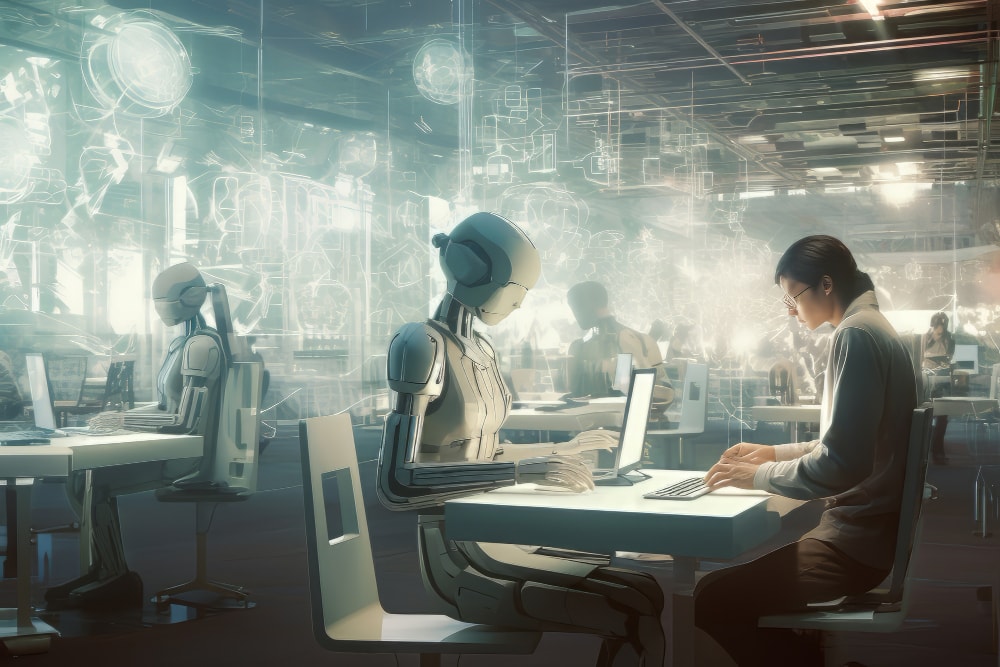
For years, Human Resources (HR) teams have relied on email threads, chat apps, and siloed software to manage critical processes. These tools once felt revolutionary, but in 2025 and beyond, they are relics of an older workplace reality. Today’s HR is not simply about managing headcount or benefits, it is about shaping employee experience, orchestrating organisational agility, and steering business transformation.
With workforces increasingly distributed, compliance environments tightening, and talent expectations evolving, the question is no longer whether HR teams should “go digital.” It is about how far they can go. And the answer is clear: beyond chat. Future-ready HR functions need mission-critical collaboration platforms infused with artificial intelligence (AI), platforms that don’t just connect people but actively automate, analyse, and orchestrate HR processes at scale.

From Digital to Intelligent – HR’s AI-First Pivot
Traditional chat tools are built for conversations. But HR today is built on decisions, which candidate to hire, which skills to prioritise, which employees to retain, and how to ensure compliance across jurisdictions. These decisions generate and depend on vast amounts of data. Without intelligent systems, HR professionals are left to manually stitch together signals from multiple platforms, a process that is slow, error-prone, and reactive.
This is where AI changes the equation. Modern collaboration platforms are no longer passive digital workspaces; they are active participants in HR workflows. Using machine learning, natural language processing, and predictive analytics, they surface insights, recommend actions, and even automate routine processes, freeing HR teams to focus on strategy rather than administration.
For example, an AI-enabled collaboration platform can flag bias risks in job descriptions, automatically route onboarding tasks to different departments, or predict which employees may be at risk of attrition, all without HR manually intervening.
Enter Agentic AI – HR’s New Co-Pilot
While traditional AI focuses on automating repetitive tasks, agentic AI represents the next leap. These AI “agents” don’t just execute pre-set actions; they can plan, reason, and act across systems on HR’s behalf.
Imagine a new hire joining a hybrid workforce. Instead of HR sending a dozen emails, an agentic AI within the collaboration platform could:
- Generate a personalised onboarding plan based on role, location, and career trajectory.
- Schedule training modules automatically, factoring in team availability.
- Update payroll, IT access, and compliance records across systems in real time.
- Check in with the new employee after 30 days, analyse sentiment from feedback, and alert HR if risk factors emerge.
This is no longer a distant vision, pilot implementations are already underway in forward-thinking organisations. Agentic AI promises to make collaboration platforms self-orchestrating ecosystems where processes run seamlessly and intelligently in the background, with HR acting as the designer and supervisor rather than the executor.
The AI-Driven Advantages of Mission-Critical Collaboration Platforms
Moving beyond chat to AI-powered platforms transforms HR across four critical dimensions:
1. Proactive Decision-Making
AI-enabled platforms can synthesise data from HRMS, payroll, performance tools, and external labour market sources to surface predictive insights. HR leaders can identify skill gaps, forecast attrition, and benchmark compensation, enabling evidence-based workforce planning rather than gut-driven decisions.
2. Hyper-Personalised Employee Experience
Agentic AI allows HR to deliver a consumer-grade, personalised experience at scale. Employees can interact with AI-powered HR assistants to check policies, apply for leave, or request career coaching, while behind the scenes, the platform tailors responses based on role, performance, and preferences.
3. Security, Compliance, and Auditability
Enterprise collaboration platforms now combine advanced encryption with AI-driven compliance checks. For example, AI can automatically redact sensitive information in documents shared across teams, track policy updates, or flag conversations that may violate regulatory guidelines, reducing HR’s compliance burden.
4. Continuous Learning and Culture Building
By analysing communication patterns, feedback loops, and engagement data, AI can help HR identify culture trends early, from burnout signals to emerging informal leaders. These insights allow HR to deploy targeted interventions, build stronger inclusion strategies, and link culture directly to performance outcomes.
Designing the Future – HR as an Architect, Not an Operator
The rise of agentic AI and intelligent collaboration platforms doesn’t diminish HR’s role, it elevates it. Rather than being bogged down in process execution, HR leaders can become architects of employee experience and organisational capability.
- From manual to autonomous workflows: Let AI handle repetitive administration; HR focuses on innovation.
- From fragmented to integrated systems: Use platforms that unify payroll, talent, and learning data with communication tools.
- From reactive to anticipatory HR: Leverage predictive analytics and agentic AI to act before issues escalate.
The shift also demands new skills. HR teams will need to understand data ethics, AI governance, and digital change management to fully see the power of these platforms.
Beyond Chat, Beyond Today
In 2015, adopting a chat platform for HR might have felt cutting-edge. In 2025, it is table stakes. The organisations that will thrive are those that see collaboration not as a messaging function but as a strategic capability, one that integrates AI, security, and workflow orchestration into a single mission-critical hub.
Agentic AI is poised to be HR’s most powerful ally in this transformation. By turning collaboration platforms into intelligent co-pilots, it will allow HR teams to build agile, inclusive, and high-performing workplaces, not in theory, but in day-to-day operations.
For future-ready HR leaders, the message is clear: chat is yesterday’s tool. AI-powered collaboration platforms are tomorrow’s competitive advantage. Those who embrace them will not just manage the workforce, they will shape the future of work itself.
