


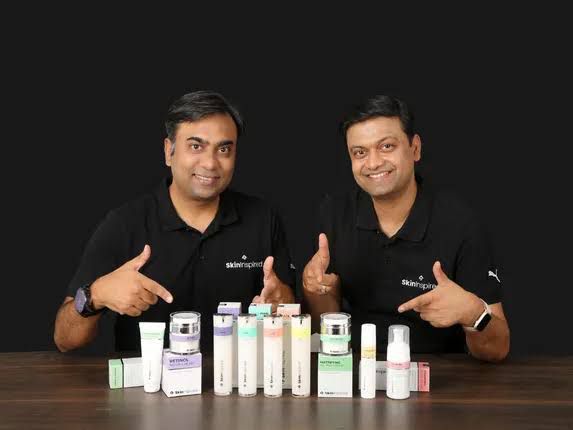
Speaking with TechGraph, Piyush Jain, Founder of SkinInspired, discussed how India’s skincare market has rapidly moved toward active-rich and science-backed formulations but continues to struggle with inconsistent results and irritation, and how the brand was built to address this gap by creating clinically driven products with formulations designed specifically for Indian skin realities.
Jain also spoke about how the brand’s focus on multi-active products, developed in collaboration with dermatologists and tested under real-world conditions, is allowing customers to achieve steady results without overwhelming their skin or abandoning products midway due to irritation or confusion.

Read the interview in detail:
TechGraph: Over the past few years, Indian skincare has shifted from basic creams and generic serums to active, rich, science-based routines and heavy ingredient talk, yet many users still say results are inconsistent or short-lived. When you started SkinInspired, what was the exact gap you wanted to solve in a category that already had several science-based brands?
Piyush Jain: What I kept hearing from people was: “I tried actives, but they either did nothing or irritated my skin.” The market had science-based brands, but the experience was often either not good enough to make a difference or too harsh to keep using. With SkinInspired, the idea was to bring scientific, effective formulations that are easy to understand, easy to layer, and meant for us Indians.
Ultimately, the brand exists to bridge the gap between “science on the label” and “results on your face” for Indian consumers who are willing to invest in better skincare but are tired of inconsistent, short-lived outcomes. The idea was never to just launch “another” active-based brand; it was to design products that people would actually finish, rebuy, and build their routine around without any false promises.
TechGraph: These days, people discover very different types of skincare products online, whether it is an Ayurvedic formulation trending on reels, a Korean serum recommended in a video, or a dermatologist-backed product highlighted in reviews. When someone is choosing between such contrasting options, where does SkinInspired fit, and for which concerns should your products ideally be chosen?
Piyush Jain: Honestly, the skincare world feels like chaos right now. One day it’s all about ancient Ayurvedic herbs, and the next it’s endless 10-step Korean routines. People are just… confused, overwhelmed, and honestly a bit burnt out from chasing trends that don’t stick. We built SkinInspired to cut straight through that noise.
We’re not here chasing Instagram virality or jumping on the latest K-beauty hype or “back-to-roots” Ayurveda wave. Our focus is on dermatologically formulated, effective skincare products that target real conditions such as anti-aging, pigmentation, sun damage and other skin-related issues.
Our products are based on multi-active formulations designed for real results with clinical testing. Over 250 board-certified dermatologists back us, and we’ve poured huge numbers of hours into R&D to make sure every drop delivers.
TechGraph: Indian skin faces everyday stress factors like pollution, hard water, long hours of sun exposure, and seasonal breakouts. How have these realities shaped your core formulations, and how much do they influence decisions around which products continue and which ones eventually get discontinued?
Piyush Jain: Indian skin faces way more environmental stress than most places – pollution, mineral-heavy hard water, brutal UV exposure, humidity, and so much more. When I started SkinInspired, I made sure our products were built for this stuff, not just copied from foreign countries and their climates and environments.
For pollution, we add things like niacinamide and vitamin C to protect skin, plus mild exfoliants to clean pores without making it worse. Sun exposure is a huge concern here in India, so we designed our sunscreen keeping all factors like harsh UV rays, pollution, and water resistance in mind. Something might perform beautifully in the lab but fail in real Indian conditions.
We prioritize actual performance over R&D perfection. We have dermatologists on board and included in every formulation, which ensures we check all the boxes that are important for our customers or Indian skin before launching them. We look at what customers say (over 100k people) and what dermatologists recommend (250+ of them).
TechGraph: For customers who shift from basic moisturisers to stronger ingredients like Retinol or Vitamin C, irritation or slow results can become a barrier to staying consistent. How does SkinInspired work out the right balance of concentration, texture, and usage sequence so the products deliver results without making the routine uncomfortable for beginners?
Piyush Jain: Retinol and vitamin C are amazing – but let’s be honest, most people find them intimidating or irritating. They give up before seeing results. We wanted to fix that.
Our approach? Make powerful ingredients feel comfortable and beginner-safe.
We use encapsulation tech that releases actives slowly, cutting down irritation. Every strong active gets paired with barrier-support ingredients – ceramides, peptides, and panthenol, so your skin stays calm throughout. This ensures you get the results with added benefits.
We believe in the overall experience for our customers, and texture plays a key role in that. We designed formulations that feel good not only in results but in application as well. We made the products for Indian skin and weather while focusing on the ingredients, too.
We also understand that too many things can overwhelm a beginner. This is why we developed products for simpler routines – one to three steps max – while delivering maximum efficacy.
TechGraph: The Indian market is aspirational, yet highly price sensitive and heavily influenced by online discovery. As the brand scales, how are you planning channels and pricing so SkinInspired stays desirable while still remaining within reach for customers beyond metro cities?
Piyush Jain: India’s an aspirational market, but it’s also value-sensitive. Our strategy is to keep the balance between offering value while staying within reach of Indian consumers. D2C lets us educate and build trust directly. Marketplaces like Amazon and Nykaa help people discover us. Offline partnerships with dermatologists add credibility.
We price according to results, not milliliters. If something actually works, people get it, and they’ll definitely pay for it. Behind the scenes, we optimize packaging, supply chain, and batch sizes to keep costs smart without compromising formulation quality. The goal is simple: be premium via results and packaging, and accessible enough to actually buy.
As India gets more ingredient-aware, we want to be the brand people confidently upgrade to, knowing they’re getting science, safety, and results that match global standards, not just their prices. At SkinInspired, we’re scaling smart: stay aspirational with luxe packaging and derm-backed results, but price accessible so Tier 2/3 cities can get the best without compromise.
TechGraph: In the skincare market, repeat usage usually says more than first-time trials. Based on customer retention patterns so far, what learnings have stood out for SkinInspired, and how have those learnings shaped adjustments in formulation or usage guidance?
Piyush Jain: Repeat usage is where the magic happens. An ad or an influencer can help you get the customer once, but them coming back month after month tells us what’s really working. At SkinInspired, with a 60% customer repeat rate, we know we’re offering something customers truly want and need.
In my opinion, Indian consumers stay loyal if your products deliver results. They want products that work steadily, fit their lifestyle easily, and are not just another item to add to their shelf. Our Retinol Night Cream is a great example of this.
One key learning is that customers want what the product promises, and you can see this in our packaging and marketing too. We don’t do false marketing or claims.
We follow a transparent label policy – you see what you’re getting, and hence, customers are aware of the results they can expect from us. This has really helped our customer retention journey. Another insight is that education drives retention. When we explain how something works, what to expect week by week, and how to pair it, people see better results and come back. Over time, this education-led approach results in fewer drop-offs, better outcomes, and customers who achieve real results.
TechGraph: Looking ahead, personalised routines and AI-based diagnostics are starting to gain space in the skincare segment. Do you see SkinInspired evolving in that direction in the future, or is the present focus to build deeper credibility and scale within the formulation-driven model before stepping into technology?
Piyush Jain: Personalization and AI diagnostics are exciting and definitely transforming skincare globally. But for us, it’s about being credible while delivering results. Right now, we’re focused on keeping the basics right: formulation credibility, clinical validation, dermatology partnerships, and consistent performance at scale. Those foundations need to be very strong before we add tech layers. SkinInspired wants to be future-oriented, but via our formulations and products.
That said, personalized guidance makes sense – especially when misinformation and active overuse are so common here. AI can help people understand their skin type, concerns, and routine gaps faster. We’re also looking into ways AI can help customers know what will work for their skin, but keeping it science-based. We would only do something if it adds real value for people, not just for the sake of doing it.