


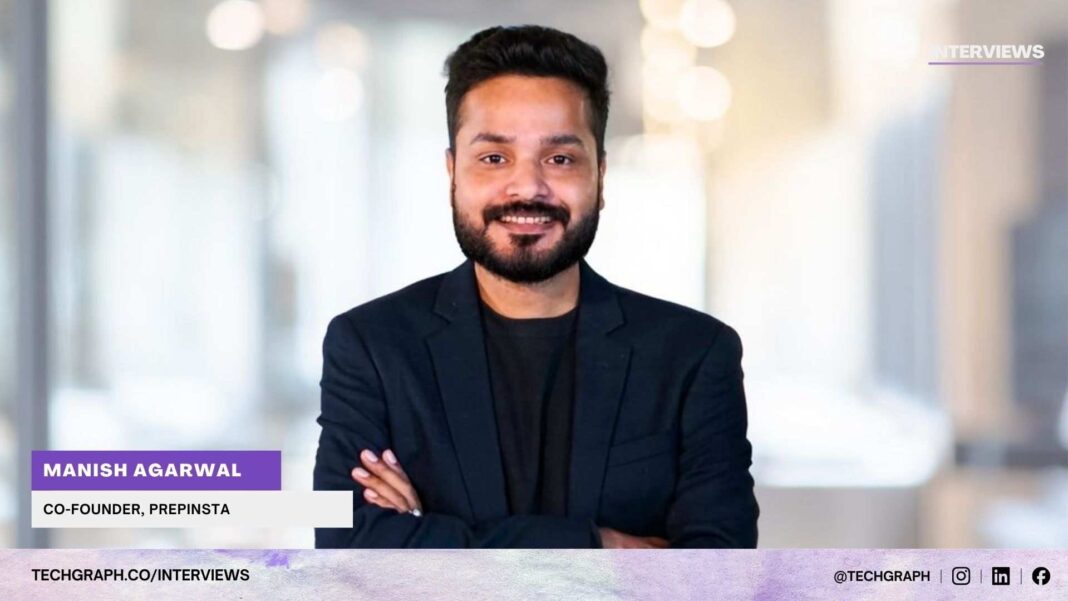
Speaking with TechGraph, Manish Agarwal, Co-Founder of PrepInsta, discussed how the increasing adoption of AI-led assessments and automated hiring platforms is shifting campus recruitment away from reliance on pedigree and location toward a more merit-driven model that values consistency, analytical reasoning, and practical application of knowledge, and how PrepInsta is helping students across Tier 1 to Tier 3 cities adapt to this transition through structured, data-led learning journeys that mirror real hiring expectations.
Agarwal also spoke about how PrepInsta Prime and the company’s SaaS platform Optimus are enabling personalised learning journeys by tracking readiness, monitoring progress across technical and behavioural skills, and giving both students and universities visibility into employability outcomes, ensuring learners are prepared for an AI-driven job market rather than legacy interview-based preparation models.

Read the complete interview:
TechGraph: Over the past few years, companies have increasingly adopted AI-driven assessments, resume screening tools, and automated interview platforms for campus hiring. Based on what you’ve seen through PrepInsta’s work with students, how has this shift changed the very definition of employable talent?
Manish Agarwal: The rise of AI-driven assessments and automated hiring tools has fundamentally redefined employability today. Success is no longer measured solely by academic scores or coding ability; employers increasingly value adaptability, problem-solving skills, and the capacity to apply knowledge in unfamiliar contexts.
Through PrepInsta’s ecosystem, powered by our SaaS platform, Optimus, we’ve observed that students thrive when they can think algorithmically, communicate effectively, and demonstrate practical skills through simulations and real-world projects.
AI tools highlight patterns in consistency, accuracy, and learning agility that traditional interviews often overlook, making the hiring process more meritocratic as genuine skill takes precedence over background or location. Preparing learners now requires fostering technical competence, analytical reasoning, and a self-driven learning mindset, and that is exactly what our courses, adaptive assessments, and project-based modules are designed to cultivate.
TechGraph: These systems are often described as fair and data-led, yet many students believe they create new forms of bias that are harder to identify. From what you’ve observed, is this more perception than reality, or have there been genuine instances where deserving candidates were filtered out unfairly?
Manish Agarwal: AI-driven assessments and automated screening tools are designed to be objective and consistent, but they are only as unbiased as the data and parameters they’re built on. There have been instances where students with unconventional backgrounds or non-traditional learning paths were initially filtered out because the system prioritized patterns it had “learned” from historical data. That said, much of the concern also comes from a lack of understanding of how these tools work.
At PrepInsta, we address this by preparing students for these systems through adaptive mock tests, real-world simulations, and insights from our SaaS platform Optimus, which helps track gaps and readiness. This ensures that learners understand both technical expectations and the subtleties of AI-based evaluation, minimizing the chances of deserving candidates being unfairly overlooked.
TechGraph: PrepInsta works with a large number of students from tier 2 and tier 3 cities, where exposure to AI-led recruitment remains limited. Based on what you’ve observed, how big is the learning gap when it comes to understanding what these automated filters actually value?
Manish Agarwal: The learning gap is significant, especially in Tier 2 and Tier 3 cities, where students often have limited exposure to AI-led recruitment processes. Many are unaware that automated filters prioritize consistency, accuracy, problem-solving approach, and applied understanding rather than just textbook knowledge. Through PrepInsta, we’ve seen that students who rely solely on rote learning struggle to perform well in adaptive mock tests or AI-driven simulations. That’s why our platform, including Optimus, focuses on bridging this gap by providing real-time feedback, performance analytics, and hands-on project-based learning.
Students gradually learn how assessments value logical thinking, coding efficiency, and practical application of concepts. Coupled with mentorship and targeted guidance, this approach equips learners to align their preparation with what automated systems actually measure, leveling the playing field and making them genuinely competitive for modern recruitment processes.
TechGraph: Some virtual interview tools now analyze tone, eye movement, and facial expressions during recorded interviews. Do you think this growing reliance on behavioral analytics risks overshadowing real knowledge and skill, and how can students prepare without losing authenticity?
Manish Agarwal: There is definitely a balance to be struck between behavioral analytics and actual knowledge, because while tone, eye contact, and expressions provide signals about confidence and communication, they should never replace genuine skill or problem-solving ability. Students need to focus on mastering core concepts, coding, and aptitude while simultaneously practicing soft skills in a natural way.
At PrepInsta, we simulate these scenarios through mock interviews and AI-driven behavioral feedback, helping learners become aware of presentation cues without forcing artificial behaviors. The key is building self-awareness and confidence so that any analytics reflect their true capabilities rather than a rehearsed persona. Combining technical competence with authentic communication ensures students perform holistically in AI-evaluated settings, making them both employable and genuine, rather than just algorithmically optimized.
TechGraph: Transparency has become a major concern since most companies do not reveal how their screening algorithms work or what data they use. What level of openness should employers maintain, and do you think this space now needs clearer ethical or regulatory standards?
Manish Agarwal: Employers should aim for a level of transparency that builds trust without compromising proprietary advantages. At a minimum, students need clarity on the types of skills being assessed, the general criteria used in AI-driven evaluations, and how data from assessments impacts selection decisions.
Right now, the lack of transparency often creates anxiety and misconceptions, particularly for students in Tier 2 and Tier 3 cities who have limited exposure to such systems. Clearer ethical guidelines and regulatory standards would help ensure fairness, accountability, and inclusivity, preventing misuse or unintentional bias.
At PrepInsta, we try to bridge this gap by educating learners on what these tools measure, providing practice through simulations, and emphasizing skills, adaptability, and communication. Establishing industry-wide norms would make the hiring process more predictable and equitable while still enabling companies to innovate with AI assessments.
TechGraph: PrepInsta sits at an interesting intersection between education and employability. From your data and experience, have you noticed measurable changes in how students approach placement prep now that automation plays such a large role in hiring?
Manish Agarwal: Students today approach placement preparation with far more structure and data-driven focus than before. They no longer rely solely on rote learning or generic interview prep; instead, they aim to understand what skills, problem-solving approaches, and practical applications automated systems are likely to evaluate.
Through PrepInsta Prime and our SaaS platform Optimus, we’ve observed learners tracking their progress meticulously, analyzing mock test performance, and adjusting strategies based on feedback from AI-driven assessments.
Engagement with real-world projects, adaptive quizzes, and company-specific simulations has increased significantly, reflecting a shift toward preparation that mirrors actual recruitment pipelines. Students are also more conscious of soft skills, behavioral cues, and consistency, recognizing that automated systems factor these in alongside technical competence.
TechGraph: Looking ahead, as AI continues to shape the future of recruitment, what kind of skills, mindsets, or preparation strategies do you believe will define the next generation of successful job seekers? And how should universities and platforms like PrepInsta adapt to that future?
Manish Agarwal: The future of hiring will demand students who are not just technically skilled but adaptable, solution-oriented, and able to apply knowledge in real-world scenarios. Success will come to those who combine expertise in areas like Generative AI, Cloud Computing, and Cybersecurity with strong analytical thinking and problem-solving skills. At PrepInsta, we’re already adapting to this shift with over 200 industry-relevant courses, hands-on projects, and adaptive assessments that reflect actual recruitment challenges.
Partnering with more than 100 institutions, and with over 90,000 paid subscribers actively learning and 1.4 million students trained through our ecosystem, we focus on personalizing learning journeys and bridging skill gaps. Tools like Optimus track progress and readiness, giving both students and colleges clarity on employability outcomes. This way, learners gain not just knowledge but confidence and practical exposure, preparing them to thrive in AI-driven, data-led hiring environments.