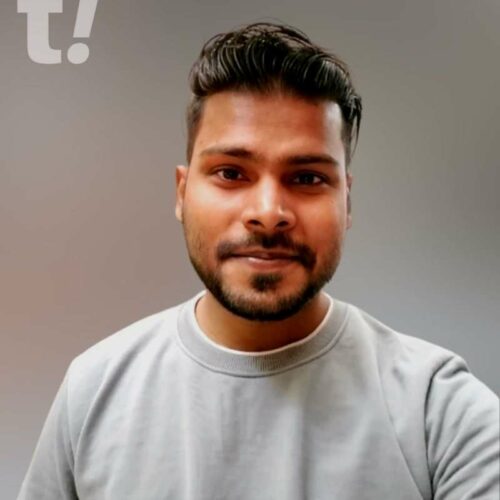



Speaking with the TechGraph on Friday, Ankur Bansal, Co-founder & Director of BlackSoil said, “The impact of lockdown on our portfolio company was minimal.”
Here is a full expect:

TechGraph: What’s the investment philosophy that you follow at BlackSoil?
Ankur Bansal: For the past 7 years, BlackSoil has pioneered in providing distinctive financing resources by working extensively with start-ups, high growth companies, and real estate developers with tailor-made credit products, with the overarching commitment to creating value for all the stakeholders.
We partner with trailblazing entrepreneurs who have built rapidly growing businesses that have clearly defined competitive advantages.
The common threads of our approach include operational flexibility, patience, and commitment to creating value. BlackSoil takes both a credit and an equity view on each financing situation, offering quick feedback on any deal proposal without lengthy external audits or substantial equity dilution.
Our team is headed by eminent industry personalities and consists of specific domain experts with a rich understanding of what companies across all stages need, fulfilling those requirements with debt facilities that meet the new age demands of growing businesses, sponsors, and investors.
TechGraph: What is BlackSoil’s fund approach in the current market? Are you looking at new sectors too or using more stringent norms to evaluate a business?
Ankur Bansal: We are looking at sectors that will be resilient in the new normal where lockdowns and potential supply chain disruptions might become a norm. Till a vaccine is widely available we all have to learn with COVID. keeping in mind all safety measures like social distancing.
We generally prefer B2B players as their revenues tend to be more sticky and not generally driven by marketing dollars. We are optimistic about all things online & technology-driven. Few such sectors where we see substantial tailwinds are agri-tech, med-tech & OTT media.
Agri-tech – Agriculture doing better compared to other sectors and has seen renewed investor interest recently. The sector has witnessed the rise of 450+ agri-tech startups, attracting investments from some of the top global venture capital funds. An EY report says that India’s agri-tech industry has the potential to touch $24 Bn in the next five years.
Med-tech – Social distancing norms will push patients to seek digitized healthcare which will require doctors to leverage technology. Med-tech will also ensure quicker & efficient production ramp-up of medical devices to combat against future emergencies. The med-tech industry is dominated mainly by American firms, which lead the world in product innovation. While India still imports 75%+ of its medical technology, Indian companies have begun making strides in certain areas of med-tech, providing high-quality & affordable products in diagnostics, monitoring, implants, etc.
OTT Media – Audience is switching to digital home entertainment platforms & consuming more OTT content. Startups involved in creating digital content and web series are seeing higher traction. Movie producers are also opting for OTT releases as this guarantees a broader audience for small films with less saleable names as well as reduces costs attributed to printing & distribution. Affordability and convenience are the key factors that have propelled the OTT revolution in India & the market is expected to touch ~$5 Bn by 2023.
Evaluate businesses – At the underwriting level, we are now looking at high-quality deals whose business models present adaptability to such extreme market events. Due to the survival instinct of companies, innovation & agility have peaked, and these are such deals we try to shortlist.
Though there isn’t much change at a strategic level in deal terms overall the team has to do more rigorous analysis & sensitivity study on the business model’s durability. How the co behaved in the last 6-9m is a good testament to the character/fabric of the founder/co & its investor. Based on it, this becomes a good filter in selecting companies.
As the number of portfolio companies increases and each deal may have its structuring specialty, we are moving to customized cloud-based solutions to manage both new deals underwriting as well as existing portfolio.
A lot of our backend tech being built out is for simplifying our underwriting criteria, documentation, standardizing process flows, and to ensure our risk team is being able to identify and address red flags in our portfolios early on. We have been able to use the lockdown period effectively to implement the above systems
TechGraph: How are you handling the fund’s existing portfolio and responding to challenges faced by startup founders?
Ankur Bansal: We have increased engagement with our existing portfolio companies, ever since the pandemic dawned upon us. We try to address the borrower’s needs by looking in-depth at the business models and even advising them if venture debt is a good fit for them.
Most of the team comes from an investment banking or private equity background, this helps us understand the unit economics and long-term goals of the companies better than most traditional lenders.
Since we look at multiple companies in various sectors, we are most times able to identify key business differentiators and have had many learnings. Some of these aspects we keep sharing regularly with our prospective and existing portfolio companies.
Also many times we are part of brainstorming sessions on business strategy with our existing portfolio companies. As a lender, we bring a different analytical approach to the way we look at problem statements and is appreciated by our VC partners and founders alike various government schemes were launched to boost the economy & help companies stay afloat.
We kept tracking these & highlighted the relevant policies which would be beneficial for our portfolio. With the help of our internal network, we also introduced multiple portfolio companies to various banks, HNIs for getting additional working capital lines/receivables funding, and explored several financing arrangements.
TechGraph: What is your view on the Indian startup ecosystem?
Ankur Bansal: Indian startup ecosystem has shown in the last 9 months how important resilience and nimbleness are for the survival of any business. Startups that were negatively affected by the pandemic but survived have learned many important lessons like the importance of cash, quality of earnings, and timing of a fundraise. We have also seen the rise of startups who are deploying tech to solve problems that were faced by traditional business models during the lockdown for example in logistics, agritech.
Any crisis disrupts an existing system of doing business and paves a way for innovation and we have seen many unicorns like Uber and Airbnb prosper after the Global Financial Crisis. Even though there may be some headwinds due to the temporary cash crunch in the economy, the future looks exciting for the Indian startup ecosystem.
TechGraph: How do you see the debt investment scenario in the country over the next two-three years?
Ankur Bansal: Overall VC activity will pick up manifold and will be seeing a host of new niche unicorns and early-stage startups coming up in various sectors and not only from the B2C eCommerce & fintech space.
Focus on paths to profitability – In the past, many start-ups pursued unsustainable customer acquisition strategies and growth targets to inflate their valuations. The pandemic has forced such companies to focus on healthy unit economics and profitability. Growth focused and high cash-burn start-ups have had to turn to extensive cost-cutting measures and layoffs just to survive.
Focus on sectors – The venture debt market has swiftly moved from agnosticism to favoring certain sectors. Start-ups in gaming, agri-tech, med-tech, OTT media, and logistics have been positively impacted by the pandemic and are popular amongst investors not only for debt but across all asset classes.
Preference of debt over equity – The pandemic and the ensuing lockdown have compelled start-ups to consider raising capital with huge equity dilution. Valuations of many start-ups have taken a hit and these start-ups are now facing down-rounds to sustain operations. To overcome these issues, raising debt has become a preferred choice amongst many start-ups to finance working capital needs.
TechGraph: Since coronavirus has affected almost every startup and business, Even many VC deals have closed down. How it has impacted BlackSoil’s portfolio startups?
Ankur Bansal: Most companies have already reached their pre-COVID levels and seem to be improving m-o-m as the restrictions ease & the economy opens-up. Yes, most of them have a good runway and the majority of our portfolio happened to raise capital recently.
Some of them have done bridge rounds as well plus we have also done top-ups in some situations. A couple of our B2C companies will take longer to recover and reach pre-COVID levels but they have taken strong cost-cutting measures to ensure they can survive this crisis and extend the runway.
At Blacksoil, we were positively surprised by the ability of some of our portfolio companies to adapt their business models to the unprecedented conditions of the lockdown. Compared to traditional companies, these start-ups have nimble business models which allowed them to quickly adjust their processes to beat the lockdown.
For example, an urban logistics solutions provider in our portfolio was able to onboard 20+ clients in Q1FY20 alone, adding a new revenue stream from essential goods providers. We witnessed a used-cars platform to introduce a system of home test drives and contact-less home deliveries.
We also saw an education company move their content online and continue operations with virtual lectures. Overall, the impact of the lockdown on our portfolio company was minimal.
We would like to highlight that B2B has performed better compared to B2C which is seeing improvement m-o-m. Because of the lockdown, there has been a slump in end-consumer demand as non-essential purchases have been pushed back. Some of the better-performing sectors include Healthcare, Logistics & SaaS.
When speaking about EBITDA margins, the same has improved for a lot of the companies compared to pre-Covid levels attributed to fixed expenses being lower & the utilization of various support measures introduced by the Government.
TechGraph: Lastly, what does the future hold for BlackSoil?
Ankur Bansal: The inflow of deals that we are receiving has significantly increased during the lockdown and we have been actively investing in high potential startups.
The fund will look to raise overall INR 350 Cr and complete 30 deals with an average ticket size of INR 10-20 Cr per transaction. We are seeing a strong pipeline of deals and we would be looking to invest in sectors that we project are ripe for disruption.