


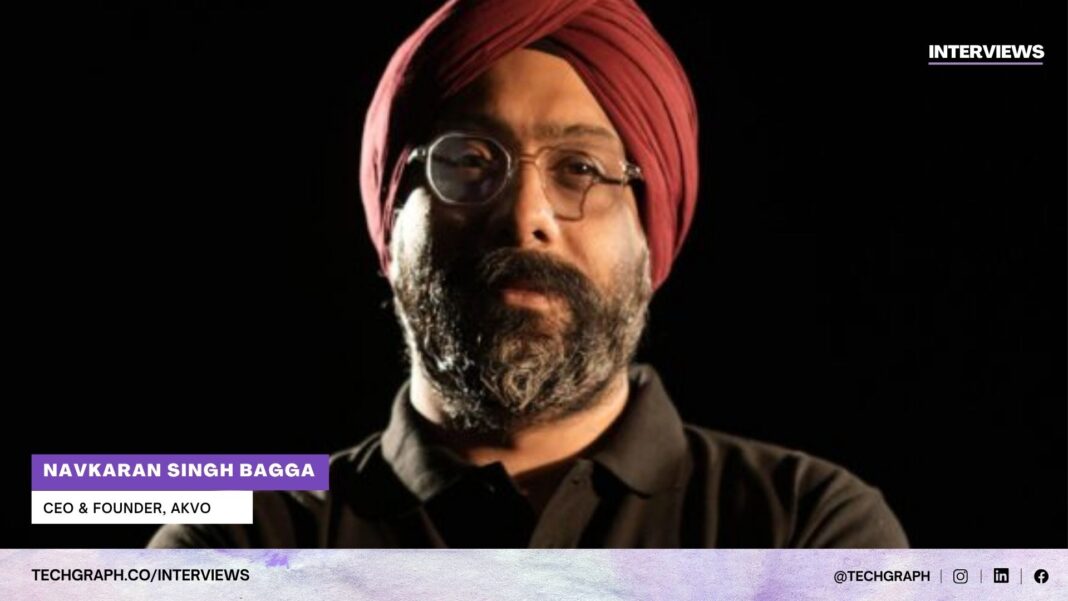
In a discussion with TechGraph, Navkaran Singh Bagga, CEO and Founder of AKVO, explained how the company’s atmospheric water generators are designed to ease pressure on bottled supply chains and overstretched municipal networks. He also spoke about the role of modular design and service-based pricing in expanding access to air-to-water technology, and added that when paired with renewable energy and efficiency gains, these systems can achieve near-municipal pricing, making decentralized water solutions viable for a wide range of users.
Read the interview in detail:

TechGraph: Water has historically been treated as a public good rather than a consumer technology. How do you reconcile the idea of selling water through a device with the ethical sensitivities that come with commodifying access to such a basic human need?
Navkaran Singh Bagga: I don’t think of it as selling water at all—we’re enabling people to make their own. The atmosphere is full of water vapour; we’re simply helping you tap into it. Our machines reduce dependence on bottled water or stressed municipal networks. We price the technology so it stands on solid economics, not scarcity. For me, it’s about independence and resilience, not turning water into a commodity.
TechGraph: Air-to-water sounds deceptively simple, yet the history of water innovation is full of solutions that never scaled beyond niche adoption. What is different in the global market today that makes Akvo believe this technology can escape that cycle?
Navkaran Singh Bagga: Two things have shifted. First, climate change has exposed how fragile centralised water networks really are. Second, energy efficiency and IoT have matured—our cost per litre is nothing like it was ten years ago. Add public frustration with plastic bottles and policy pressure for climate adaptation, and the market is finally ready. This isn’t a science project anymore; it’s a timely, scalable solution.
TechGraph: Traditional water supply models depend on centralised infrastructure, while your approach is decentralised and individualised. Do you see this as the beginning of a shift in how societies will organise water access, much like solar rooftops changed the energy sector?
Navkaran Singh Bagga: Absolutely. Water is heading the way of energy—distributed and local. Like rooftop solar, our systems let you generate a critical resource right where you need it. That means less waste, no reliance on a single grid, and more resilience when droughts or pipe failures happen. It also changes the mindset: water security becomes a shared responsibility between communities, businesses and government.
TechGraph: In regions facing severe scarcity, water is often used as a tool of control by governments or private suppliers. How then does Akvo plan to navigate the reality that disrupting that system could provoke resistance from powerful interests?
Navkaran Singh Bagga: You can’t just show up and challenge entrenched interests. We work with governments, utilities and NGOs to fit into their water-security plans. Our role is to reduce pressure on existing systems, not replace them. When we show that decentralised generation lowers costs and expands access, it’s harder for anyone—public or private—to see us as a threat. Collaboration beats confrontation.
TechGraph: The bottled water industry has managed to turn what is essentially tap water in a plastic bottle into a multi-billion-dollar habit. What does that say to you about consumer psychology around water, and how do you intend to shift those deeply ingrained behaviours?
Navkaran Singh Bagga: Bottled water proves people pay for trust and convenience, even when tap water is perfectly safe. We tap into the same instinct but remove the plastic and logistics. With an Akvo unit, pure water appears where you drink it—no truck, no bottle. As awareness about plastic waste grows, the switch feels obvious. Our job is to make it as easy and reliable as grabbing a bottle.
TechGraph: The cost of producing water from the air will be under constant scrutiny, especially in markets where people still struggle to afford even subsidised municipal supply. What kind of economic model can make this technology viable without only serving wealthier households?
Navkaran Singh Bagga: Our economics aren’t built only for the wealthy. We offer everything from small plug-and-play units to large modular blocks so customers can match budget and need. Many choose a “water-as-a-service” model—paying per litre rather than a big upfront cheque. Combine that with energy-efficient operation and renewable power and you get close to municipal rates in many markets. Scale and smart financing make it accessible.
TechGraph: Climate adaptation has become the language of survival for many communities. Do you believe technologies like Akvo’s should be framed primarily as consumer lifestyle products, or as tools of resilience that could redefine how societies think about water security in an era of scarcity?
Navkaran Singh Bagga: It’s both. For a family or a hotel, it’s a lifestyle upgrade: fresh, plastic-free drinking water on tap. But it’s also a climate adaptation tool. As droughts and infrastructure failures grow, you need more than one source of safe water. Our job is to give cities, villages and businesses that extra layer of security. Call it a consumer product if you like—but its real value is resilience.