


It’s all too common—some rooms in your home are toasty and warm, while others remain stubbornly cold. This uneven heat distribution is often due to an unbalanced heating system. By learning how to balance your radiator system, you can ensure a more consistent temperature throughout your home. Balancing radiators is not only beneficial for comfort, but also for the efficiency of your heating system, helping reduce energy consumption and overall heating costs.
To understand how to balance your radiator system, it’s essential to know why imbalances occur in the first place. When your heating system is activated, hot water is pumped from your boiler to each radiator in sequence. As the water moves through the system, it naturally cools down. Therefore, radiators located further from the boiler often receive cooler water compared to those that are closer. Balancing involves adjusting the flow of water across the radiators so each one gets its fair share of heat.

Before you start, make sure you have the tools you need: a radiator key, an adjustable spanner, and a digital thermometer or a thermal imaging camera if you want precise measurements. It’s also advisable to note the order of your radiators relative to the boiler. Understanding this order will help you know which radiators need more or less adjustment.
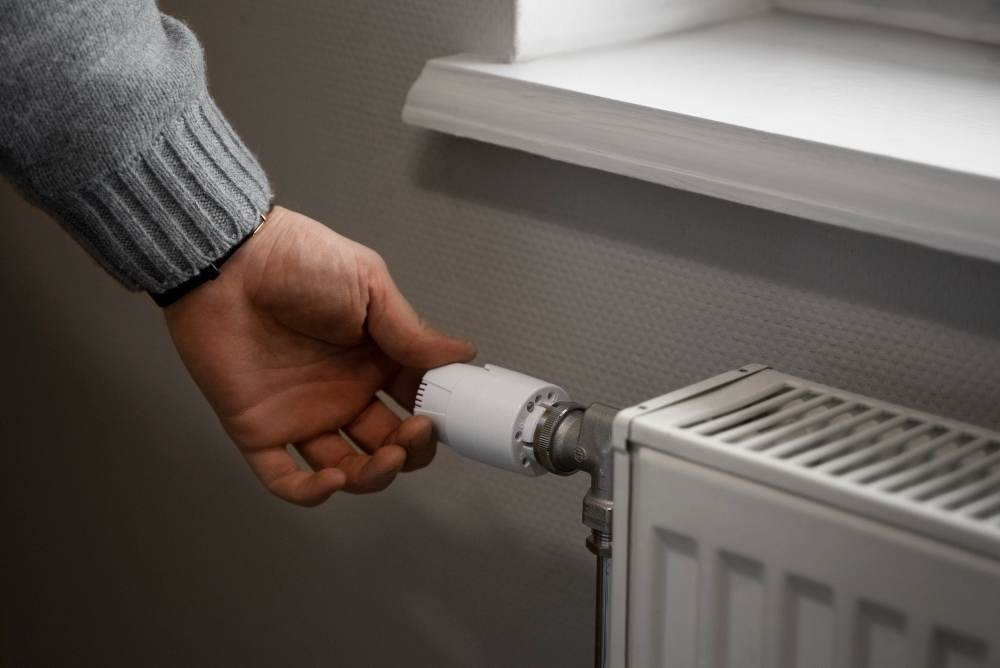
Begin with a cold system. Turn off your heating and wait until the system is cool, allowing you to feel the temperature differences more accurately. On each radiator, you’ll find two valves: a thermostatic valve and a lockshield valve. The thermostatic valve controls the room temperature, while the lockshield valve controls the flow of water into the radiator. For balancing, focus on the lockshield valve.
Fully open the lockshield valves on all radiators. Once they’re all open, switch your heating on and note the order in which they heat up. The radiators that heat up first are closest to the boiler and may need to be throttled back slightly. Using your thermostat or thermometer, check the temperature at various points on each radiator as they heat up.
The key is to get a consistent temperature drop (usually about 11-12°C) between the inlet and outlet pipes on each radiator. To achieve this, you may need to partially close the lockshield valve on those radiators that heat up quickly, effectively restricting water flow, allowing more hot water to flow to the farther radiators which heat up slower.
Adjust one radiator at a time, making small turns of the lockshield valve, and wait a few minutes to allow the system to settle before measuring again. This can be a bit of trial and error, but patience is essential. As each radiator gets evenly balanced, the previously cooler rooms should warm up and achieve a similar temperature as those closer to the boiler.
Once you’ve finished the process, reflect on your home’s heating over the subsequent days. Do the formerly cold rooms feel warmer than before? If not, additional fine-tuning might be needed. Regular checks can ensure your system remains balanced, especially if you make significant changes like installing new radiators or altering room layouts.
Balancing your radiator system is an excellent way to enhance comfort and improve the energy efficiency of your home. While it can require patience, the benefits of an evenly heated home are well worth the effort. No more cold spots, less bickering over thermostat settings, and potentially lower heating bills—those are outcomes anyone can appreciate.